
Loading, please wait...
LOT 0847
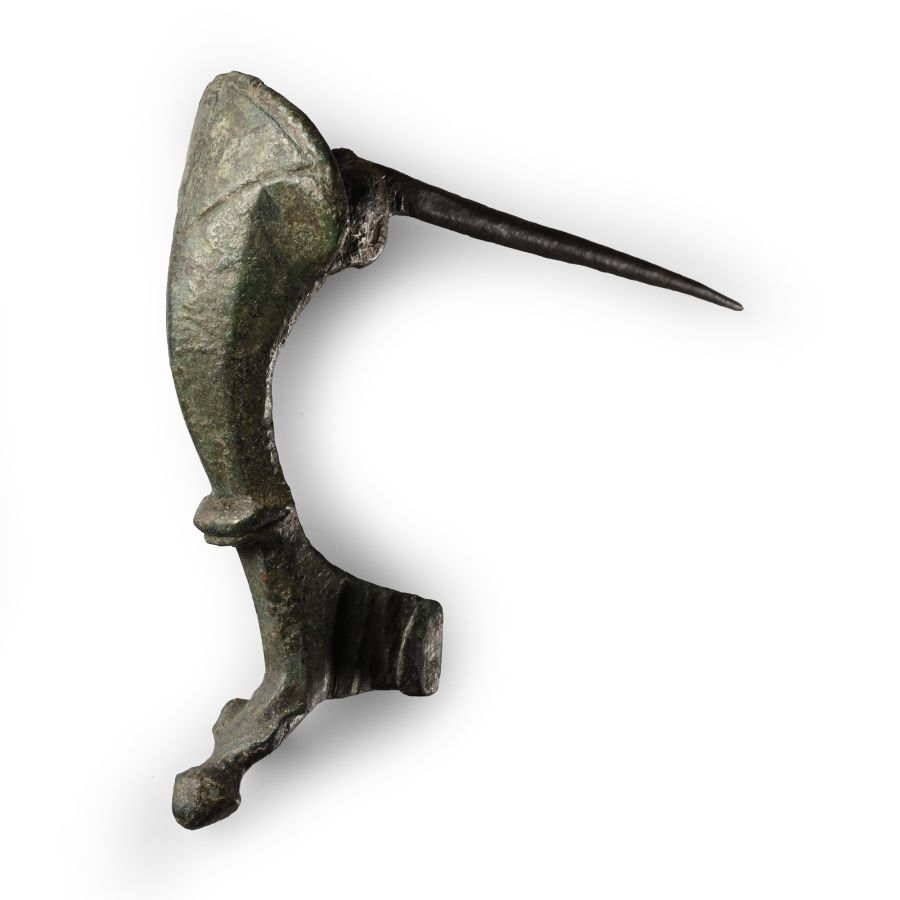
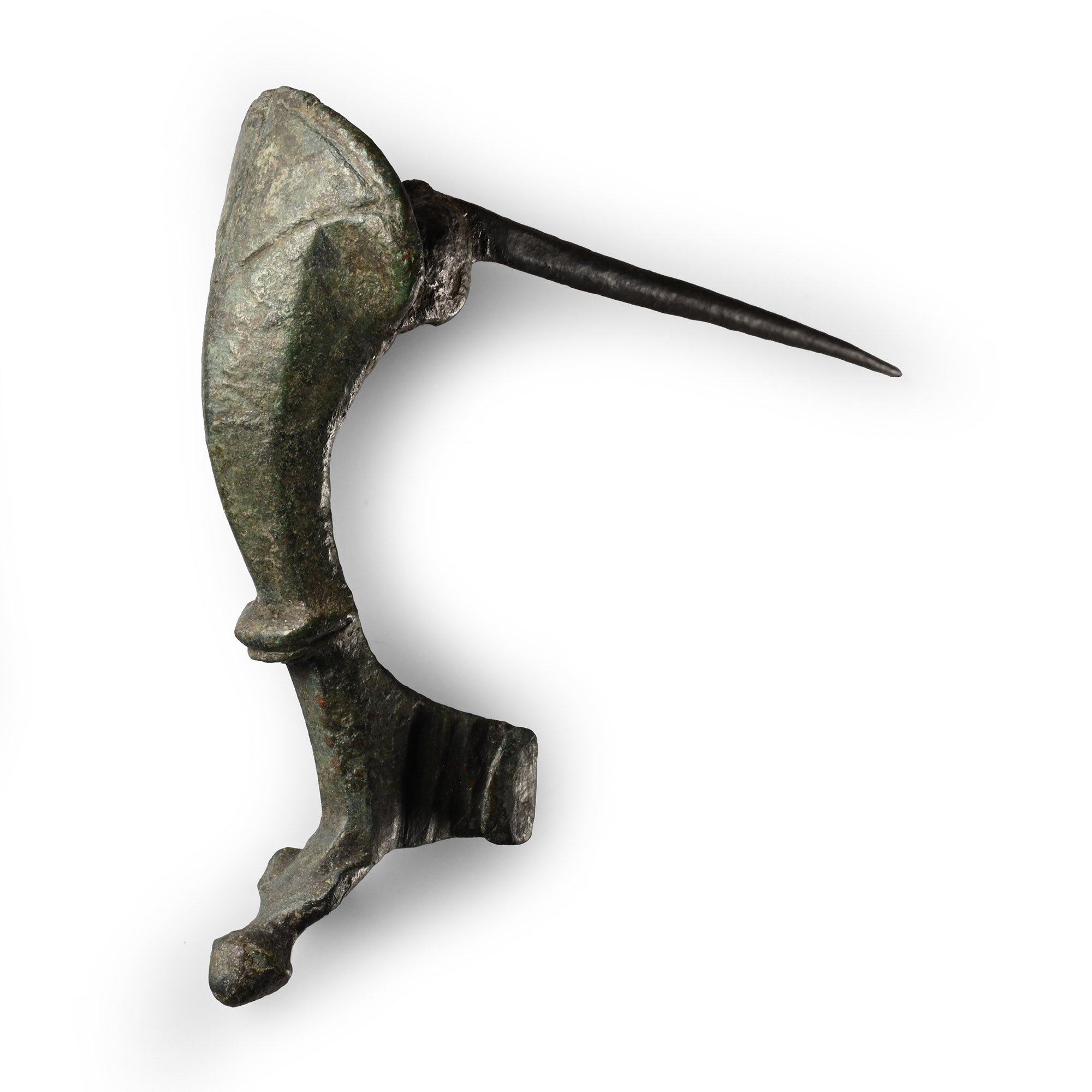
Roman Bronze Trumpet-Derivative Brooch
CIRCA 2ND CENTURY A.D.
2 1/4 in. (29.3 grams, 58 mm).
Substantial D-section bow with flared upper section and fan-shaped head, ribbed ledge below the equator and scooped foot with lateral wings and ball finial; hooked catch to rear, hinged pin intact. [No Reserve]
ProvenanceAcquired on the UK art market before 2000.
Property of an Essex, UK, gentleman.
This lot is accompanied by an illustrated lot declaration signed by the Head of the Antiquities Department, Dr Raffaele D’Amato.
Cf. Hattatt, R., Iron Age and Roman Brooches, Oxford, 1985, item 443.
FootnotesThe brooch lacks the loop at the apex of the head which is characteristic of true trumpet brooches; its hinged pin did not require this feature which originates in the coiled spring mechanism.
CONDITIONTimeLine Auctions follows a vetting process to ensure the authenticity and legality of all items, reinforcing our commitment to integrity and responsible trading. Each antiquity, antique, and coin lot undergoes thorough examination by a vetting committee of at least ten external specialists, professional trade association members, scientists, and archaeologists: Our Vetting Process
AUCTIONS:
TimeLine is a leading auction house specialising in antiquities, ancient art, collectables, natural history, coins, medals, and books. Our auctions offer museums, collectors, historians, and enthusiasts the opportunity to acquire unique and historically significant pieces.
-
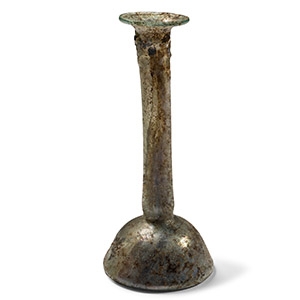
Roman Bell-Shaped Glass Vessel
3rd century A.D.Sold for (Inc. bp): £111
Wide domed body with dimple base, tall narrow piriform neck and splayed rim. 19 grams, 12.9 cm
Ex London art market 1990s. From a London, UK, collection. This lot is accompanied by an illustrated lot declaration signed by the Head of the Antiquities Department, Dr Raffaele D’Amato. -
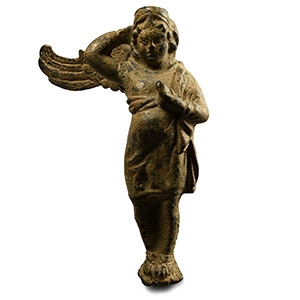
Roman Bronze Statuette of Eros Disguised as Actor
1st century B.C.-1st century A.D.Estimate: £2,000 - 3,000 (+bp*)
Opening Bid: £1,111
Modelled in the round figure in knee-length tunic and draped mantle gathered in the left hand; actor's mask worn tipped back onto the top of the head with curly hair framing the face, left hand raised to support the mask, unfurled wings to reverse (one absent); feet angled. 550 grams, 14.1 cm
Ex Paris auction, 1990s. From a French collection, 2000s. This lot has been checked against the Interpol Database of stolen works of art and is accompanied by a search certificate number no.12526-231887. This lot has been cleared against the Art Loss Register database, and is accompanied by an illustrated lot declaration signed by the Head of the Antiquities Department, Dr Raffaele D’Amato. -
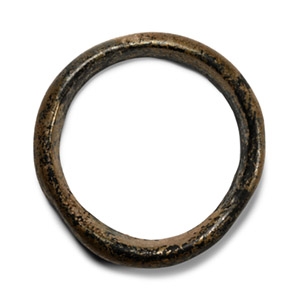
Large Roman Iridescent Glass Arm-Ring Bangle
Circa 4th century A.D.Sold for (Inc. bp): £59
D-shaped in section, annular in plan, some iridescence remaining. 40.6 grams, 79 mm
From an old English collection. Acquired from Den of Antiquity, Cambridgeshire, UK, circa 2008. Ian Wilkinson collection, Nottinghamshire, UK, formed since 1985. Accompanied by an old dealer's ticket. This lot is accompanied by an illustrated lot declaration signed by the Head of the Antiquities Department, Dr Raffaele D’Amato.
