
Loading, please wait...
LOT 0585
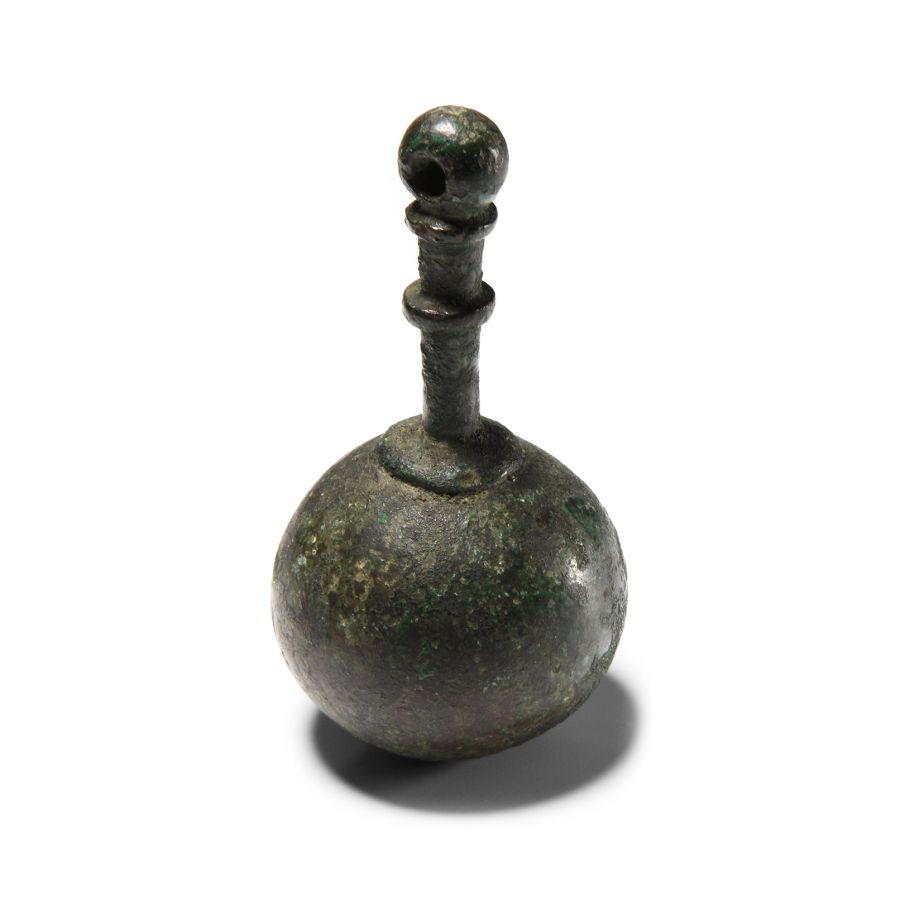
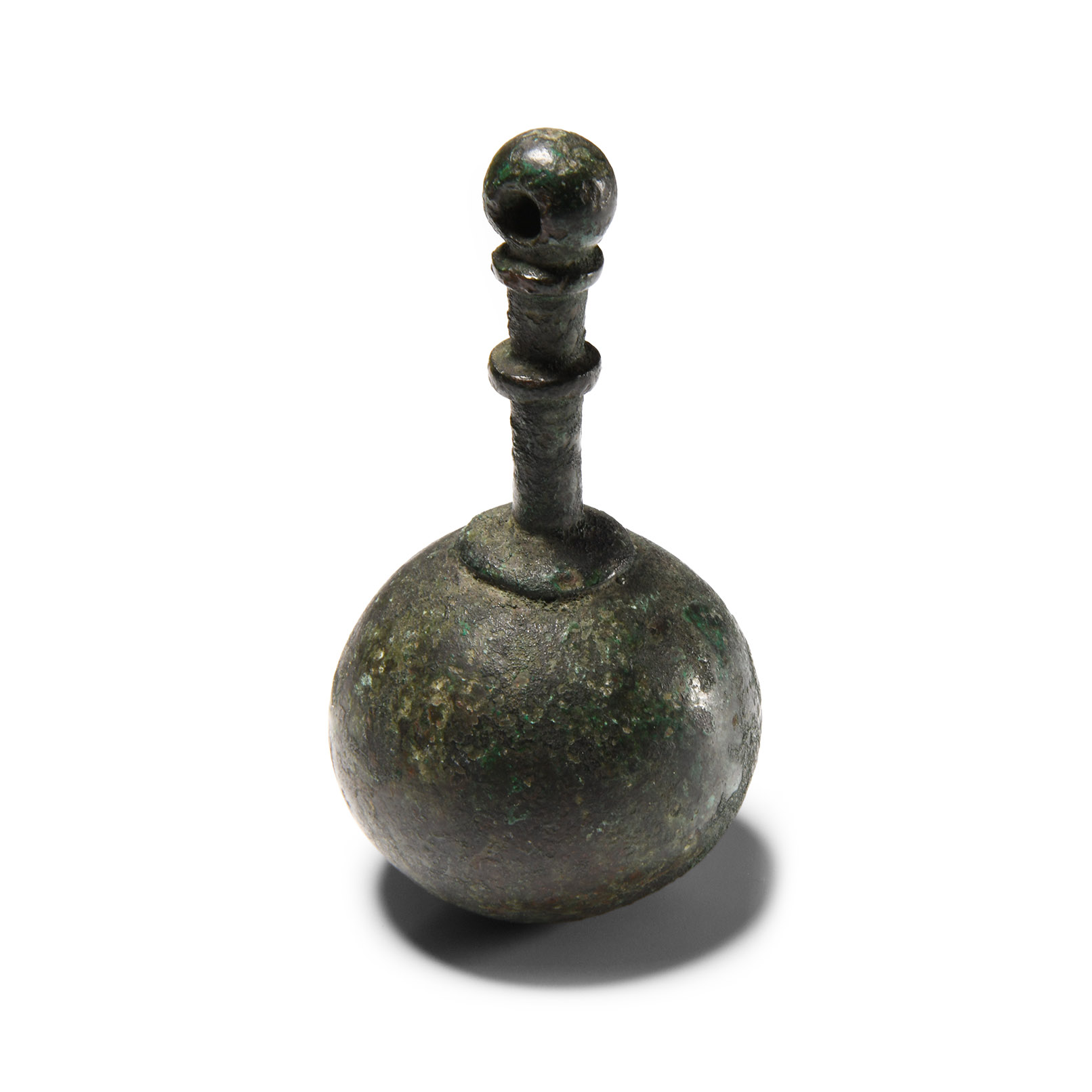
Roman Bronze Trade Weight
CIRCA 4TH-6TH CENTURY A.D.
4 1/8 in. (351 grams, 10.4 cm).
Comprising a spherical body with shank and pierced knop finial; old collector's label with inked 'ancient Roman / 1st cent. / Exe. minster'. [No Reserve]
ProvenanceFrom a North London, UK, collection.
Ex Simmons Gallery, London E11, UK.
Cf. similar (but not identical) steelyard weight in the Metropolitan Museum of Art, accession no.00.13.8.
FootnotesThe weight was inserted inside the shaft of a steelyard arm, calibrated on three or more sides with lines and Roman numerals, each providing different scales of pondera (weights).
CONDITIONTimeLine Auctions follows a vetting process to ensure the authenticity and legality of all items, reinforcing our commitment to integrity and responsible trading. Each antiquity, antique, and coin lot undergoes thorough examination by a vetting committee of at least ten external specialists, professional trade association members, scientists, and archaeologists: Our Vetting Process
AUCTIONS:
TimeLine is a leading auction house specialising in antiquities, ancient art, collectables, natural history, coins, medals, and books. Our auctions offer museums, collectors, historians, and enthusiasts the opportunity to acquire unique and historically significant pieces.
-
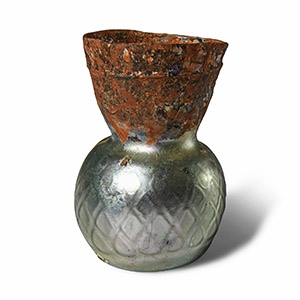
Roman Iridescent Glass Vase with Chequered Pattern
1st-4th century A.D.Estimate: £300 - 400 (‡+bp*)
Opening Bid: £150
With a rounded body decorated with a lozenge 'net' motif, broad flared neck, kick-up to base; extensive iridescence, repaired. 49 grams, 11 cm high
Acquired early 1990s. Ex private American collection; thence by descent. Private collection since 1998. -
.jpg)
Roman Celestial Intaglio Gemstone
Circa 2nd-3rd century A.D.Sold for (Inc. bp): £520
With crescent moon among three starbursts; supplied with a museum-quality impression. 0.96 grams, 14 mm
From the collection of a Swiss gentleman formed in Europe from 1970-1980s; thence by descent from the family in London. -
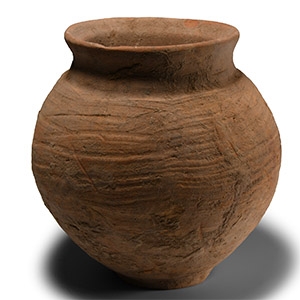
Roman Terracotta Jar
1st-4th century A.D.Sold for (Inc. bp): £72
With globular profile and broad everted rim, roughened circumferential banding to the shoulder. 896 grams, 17 cm wide
Acquired 1980-2015. Ex Abelita family collection.
