
Loading, please wait...
LOT 0176
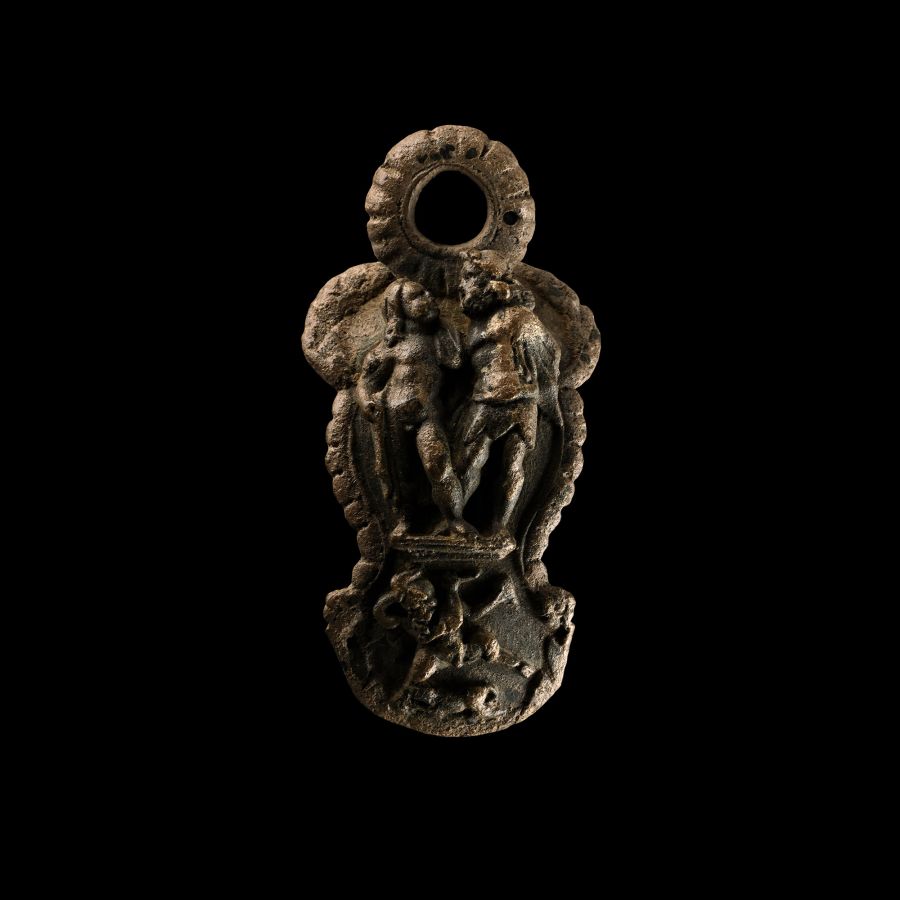
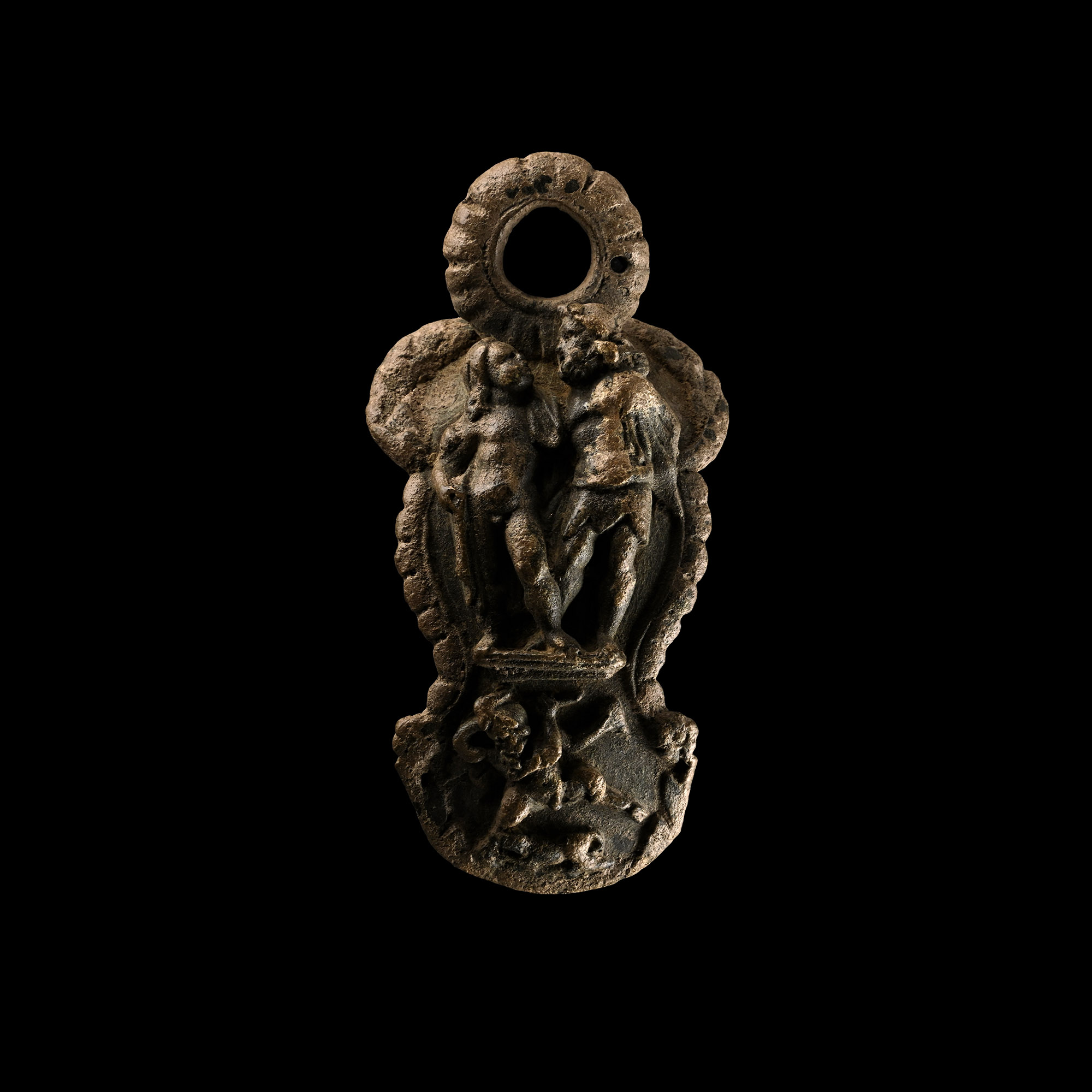
Roman Bronze Three-Dimensional Vessel Mount
2ND-3RD CENTURY A.D.
5 3/8 in. (286 grams, 13.8 cm).
Comprising a plaque of three conjoined lobes with segmented border; at the top, a loop with segmented rim; vignette with a nude male with shoulder-length hair embracing a taller bearded figure with kilt and mantle to left shoulder (Hercules?); below, a satyr with horns and goat's legs beset by hunting dogs.
ProvenanceAcquired in 1992.
Private collection, thence by descent.
Private collection, since the late 1990s.
This lot has been checked against the Interpol Database of stolen works of art and is accompanied by a search certificate number no.12865-241702.
Cf. for a similar mount Boucher, S., Inventaire des Collections Publiques Françaises - 17 Vienne: Bronzes Antiques, Paris, 1971, item 316, pp.156-157.
FootnotesVessel mounts of this form are not a commonly recovered artefact type and the presence of two figures instead one is a very singular feature. We can suppose that the mount was attached to a vessel of large dimensions and of a certain importance.
CONDITIONTimeLine Auctions follows a vetting process to ensure the authenticity and legality of all items, reinforcing our commitment to integrity and responsible trading. Each antiquity, antique, and coin lot undergoes thorough examination by a vetting committee of at least ten external specialists, professional trade association members, scientists, and archaeologists: Our Vetting Process
AUCTIONS:
TimeLine is a leading auction house specialising in antiquities, ancient art, collectables, natural history, coins, medals, and books. Our auctions offer museums, collectors, historians, and enthusiasts the opportunity to acquire unique and historically significant pieces.
LOT 0176
Roman Bronze Three-Dimensional Vessel Mount
Estimate £3,000 - 4,000€3,480 - 4,640 (for guidance only)$4,050 - 5,400 (for guidance only)
-
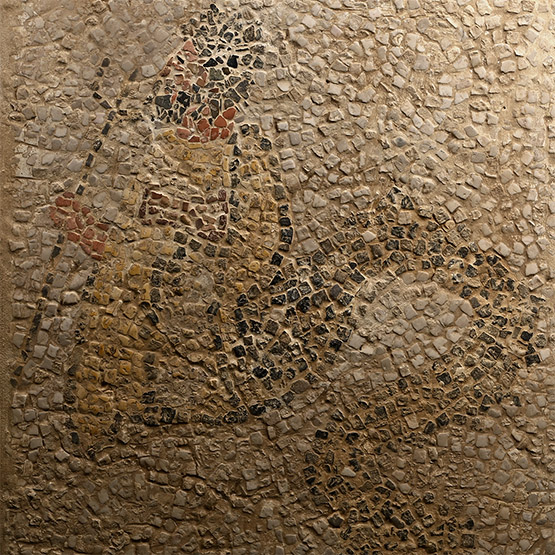
Roman Mosaic with Neptune Holding Trident
Eastern Empire, 1st-3rd century A.D. and laterSold for (Inc. bp): £1,430
Floor panel depicting Neptune (Greek Poseidon) or Triton, god of the sea, wielding a trident in his extended hand, piscine body coiled behind; some reconstitution, restored and mounted in a modern matrix and frame for display. 41.9 kg, 93.5 x 83 cm
Ex property of a Munich collector; previously acquired in the 1980s. From the stock of a UK gallery circa 2019.
Neptune is the god of the sea, freshwater, earthquakes, and horses, the Roman counterpart to the Greek god Poseidon, seen here wielding a trident but often depicted with horses or dolphins. -
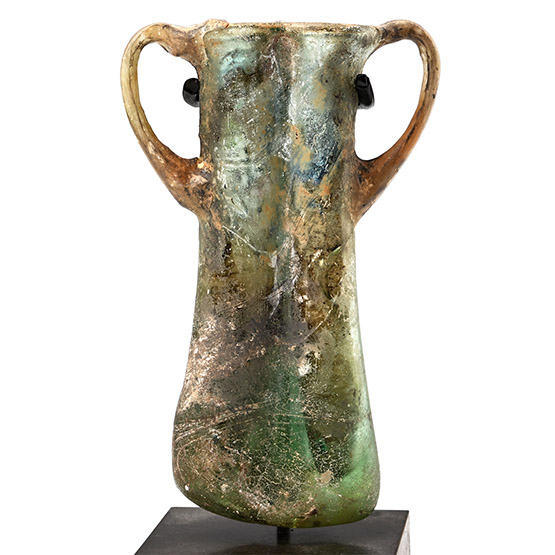
Roman Glass Double Balsamarium
Circa 4th century A.D.Estimate: £300 - 400 (+bp*)
Opening Bid: £160
Formed as a pair of conjoined tubes with slightly flared tops and thickened rims; applied handles at the shoulders joined to the rim; glass with areas of iridescence; mounted on a custom-made stand. 85 grams, 10.9 cm
From a London, UK, collection of glass, 1970-2000s. -
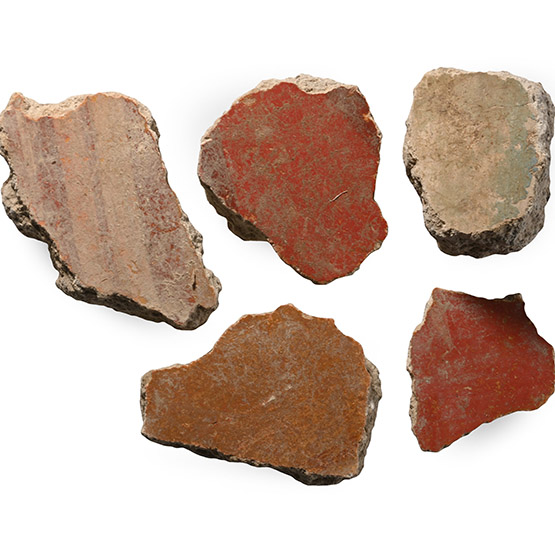
Roman Fresco Wall Plaster Collection
1st century A.D.Sold for (Inc. bp): £117
Fragments of wall plaster with rendered surface painted with mainly red, pale blue and white detailing; some with impression of timber laths to the reverse. 496 grams total, 7-10.7 cm
Acquired in the 19th century. Ex Jeger collection, Switzerland. UK gallery, early 2000s.
These small fragments, showing analogies with fragments from Pompeii, seem to belong to the second style of Roman painting, red panels representing highlights and shadows, decorated with vegetal interlaces. Some panels were probably framed by a red grenade fillet. A fragment shows alternate blue and red colours over a cream background, maybe pertinent to a socle.
