
Loading, please wait...
LOT 0696
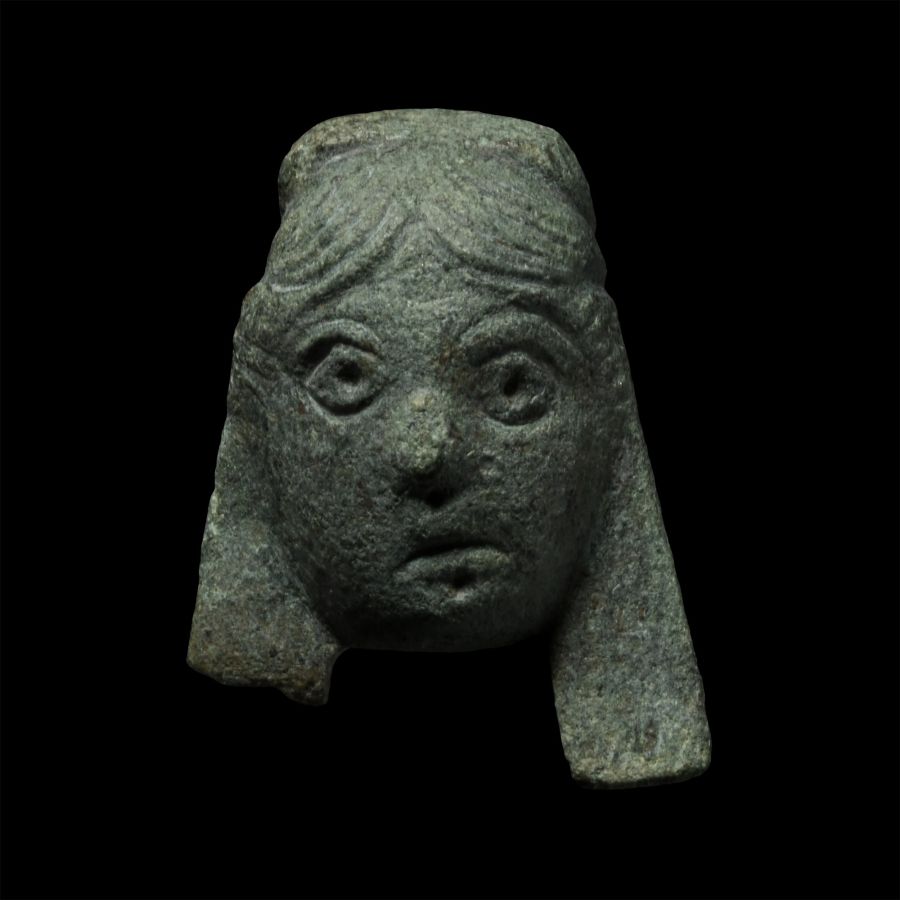
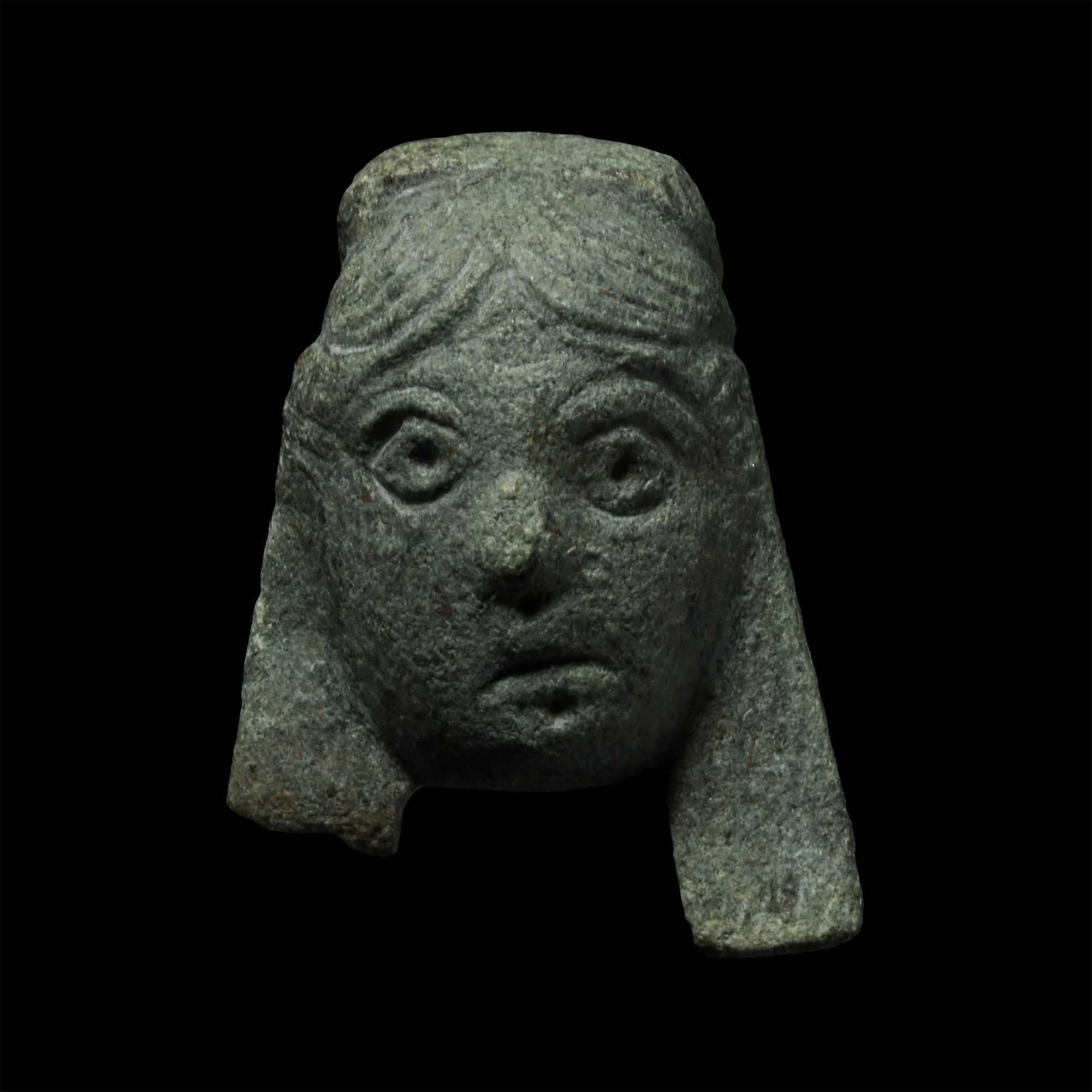
Roman Bronze Theatre Mask Mount
1ST-2ND CENTURY A.D.
1 1/4 in. (13.8 grams, 33 mm).
Domed mount with down-turned mouth and small almond-shaped eyes, hair parted at the middle and swept to the sides, stud at the rear. [No Reserve]
ProvenanceFrom an English private collection, 1980s.
Property of a London, UK, antiquarian.
TimeLine Auctions follows a vetting process to ensure the authenticity and legality of all items, reinforcing our commitment to integrity and responsible trading. Each antiquity, antique, and coin lot undergoes thorough examination by a vetting committee of at least ten external specialists, professional trade association members, scientists, and archaeologists: Our Vetting Process
AUCTIONS:
TimeLine is a leading auction house specialising in antiquities, ancient art, collectables, natural history, coins, medals, and books. Our auctions offer museums, collectors, historians, and enthusiasts the opportunity to acquire unique and historically significant pieces.
-
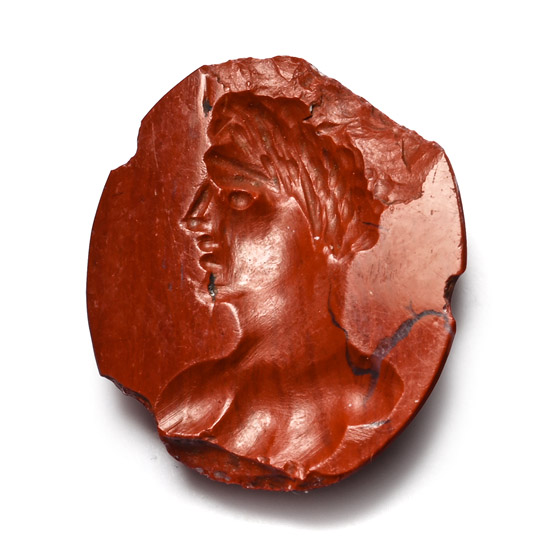
Roman Red Jasper Gemstone with Apollo
2nd-3rd century A.D.Sold for (Inc. bp): £98
With intaglio bust of Apollo; supplied with a museum-quality impression. 0.87 grams, 15.92 mm
From the private collection of a European gentleman (1942-2024), formed since the 1970s. -
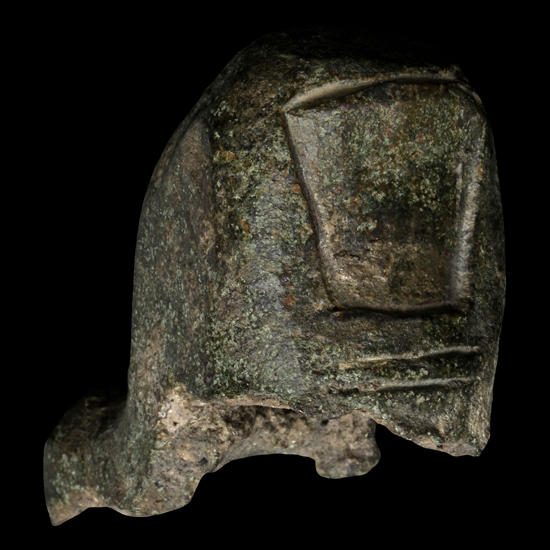
Twice Life-Size Roman Bronze Statue Thumb
1st-4th century A.D.Sold for (Inc. bp): £390
The tip of a flexed thumb with nail detailing, two creases beneath the nail. 163 grams, 61 mm
From the private collection of a European gentleman (1942-2024), formed since the 1970s. -
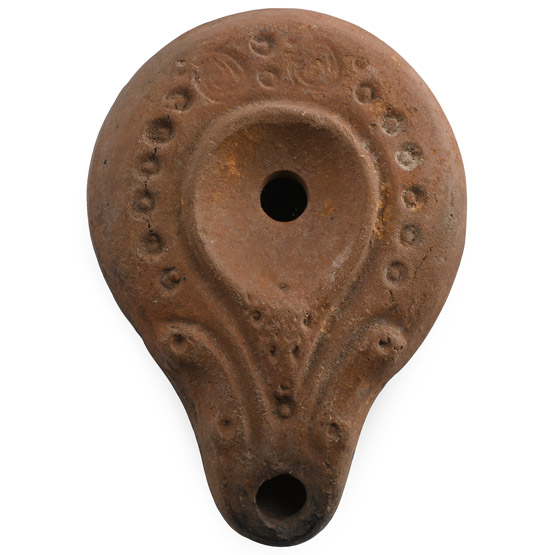
Roman Terracotta Slipper Oil Lamp
Circa 4th-5th century A.D.Sold for (Inc. bp): £130
Piriform in plan with volute nozzle, band of impressed pellets to the shoulder. 40 grams, 79 mm
Acquired at a London antiques fair in the 1990s. From the private collection of a Devon, UK, lady.
Some lamps, with or without a central handle, with one or more nozzles, either opposed or contiguous, could be of Corinthian production, representing a fine example of remarkable quality and finesse. On the other hand, some examples can be considered a local/regional production in the Eastern Roman Empire.
