
Loading, please wait...
LOT 0670
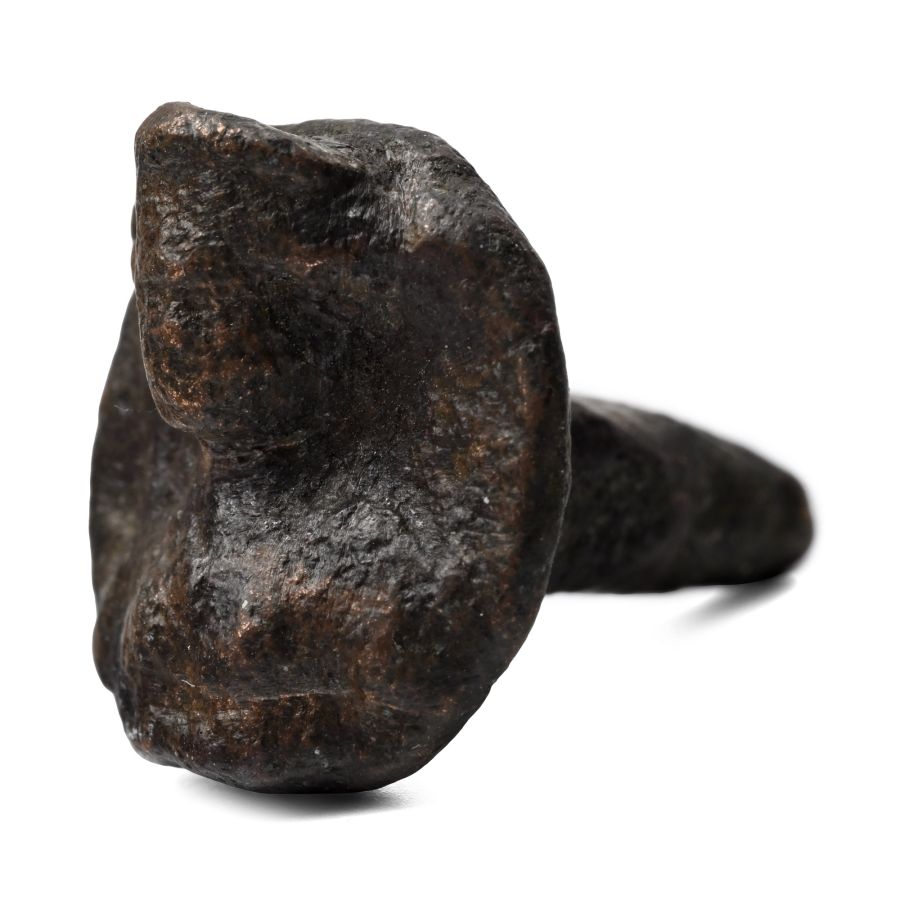
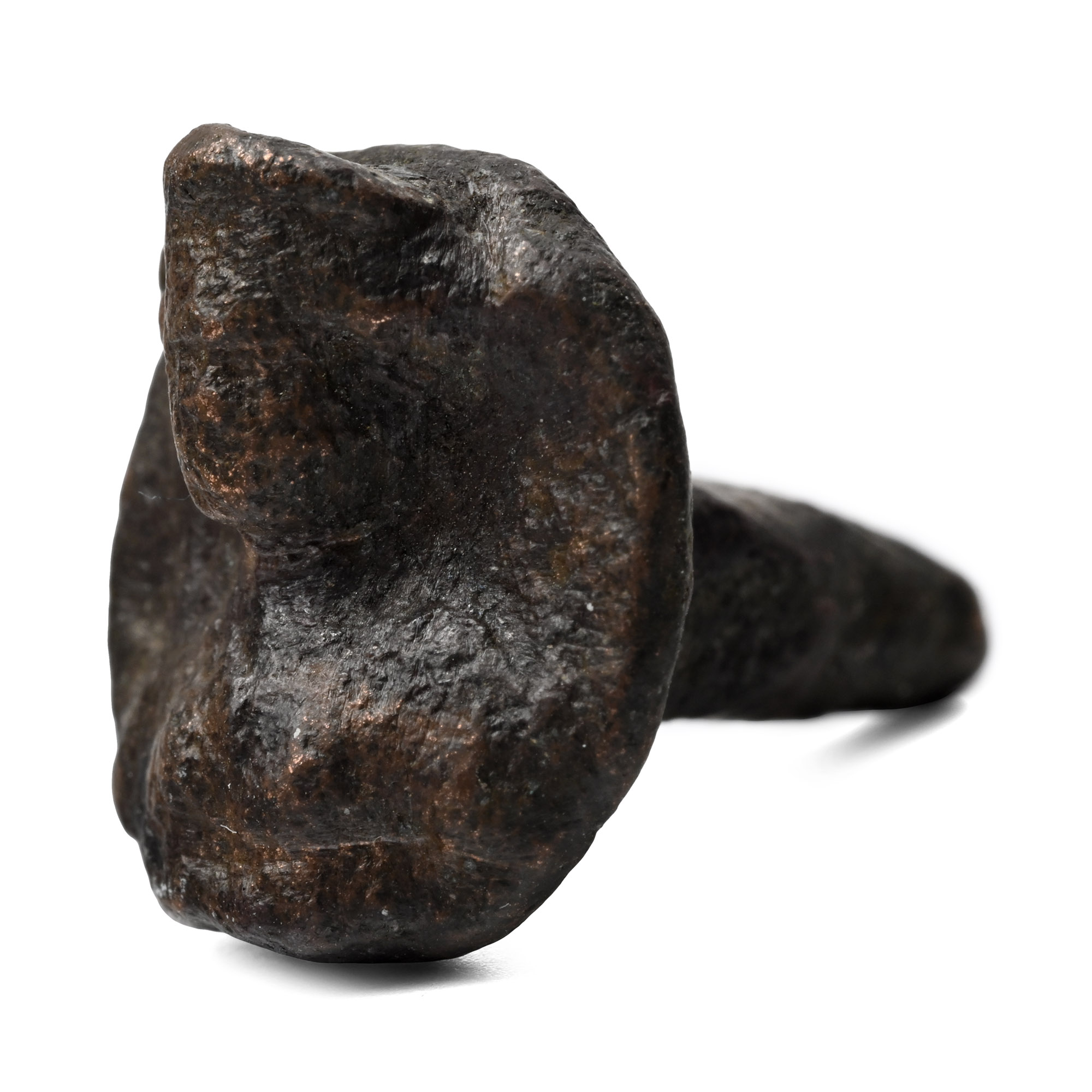
Roman Bronze Sword Baldric Stud with Bust
1ST-4TH CENTURY A.D.
7/8 in. (10.3 grams, 22 mm).
With discoid head and square-section shank, female bust modelled in the half-round. [No Reserve]
ProvenanceFrom the collection of a gentleman, acquired on the London art market in the 1990s.
This lot is accompanied by an illustrated lot declaration signed by the Head of the Antiquities Department, Dr Raffaele D'Amato.
Cf. for similar studs of Flavian Age Radman Livaja, I., Militaria Sisciensia, Finds of the Roman military equipment in Sisak in the holdings of the archaeological Museum in Zagreb, Zagreb, 2004, cat.212-248.
CONDITIONTimeLine Auctions follows a vetting process to ensure the authenticity and legality of all items, reinforcing our commitment to integrity and responsible trading. Each antiquity, antique, and coin lot undergoes thorough examination by a vetting committee of at least ten external specialists, professional trade association members, scientists, and archaeologists: Our Vetting Process
AUCTIONS:
TimeLine is a leading auction house specialising in antiquities, ancient art, collectables, natural history, coins, medals, and books. Our auctions offer museums, collectors, historians, and enthusiasts the opportunity to acquire unique and historically significant pieces.
-
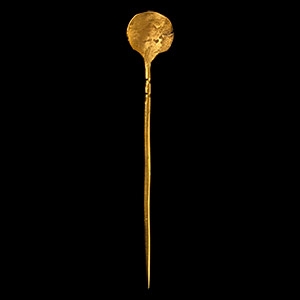
Roman Gold Pin
1st-3rd century A.D.Sold for (Inc. bp): £1,560
Comprising a slightly dished discoid head and slender shank with baluster. 4.77 grams, 80 mm
Acquired in the 1992. Private collection, Switzerland, thence by descent. Private collection, since the late 1990s. This lot is accompanied by an illustrated lot declaration signed by the Head of the Antiquities Department, Dr Raffaele D'Amato. -
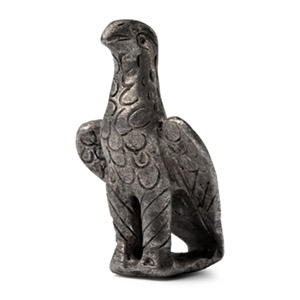
Roman Silver Eagle Statuette
1st-3rd century A.D.Sold for (Inc. bp): £650
Standing on an integral base with its wings slightly opened, head turned to the right, large incised eyes and hooked beak, incised feather detailing to the body and wings. 18.4 grams, 34 mm
Acquired in 1993. Private collection, thence by descent. Private collection, since the late 1990s. This lot is accompanied by an illustrated lot declaration signed by the Head of the Antiquities Department, Dr Raffaele D'Amato. -
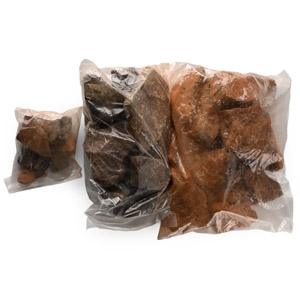
Roman Roof Tile and Pottery Sherd Group
1st-4th century A.D.Sold for (Inc. bp): £26
A large quantity of variously sized fragments. 2.81 kg total, 3.1-10.6 cm
Found whilst searching in Devon, Somerset and Wiltshire, UK. This lot is accompanied by an illustrated lot declaration signed by the Head of the Antiquities Department, Dr Raffaele D'Amato.
N.B. This lot is for UK buyers only.
