
Loading, please wait...
_900x900.jpg "Roman Bronze Swan-Headed Wine Strainer")
_200x200.jpg "Roman Bronze Swan-Headed Wine Strainer")
.jpg "Roman Bronze Swan-Headed Wine Strainer")
LOT 0726
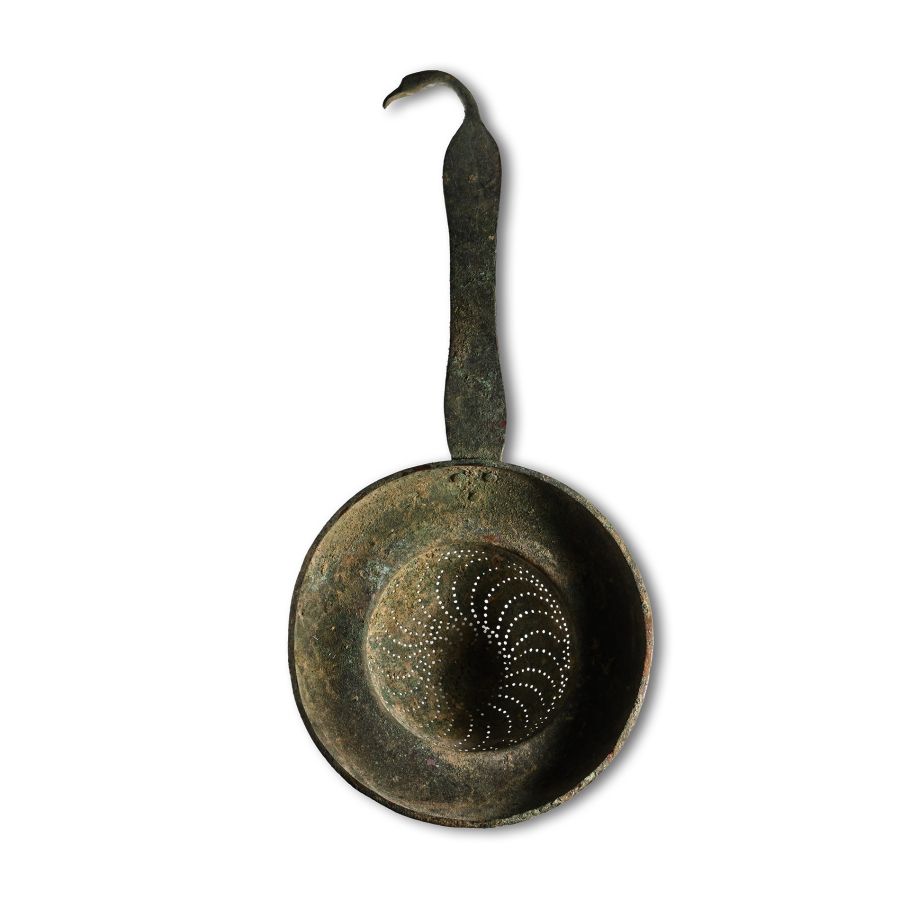
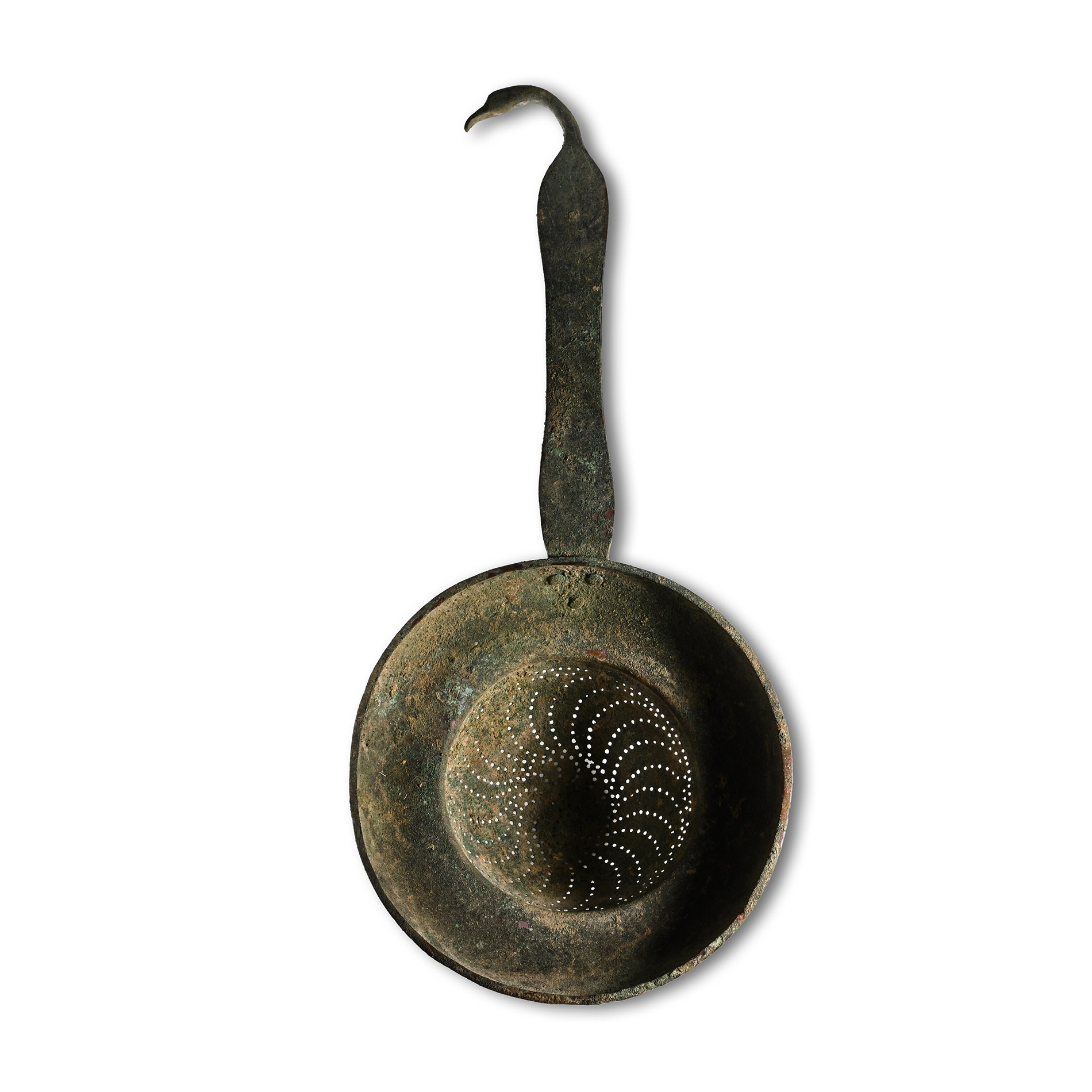
Roman Bronze Swan-Headed Wine Strainer
1ST-3RD CENTURY A.D.
10 3/4 in. (159 grams, 27.4 cm).
Cup-shaped body with flared and curved rim, flat-section handle with swan-head finial; the body with pierced rosette pattern.
ProvenanceAcquired in the mid 1980s-1990s.
Private collection, Switzerland, thence by descent.
Private collection, since the late 1990s.
This lot has been checked against the Interpol Database of stolen works of art and is accompanied by search certificate number no.12233-222331.
This lot has been cleared against the Art Loss Register database, and is accompanied by an illustrated lot declaration signed by the Head of the Antiquities Department, Dr Raffaele D’Amato.
Cf. similar item in the British Museum, London, under accession no.1878,1012.24.
CONDITIONTimeLine Auctions follows a vetting process to ensure the authenticity and legality of all items, reinforcing our commitment to integrity and responsible trading. Each antiquity, antique, and coin lot undergoes thorough examination by a vetting committee of at least ten external specialists, professional trade association members, scientists, and archaeologists: Our Vetting Process
AUCTIONS:
TimeLine is a leading auction house specialising in antiquities, ancient art, collectables, natural history, coins, medals, and books. Our auctions offer museums, collectors, historians, and enthusiasts the opportunity to acquire unique and historically significant pieces.
LOT 0726
Roman Bronze Swan-Headed Wine Strainer
Estimate £3,000 - 4,000€3,480 - 4,640 (for guidance only)$4,050 - 5,400 (for guidance only)
-
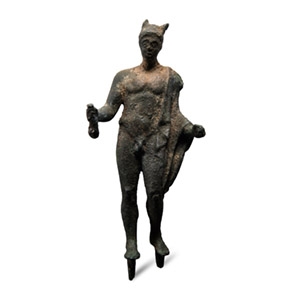
Roman Bronze Mercury Statuette
1st-2nd century A.D.Sold for (Inc. bp): £650
Modelled standing nude wearing the winged petasos and with a bag of coins in his extended right hand, mantle over his left shoulder; attachment peg to the underside of each foot. 209 grams, 12.6 cm
English private collection. This lot is accompanied by an illustrated lot declaration signed by the Head of the Antiquities Department, Dr Raffaele D’Amato. -
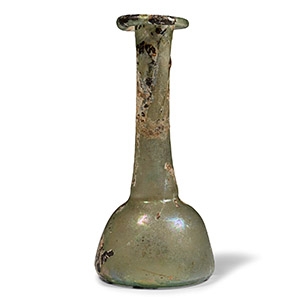
Roman Iridescent Glass Flask
1st-2nd century A.D.Sold for (Inc. bp): £98
With domed body and pontil base, tall neck with trumpet-shaped mouth and rolled rim; some iridescence. 80 grams, 16.3 cm
Ex London art market 1990s. From a London, UK, collection. This lot is accompanied by an illustrated lot declaration signed by the Head of the Antiquities Department, Dr Raffaele D’Amato. -
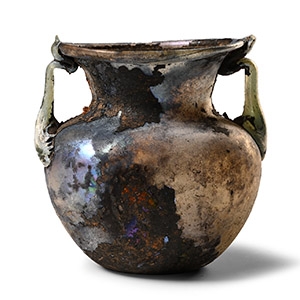
Roman Glass Double-Handled Iridescent Flask
4th century A.D.Estimate: £600 - 800 (+bp*)
Opening Bid: £333
With squat bulbous body, dimple base, flared trumpet neck; applied trails to the shoulder, applied strap handles to the shoulders. 47 grams, 72 mm
From an important London, UK, collection, 1970-1990s. This lot is accompanied by an illustrated lot declaration signed by the Head of the Antiquities Department, Dr Raffaele D’Amato.
