
Loading, please wait...


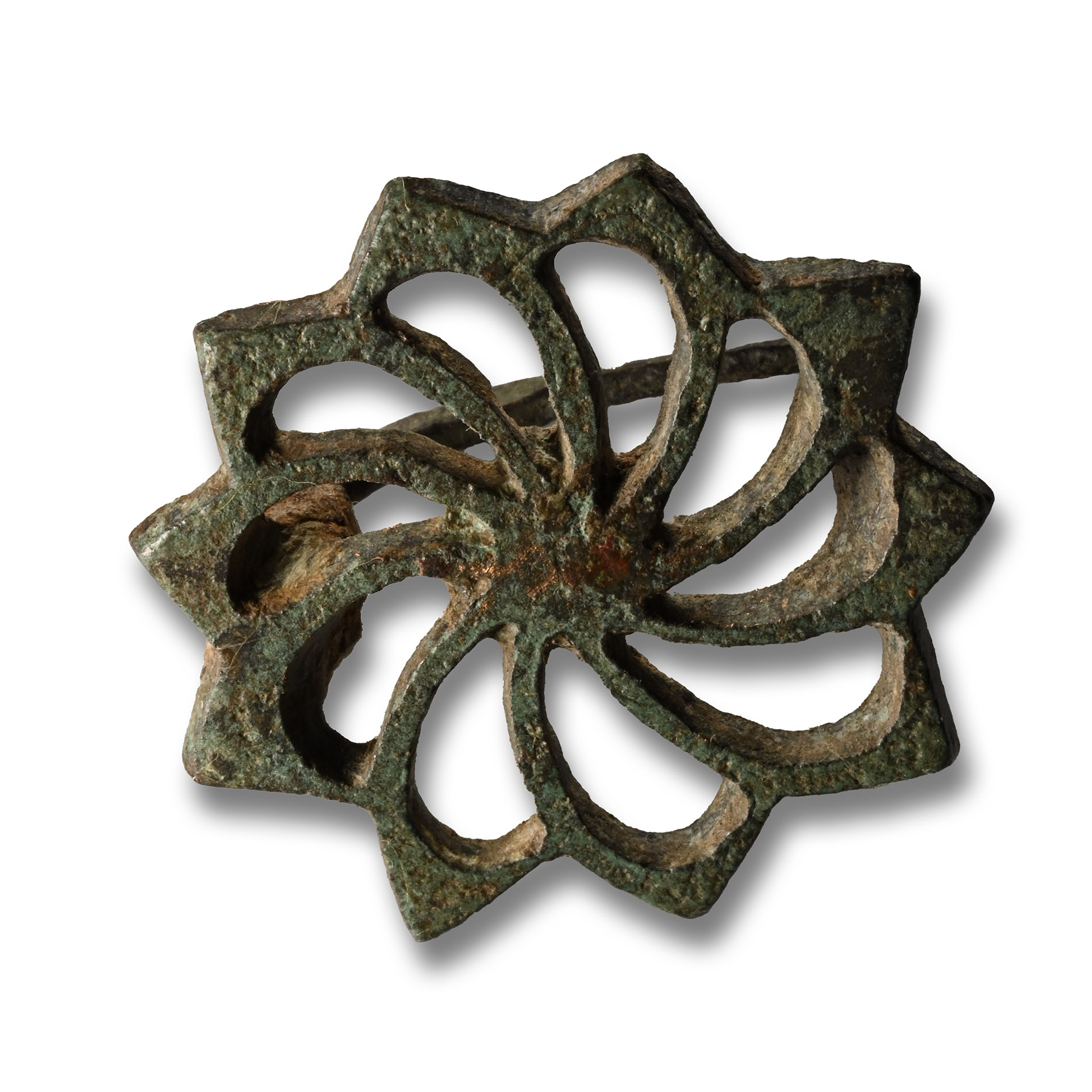
LOT 0704
Roman Bronze Sun Wheel Plate Brooch
2ND CENTURY A.D.
1 3/8 in. (11.4 grams, 36 mm).
With dentilled rim, openwork radiating cured arms from a central hub;pin, pin-lugs and catch to the reverse. [No Reserve]
ProvenanceFrom an English collection formed before 2000.
This lot is accompanied by an illustrated lot declaration signed by the Head of the Antiquities Department, Dr Raffaele D’Amato.
Cf. Hattatt, R., Ancient Brooches and Other Artefacts, Oxford, 1989, item 1696.
CONDITIONTimeLine Auctions follows a vetting process to ensure the authenticity and legality of all items, reinforcing our commitment to integrity and responsible trading. Each antiquity, antique, and coin lot undergoes thorough examination by a vetting committee of at least ten external specialists, professional trade association members, scientists, and archaeologists: Our Vetting Process
AUCTIONS:
TimeLine is a leading auction house specialising in antiquities, ancient art, collectables, natural history, coins, medals, and books. Our auctions offer museums, collectors, historians, and enthusiasts the opportunity to acquire unique and historically significant pieces.
-
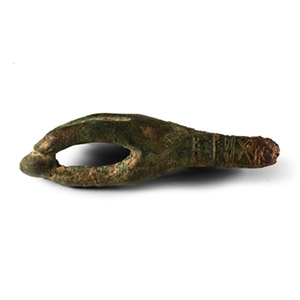
Roman Bronze Key Handle in the Shape of a Hand Holding Fruit
1st-3rd century A.D.Estimate: £600 - 800 (+bp*)
Opening Bid: £333
Formed as a lady's right hand with thumb and forefinger extended to hold a grape; iron shank to the wrist. 157 grams, 10.1 cm
Ex Cambridgeshire, UK, collection, 1990s. This lot is accompanied by an illustrated lot declaration signed by the Head of the Antiquities Department, Dr Raffaele D’Amato. -
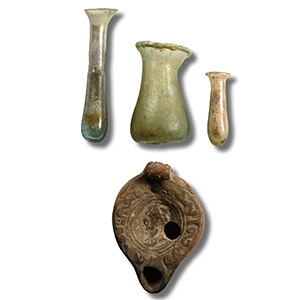
Romano-British Glass Vessel and Terracotta Oil Lamp Group
1st-2nd century AD.Sold for (Inc. bp): £117
Comprising: a small unguentarium with iridescent surface; a small flask with rolled rim; terracotta oil lamp with lug handle. 71 grams total, 41-75 mm
From an old collection formed before WWII, and believed to have been found at Worcester, UK. Acquired from Alan Cherry, Bournemouth, UK, in 2007. Ian Wilkinson collection, Nottinghamshire, UK, formed since 1985. This lot is accompanied by an illustrated lot declaration signed by the Head of the Antiquities Department, Dr Raffaele D’Amato. -
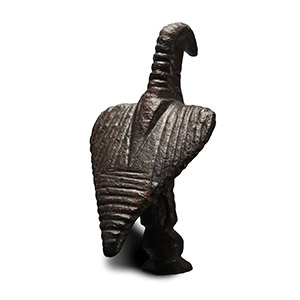
Late Roman Bronze Eagle Statuette
5th century A.D.Sold for (Inc. bp): £130
Depicted standing on a globe with its wings spread open, elongated neck and stylised feather detailing to the body and wings. 40 grams, 51.6 mm
Ex German art market, 2000s. Acquired from an EU collector living in London. From the collection of Surrey, UK, gentleman. This lot is accompanied by an illustrated lot declaration signed by the Head of the Antiquities Department, Dr Raffaele D’Amato.
