
Loading, please wait...
LOT 0657
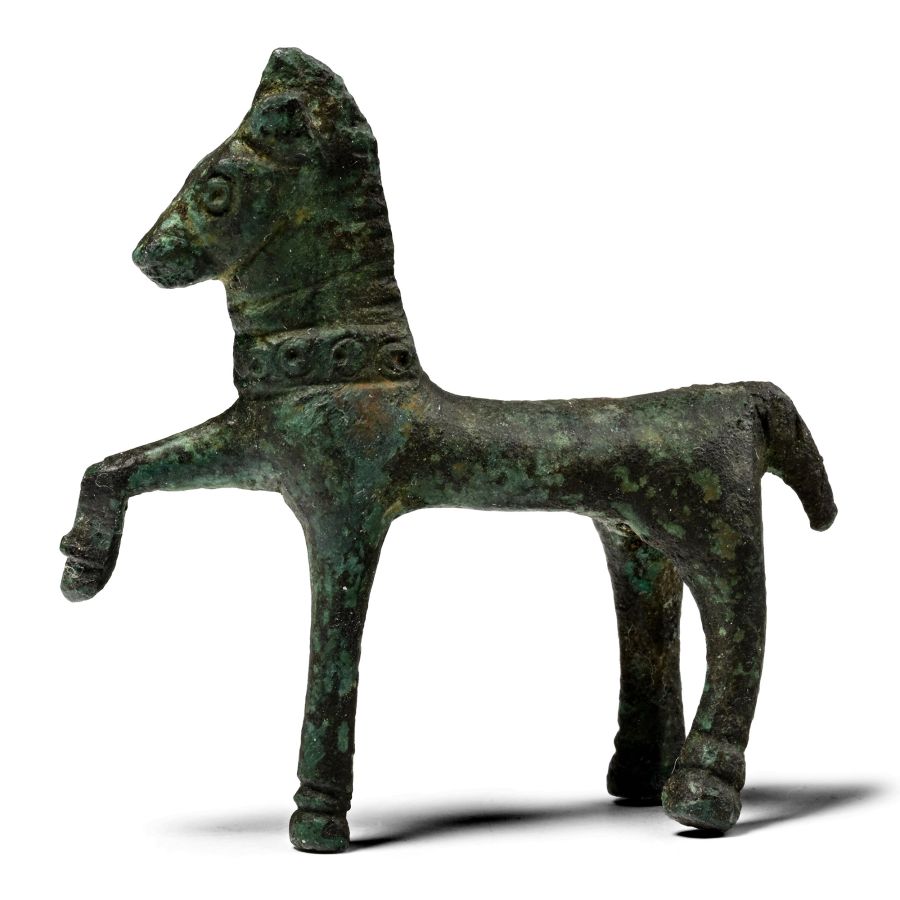
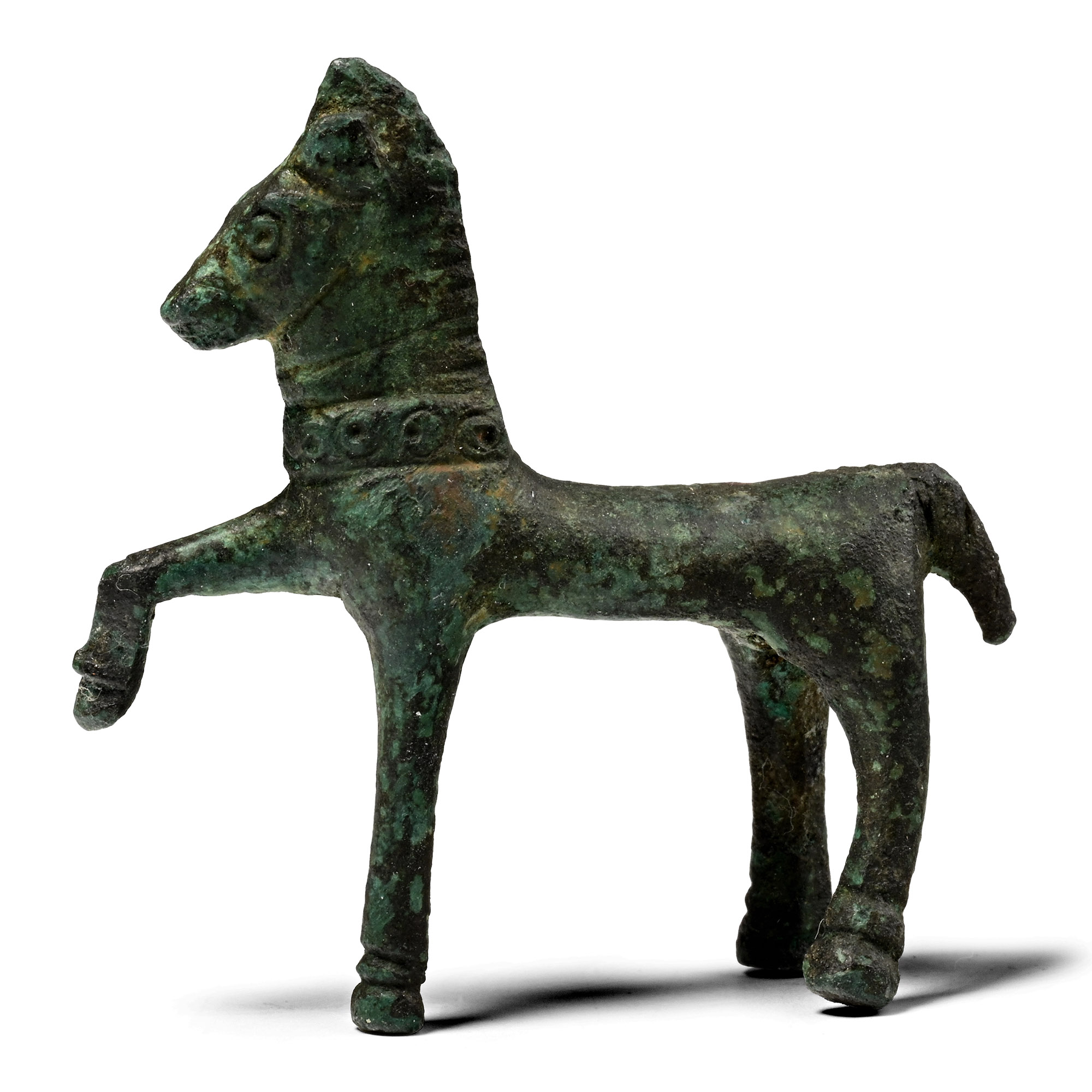
Roman Bronze Stepping Horse Statuette
100-300 A.D.
2 in. (27.44 grams, 49 mm).
Modelled in the round with an elongated body and legs, right foreleg raised, head turned slightly to the right, a stamped ring-and-dot collar around the neck and eyes indicated by ring-and-dot motifs. [No Reserve]
ProvenanceFrom the private collection of a European gentleman (1942-2024), formed since the 1970s.
LiteratureCf. similar statuette in PAS NMS-70E0B8.
CONDITIONTimeLine Auctions follows a vetting process to ensure the authenticity and legality of all items, reinforcing our commitment to integrity and responsible trading. Each antiquity, antique, and coin lot undergoes thorough examination by a vetting committee of at least ten external specialists, professional trade association members, scientists, and archaeologists: Our Vetting Process
AUCTIONS:
TimeLine is a leading auction house specialising in antiquities, ancient art, collectables, natural history, coins, medals, and books. Our auctions offer museums, collectors, historians, and enthusiasts the opportunity to acquire unique and historically significant pieces.
-
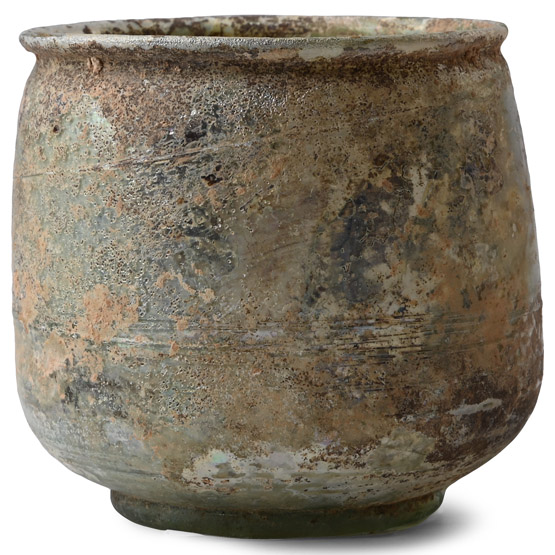
Roman Iridescent Glass Cup with Trail
Circa 1st-4th century A.D.Sold for (Inc. bp): £312
Drum-shaped body on a low basal ring and everted rim, bands to the outer face; iridescent surface. 33.8 grams, 71 mm
From a London, UK, collection of glass, 1970-2000s. -
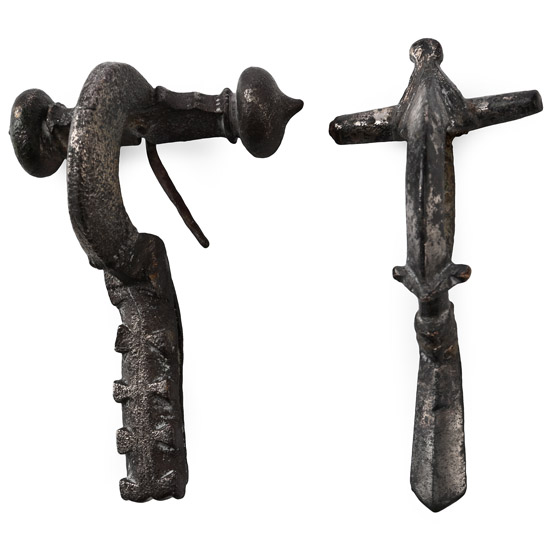
Roman Silvered Bronze Crossbow Brooch Group
4th century A.D.Estimate: £100 - 140 (+bp*)
Current Winning Bid: £60
Comprising two crossbow brooches, each with a keeled bow and flaring foot, both with a partial pin and integral catch beneath the footplate. 64.9 grams total, 62-66 mm
From an Essex collection. Private collection, Suffolk. -
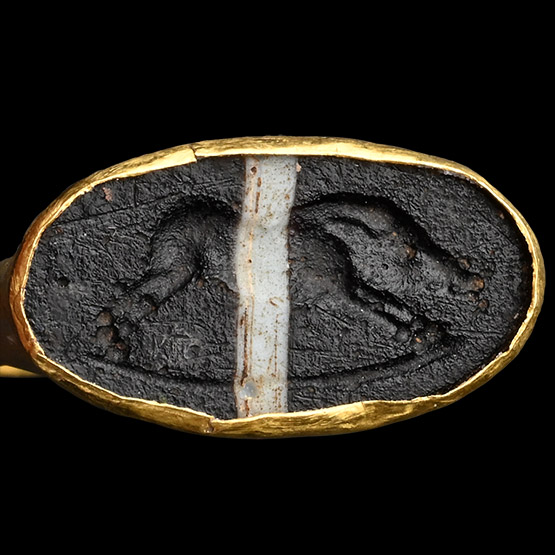
Roman Gold Ring with Greek Boar Gem
4th century B.C.-1st century B.C.Sold for (Inc. bp): £780
Hollow-formed and widening at the shoulders to a high elliptical bezel set with a black and white banded glass intaglio imitating striped sardonyx, depicting a running boar in profile on a baseline; Greek letters KΠ on the surface under the boar; supplied with a museum-quality impression. 1.93 grams, 22.40 mm overall, 15.77 mm internal diameter (approximate size British J, USA 4 3/4, Europe 8.69, Japan 8)
Ex private collection, Contessa L.G., since the 1980s. Private collection, acquired in 1997.
The motif and style, a running boar with a tube-like body, seem to fit into Boardman's Wyndham Cook Group, and could be ascribed to the Graeco-Persian period, despite the fact that the gemstone was later incorporated into a Roman ring.
