
Loading, please wait...
LOT 0670
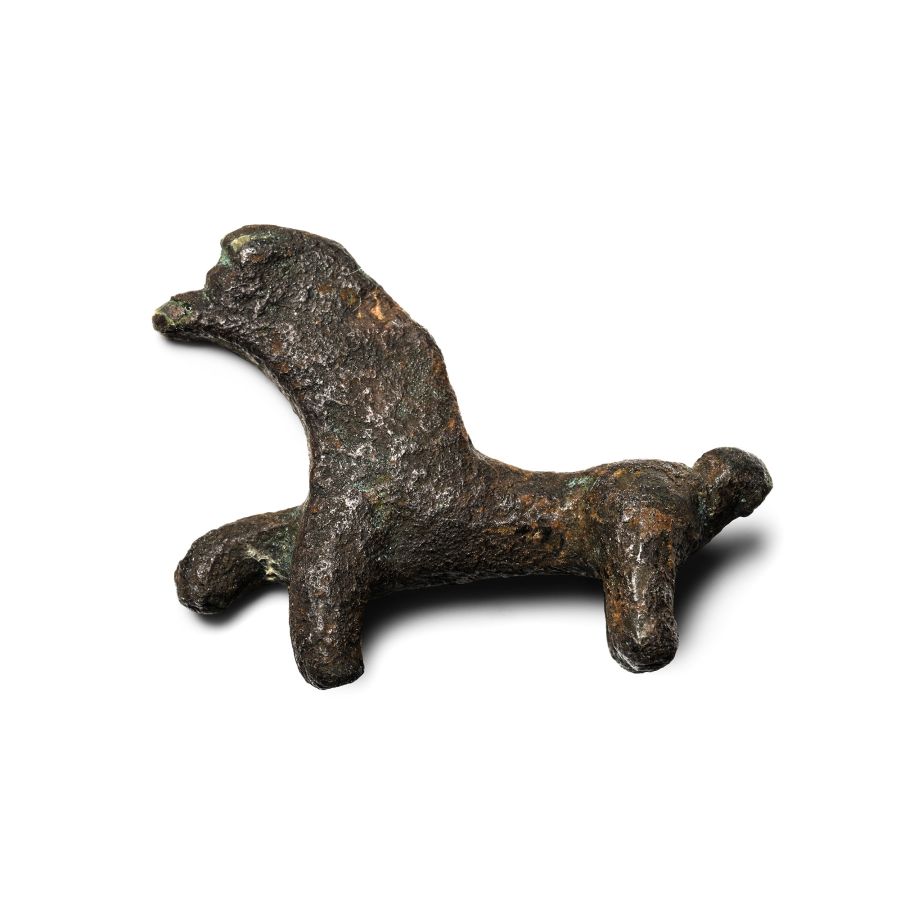
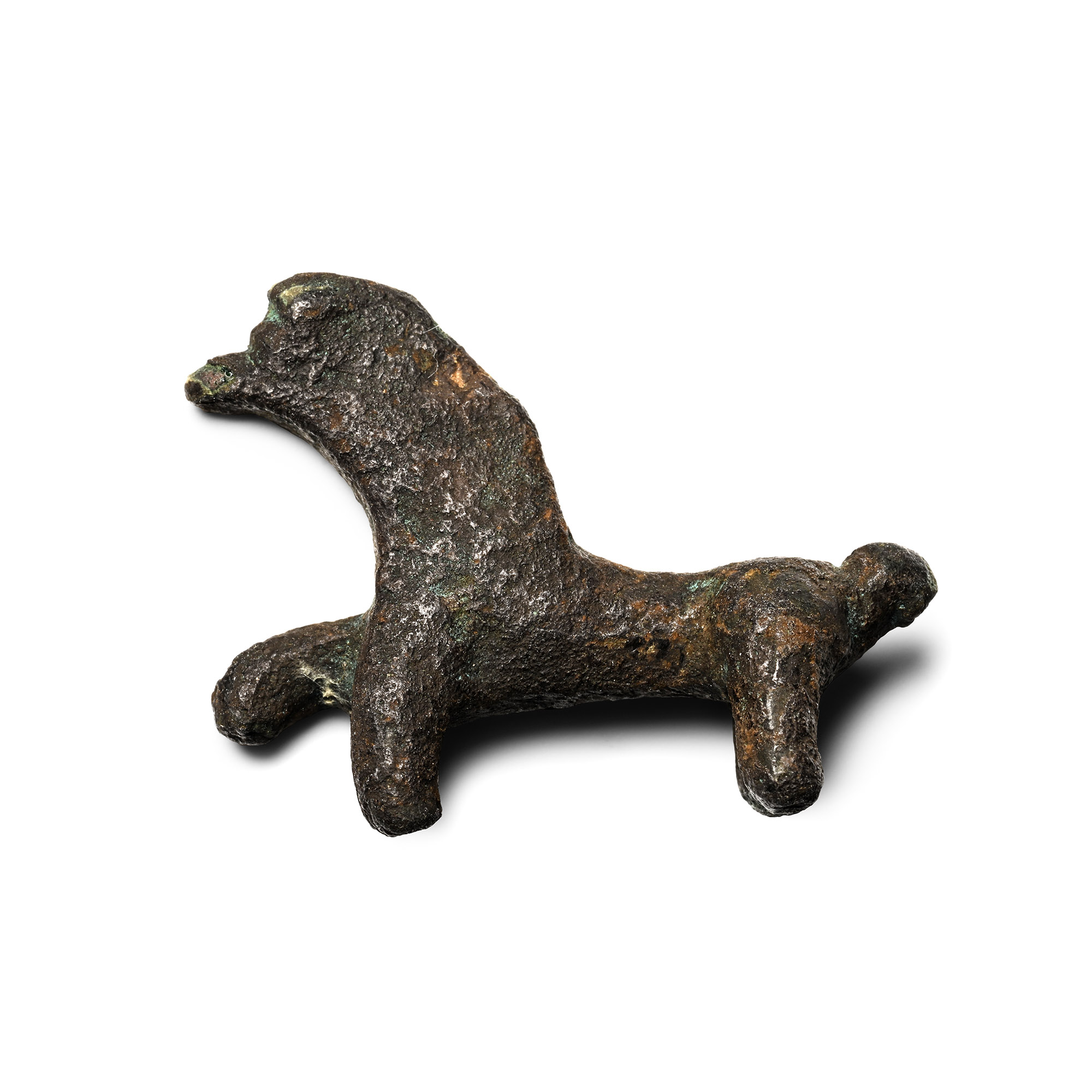
Roman Bronze Stepping Horse Statuette
2ND-4TH CENTURY A.D.
1 3/8 in. (12.5 grams, 36 mm).
Stylised horse figure with short, stocky legs, curving neck and a narrow muzzle. [No Reserve]
ProvenanceFrom the private collection of a European gentleman (1942-2024), formed since the 1970s.
LiteratureCf. Rolland, H., Bronzes Antiques de Haute Provence, Paris, 1965, items 245, 247, for type.
CONDITIONTimeLine Auctions follows a vetting process to ensure the authenticity and legality of all items, reinforcing our commitment to integrity and responsible trading. Each antiquity, antique, and coin lot undergoes thorough examination by a vetting committee of at least ten external specialists, professional trade association members, scientists, and archaeologists: Our Vetting Process
AUCTIONS:
TimeLine is a leading auction house specialising in antiquities, ancient art, collectables, natural history, coins, medals, and books. Our auctions offer museums, collectors, historians, and enthusiasts the opportunity to acquire unique and historically significant pieces.
-
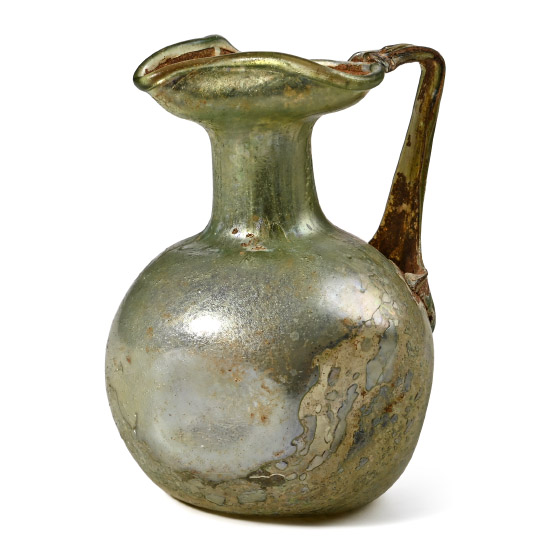
Roman Iridescent Green Glass Trefoil Oinochoe
3rd-4th century A.D.Sold for (Inc. bp): £351
Bulbous, dimpled body and a tubular neck with trefoil mouth, a strap handle to the rear. 28 grams, 79 mm
Acquired in the 1990s from London dealerships and auction houses. From the Lonson collection. -
.jpg)
Roman Bronze Statuette of Resting Hercules
3rd century A.D.Estimate: £4,000 - 6,000 (+bp*)
Opening Bid: £2,000
Depicted as lar and modelled nude in a standing pose with the right hand resting on the handle of his club, left arms supporting the lionskin mantle; hair cut short and beard textured. 715 grams, 15.5 cm
Acquired on the UK art market, 1990s. Private collection, New York, USA. Accompanied by an academic report by Dr Raffaele D'Amato. This lot has been checked against the Interpol Database of stolen works of art and is accompanied by search certificate number no.13295-255447.
The position of the statuette, belonging to the typology of ‘resting’ Hercules, is unconventional, probably belonging to a more archaic period prototype (Reinach, 1897, p.211,7). By the late 300s or early 200s B.C., the depiction of Hercules wearing the lion's skin over his head had fallen out of favour in Greek art. A worshipper probably placed this statuette in a sanctuary as an offering to the deity, or in his house as a symbol of protection. The majority of small Hercules statuettes are ex-votos, and the donors were possibly herdsmen, considering his function as protector of the flocks. Statuettes of the god found in provinces like Gallia, Britannia, or Pannonia might have appealed to Italic soldiers serving further north and could easily have been carried with them on campaign. -
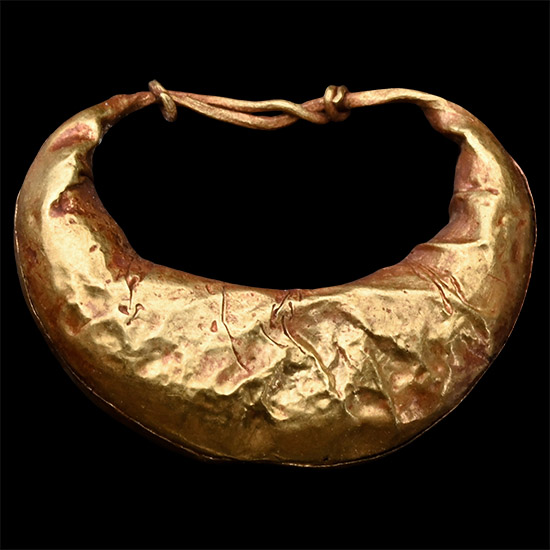
Roman Gold Crescent-Shaped Earring
1st-4th century A.D.Sold for (Inc. bp): £72
Hollow-formed with narrow ends developing into wires twisted around the shank. 0.49 grams, 14 mm
From the private collection of Mr Brian Edwards, New Malden, Surrey, UK, formed from the late 1970s-early 1980s; thence by descent.
