
Loading, please wait...


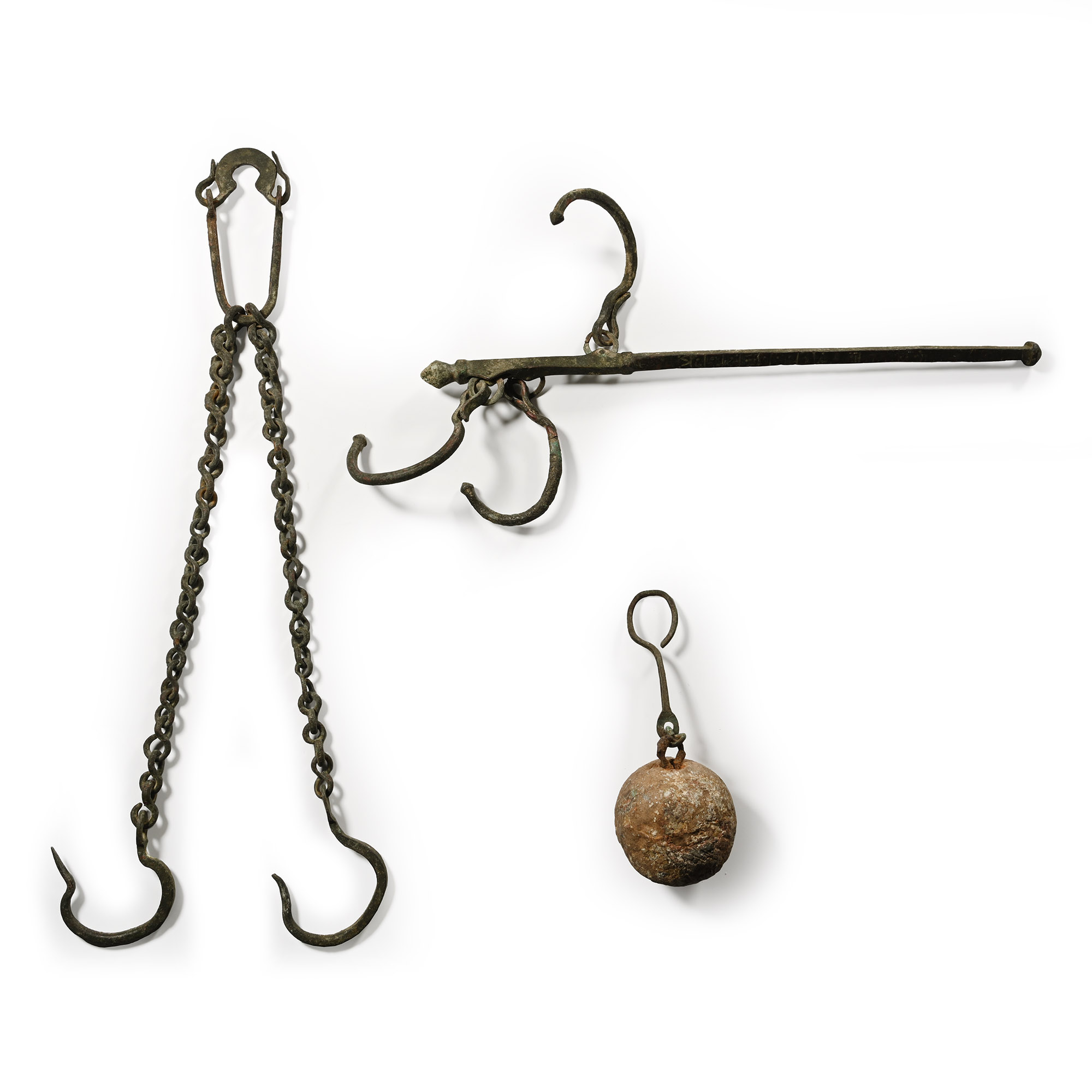
LOT 0959
Roman Bronze Steelyard Balance and Lead Weight
4TH CENTURY A.D.
5 1/2 - 15 in. (1.3 kg total, 13.9-38 cm).
Comprising a square-section arm with lug finial, notches to the upper face, suspension ring, counter weight lead ball, three hooks at the arm, chain with shackle and long hook. [3]
ProvenanceAcquired from Notaras Coins & Antiquities, Suffolk, UK, before 2000.
Property of a Bedfordshire, UK, private collector.
Accompanied by two illustrated collector's identification tags.
This lot is accompanied by an illustrated lot declaration signed by the Head of the Antiquities Department, Dr Raffaele D’Amato.
See The Metropolitan Museum, accession number 2008.355a-d, for similar.
CONDITIONTimeLine Auctions follows a vetting process to ensure the authenticity and legality of all items, reinforcing our commitment to integrity and responsible trading. Each antiquity, antique, and coin lot undergoes thorough examination by a vetting committee of at least ten external specialists, professional trade association members, scientists, and archaeologists: Our Vetting Process
AUCTIONS:
TimeLine is a leading auction house specialising in antiquities, ancient art, collectables, natural history, coins, medals, and books. Our auctions offer museums, collectors, historians, and enthusiasts the opportunity to acquire unique and historically significant pieces.
-
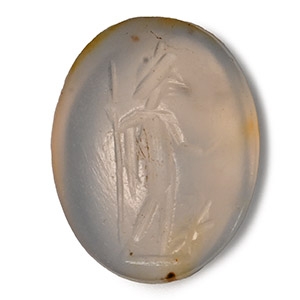
Roman Chalcedony Gemstone with Jupiter
2nd-3rd century A.D.Sold for (Inc. bp): £234
An oval intaglio with convex faces, engraved with an image of standing god Jupiter holding a long spear, an eagle at his feet. 0.66 grams, 12 mm
Ex Swiss collection formed in the 1980s onwards. This lot is accompanied by an illustrated lot declaration signed by the Head of the Antiquities Department, Dr Raffaele D’Amato. -
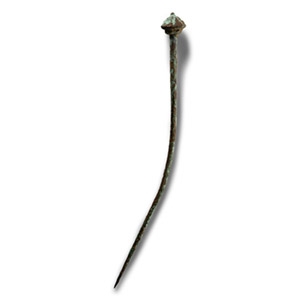
Roman Bronze Hair Pin
1st century B.C.-1st century A.D.Sold for (Inc. bp): £33
With biconvex knop finial, five radiating creases to upper face. 5.43 grams, 11.2 cm
Acquired on the London art market in the late 1980s-1990s. From the family collection of an East London, UK, gentleman. This lot is accompanied by an illustrated lot declaration signed by the Head of the Antiquities Department, Dr Raffaele D’Amato. -
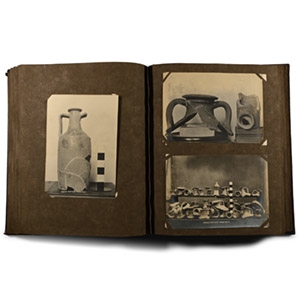
Archaeologist's Photograph Album
1920s A.D. and earlierSold for (Inc. bp): £845
Containing numerous original photographs of archaeological digs, found artefacts, etc, including digs at Roman sites such as Hadrian's Wall, Colchester, Templeborough, Silchester, Viroconium, Mancunium, Wilderspool and Holt and published images from the Ny Carlsberg Glyptek, Copenhagen; mostly with handwritten identification; with a photograph of the archaeologist T. May M.A. F.S.A. at Richborough and dated 1926 and Wilderspool - possibly the owner of the book; a rare archive of the 1920s British archaeology. 2.03 kg, 26.3 x 20.5 cm
Acquired on the English art market circa 2017. Ian Wilkinson collection, Nottinghamshire, UK, formed since 1985. This lot is accompanied by an illustrated lot declaration signed by the Head of the Antiquities Department, Dr Raffaele D’Amato.
The Roman furnaces at Wilderspool were excavated in 1905; the photographs are consistent in their appearance with that date.
