
Loading, please wait...
LOT 0802
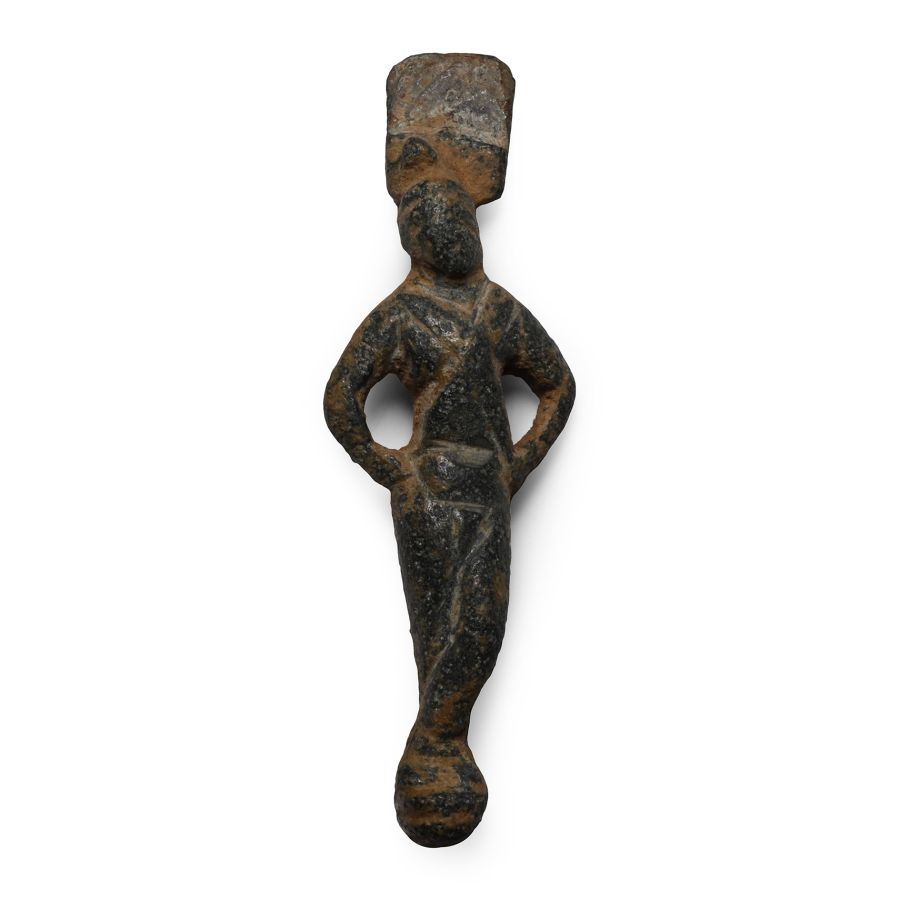
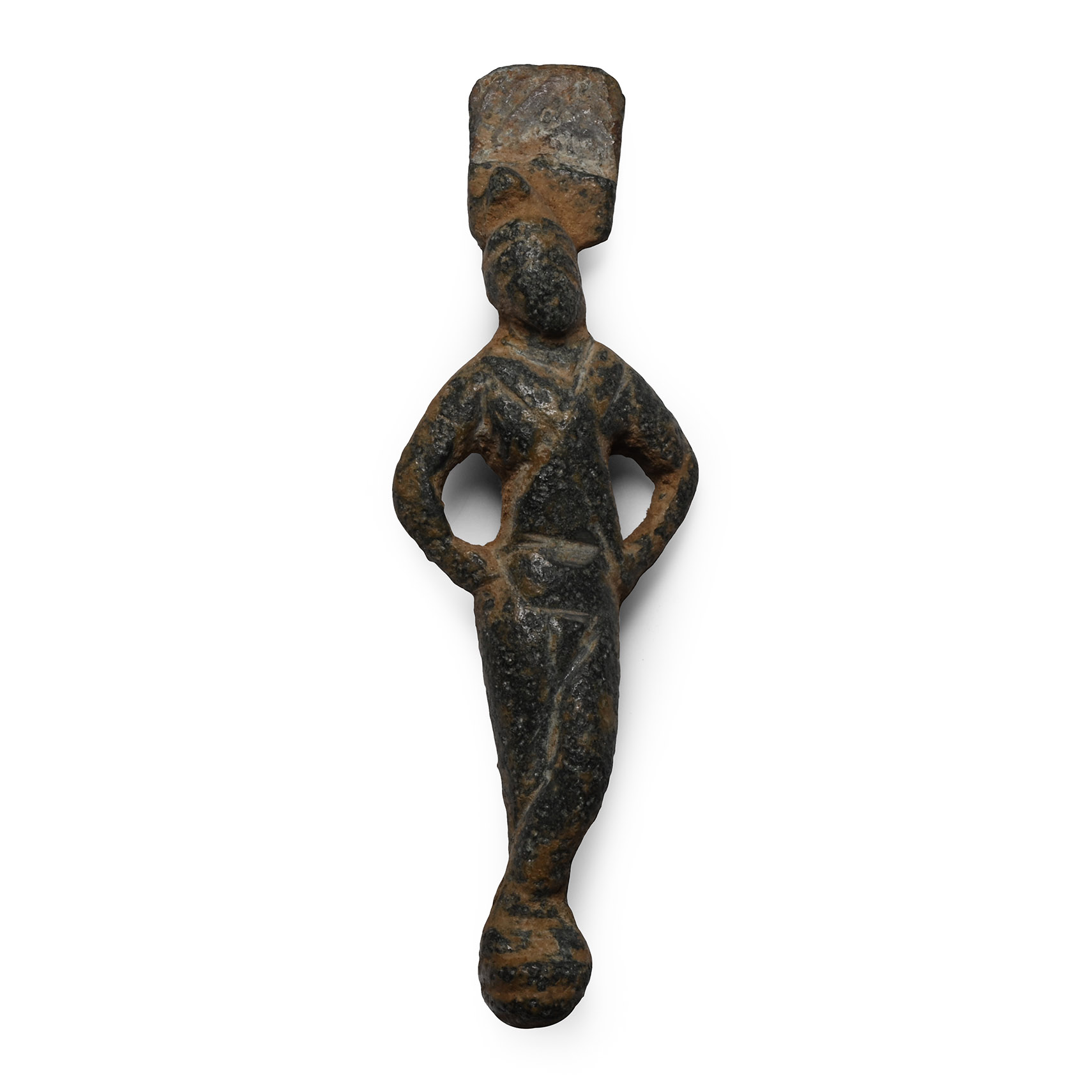
Roman Bronze Statuette
1ST-2ND CENTURY A.D.
2 1/2 in. (23 grams, 64 mm).
Modelled in the round figure with hands on the hips, legs crossed, head tilted, rectangular plaque above.
ProvenanceFrom the collection of a gentleman, acquired on the London art market in the 1990s.
CONDITIONTimeLine Auctions follows a vetting process to ensure the authenticity and legality of all items, reinforcing our commitment to integrity and responsible trading. Each antiquity, antique, and coin lot undergoes thorough examination by a vetting committee of at least ten external specialists, professional trade association members, scientists, and archaeologists: Our Vetting Process
AUCTIONS:
TimeLine is a leading auction house specialising in antiquities, ancient art, collectables, natural history, coins, medals, and books. Our auctions offer museums, collectors, historians, and enthusiasts the opportunity to acquire unique and historically significant pieces.
-

Roman Bronze Ring with Bird
1st century B.C.-1st century A.D.Sold for (Inc. bp): £65
Scaphoid bezel with incuse image of a perching bird looking to the rear. 2.17 grams, 20.27 mm overall, 16.57 mm internal diameter (approximate size British L, USA 5 3/4, Europe 11.24, Japan 10)
UK private collection before 2000. Acquired on the UK art market. Property of a London gentleman. -
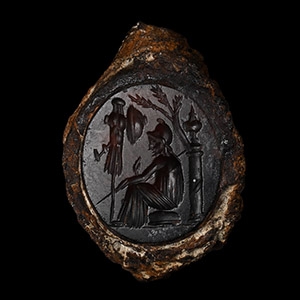
Roman Iron Ring with Gemstone
1st-4th century A.D.Sold for (Inc. bp): £1,105
discoid bezel with intaglio scene of figure wearing a helmet and pleated robe sitting on a rock beneath a tree with a spear resting on one shoulder, altar behind him flaming vessel, post with armour and shield. 5.59 grams, 23.23 mm overall, internal diameter 11.8x15.38 mm (approximate size British F, USA 2 3/4, Europe 3.67, Japan 3)
From the collection of a gentleman, acquired on the London art market in the 1990s. -
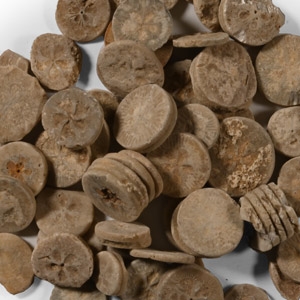
Romano-Egyptian Limestone 'Floral' Inlay Group
30 B.C.-323 A.D. or earlierSold for (Inc. bp): £33
Group of discoid inlay plaques or gaming counters, crinoids with cinquefoil motif. 74 grams total, 8-19 mm
From a central London ADA dealership, 1980-1990.
Flowers were symbolic of rebirth due to the daily reopening of their petals after nightfall. As a result, they were widely used in domestic settings, religious and funerary contexts, and as adornments. Similar rosette discs, like those recovered from the Ramesside Period palace at Qantir, were used as decorative elements in royal palaces.
