
Loading, please wait...


LOT 0121
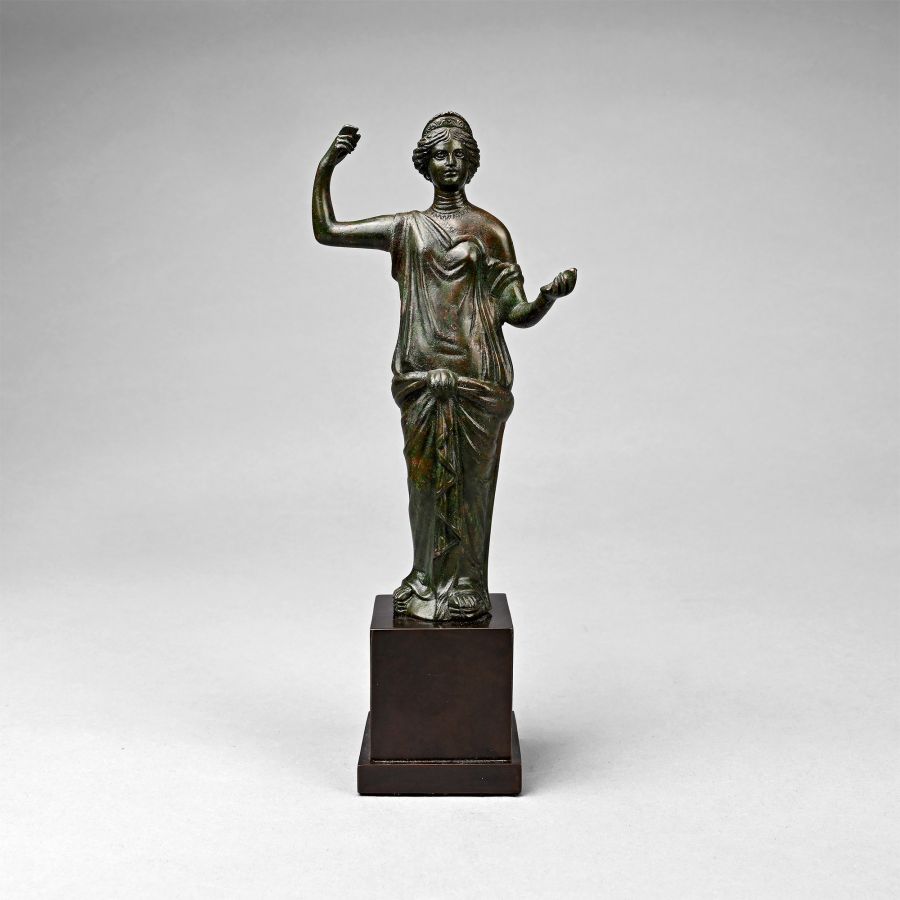
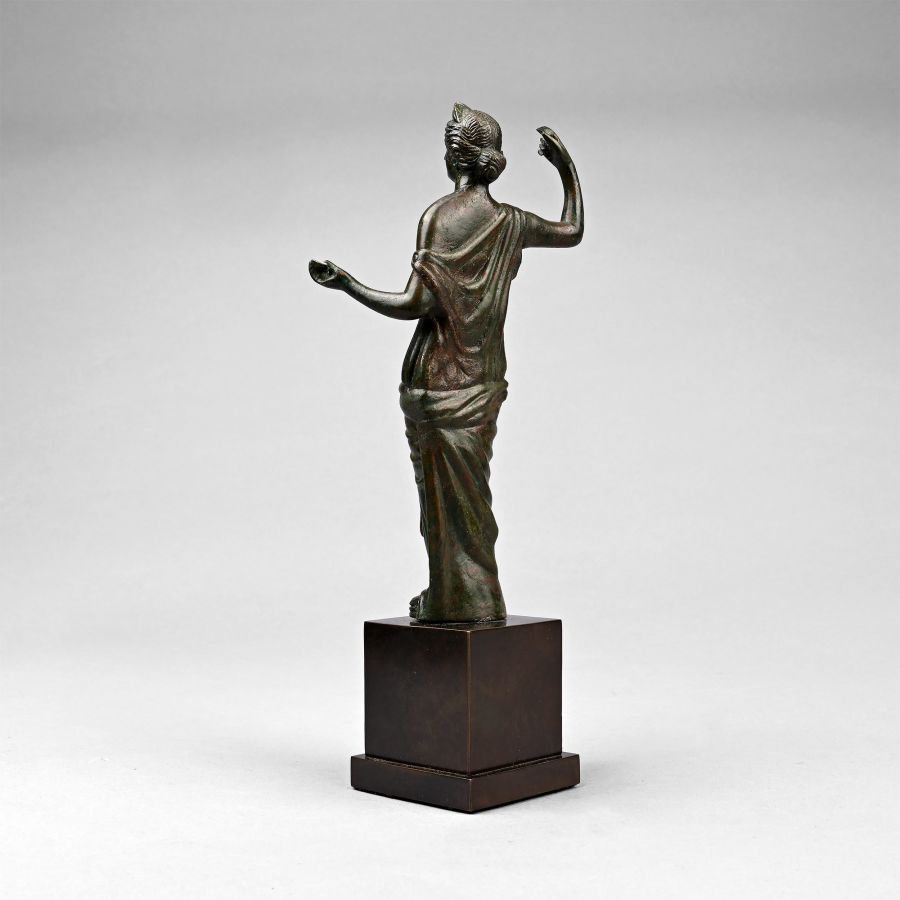
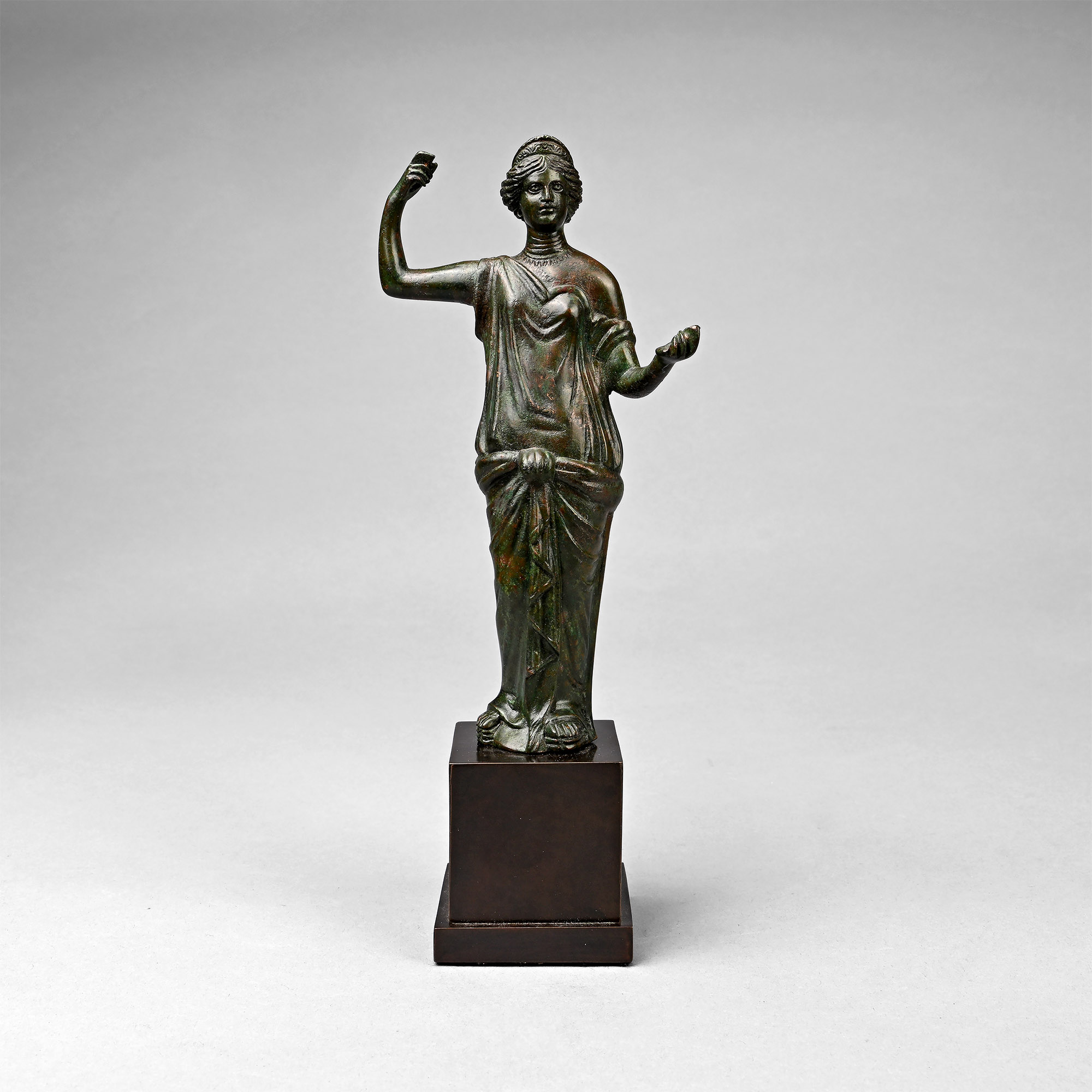
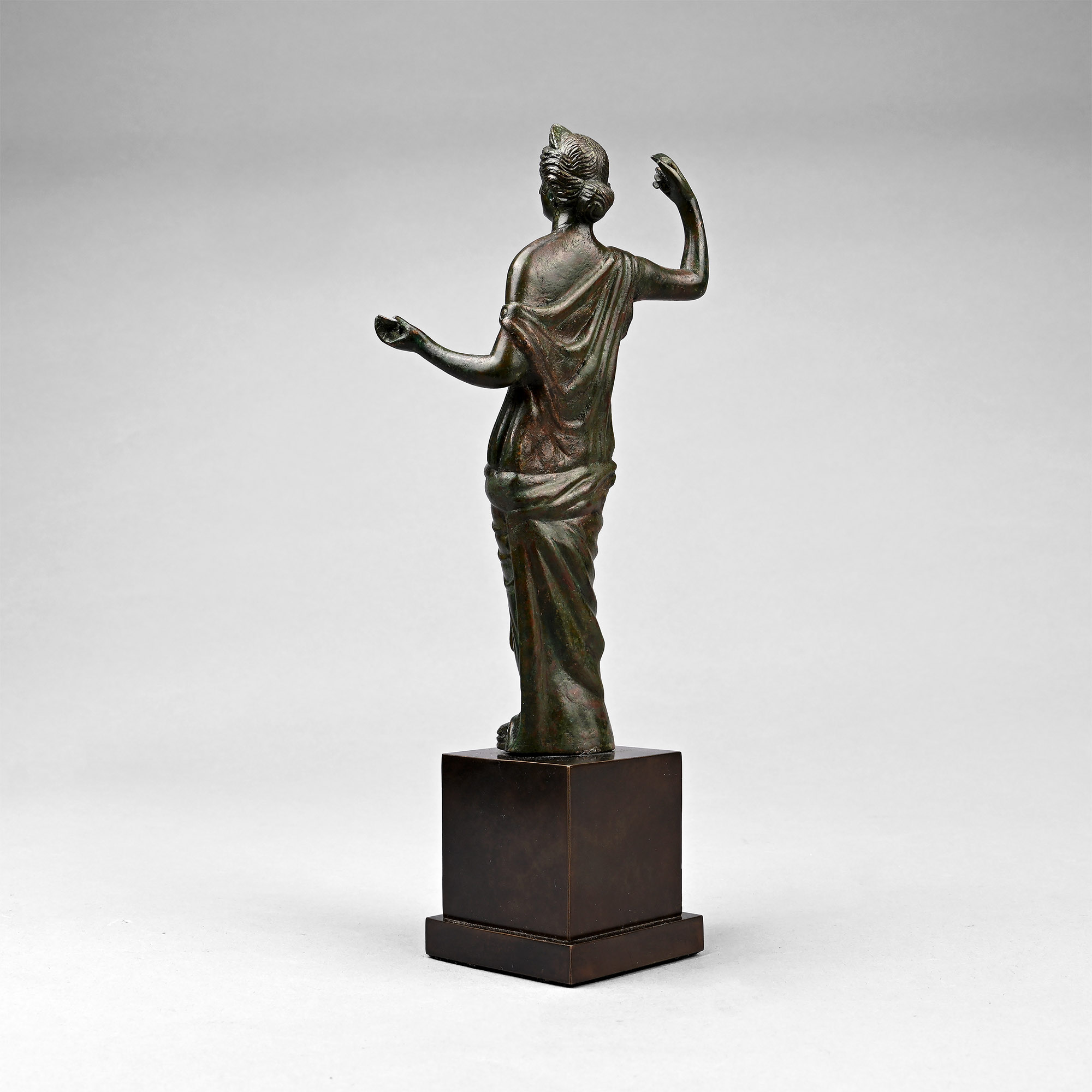
Roman Bronze Statuette of the Goddess Juno
3RD-4TH CENTURY A.D.
9 7/8 in. (693 grams total, 25 cm high including stand).
A substantial hollow-form figure of Juno (Greek Hera) standing with right hand in gripping pose, left hand extended palm-upwards, engraved collar to the neck and diadem to the hair, palla gathered at the waist, slipping from the right shoulder; mounted on a custom-made stand.
ProvenanceHoratio and Patsy Melas Collection, Alexandria and later Switzerland, acquired by 1960 and until 1989.
Kyros Melas Collection, London, 1989 until 1999.
with Bonhams, Knightsbridge, 21 October 1999, no.178 [£6,000-£8,000].
Private collection, London.
Accompanied by copies of the relevant Bonhams catalogue pages.
This lot has been checked against the Interpol Database of stolen works of art and is accompanied by search certificate number no.13308-258228.
Cf. for similar typologies Reinach, S., Répertoire de la statuaire grecque et romaine, Paris, 1897, p.240, 9.
FootnotesThe figure's pose recalls that of the statue of Juno Sospita in the Vatican Museum, Rome, inv. no.241. Horatio Melas was born in 1904 into a family of Greek merchants established in Alexandria, Egypt. It was there that he met and, in 1960, married Patsy, and together they maintained the family collection. Following the family's departure from Egypt in 1967, the collection was relocated to Switzerland, remaining there until 1989, when their son, Kyros Melas, settled in London. Kyros, who worked in the City as a private equity trader, continued to care for the collection and occasionally added to it during the 1990s.
CONDITIONTimeLine Auctions follows a vetting process to ensure the authenticity and legality of all items, reinforcing our commitment to integrity and responsible trading. Each antiquity, antique, and coin lot undergoes thorough examination by a vetting committee of at least ten external specialists, professional trade association members, scientists, and archaeologists: Our Vetting Process
AUCTIONS:
TimeLine is a leading auction house specialising in antiquities, ancient art, collectables, natural history, coins, medals, and books. Our auctions offer museums, collectors, historians, and enthusiasts the opportunity to acquire unique and historically significant pieces.
-
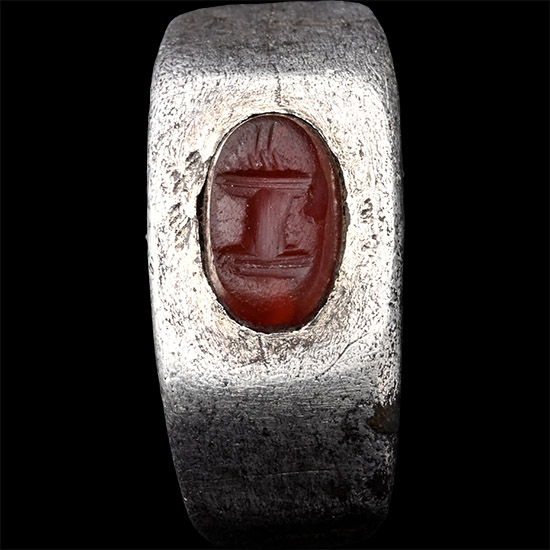
Roman Silver Ring with Carnelian Gemstone with Flaming Altar
2nd-3rd century A.D.Sold for (Inc. bp): £176
Facetted hoop with rectangular bezel set with a raised intaglio with a flaming altar; accompanied by a museum-quality impression. 4.69 grams, 18.39 mm overall, 15.64 mm internal diameter (approximate size British F 1/2, USA 3, Europe 4.3, Japan 4)
UK private collection before 2000. London collection, acquired on the UK art market. -
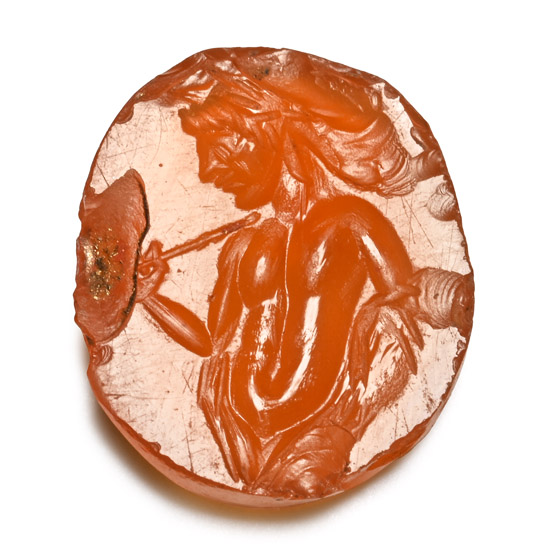
Roman Carnelian Gemstone with Dionysos
2nd-3rd century A.D.Sold for (Inc. bp): £117
Ellipsoid type with incuse design of Dionysos standing bare-chested with flowing hair; supplied with a museum-quality impression. 0.59 grams, 12 mm
From the private collection of a European gentleman (1942-2024), formed since the 1970s. -
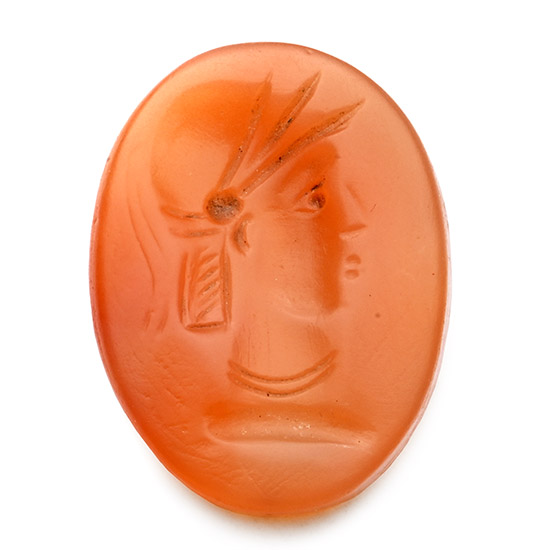
Roman Carnelian Gemstone with Bust of Roma
1st-2nd century A.D.Sold for (Inc. bp): £72
Ellipsoid in plan with a profile bust of the goddess Roma with a helmet. 1.64 grams, 18 mm
Property of a European gentleman, acquired from the estate of a London collector (formed before 2000).
