
Loading, please wait...
LOT 0864
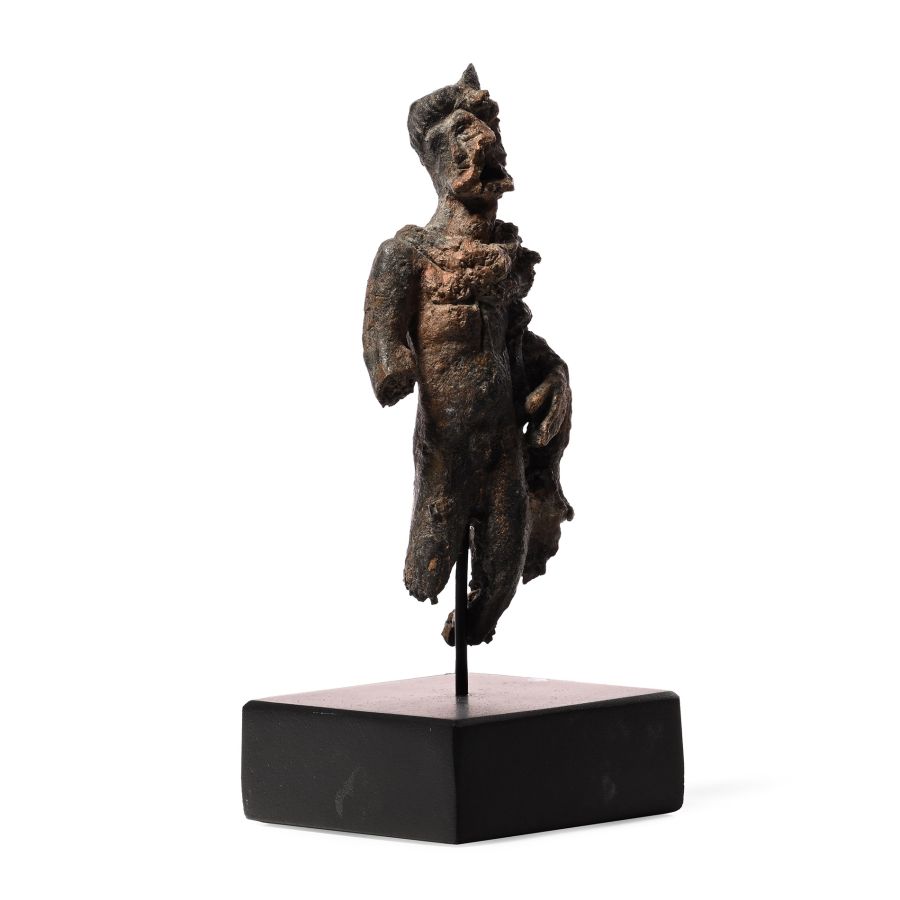
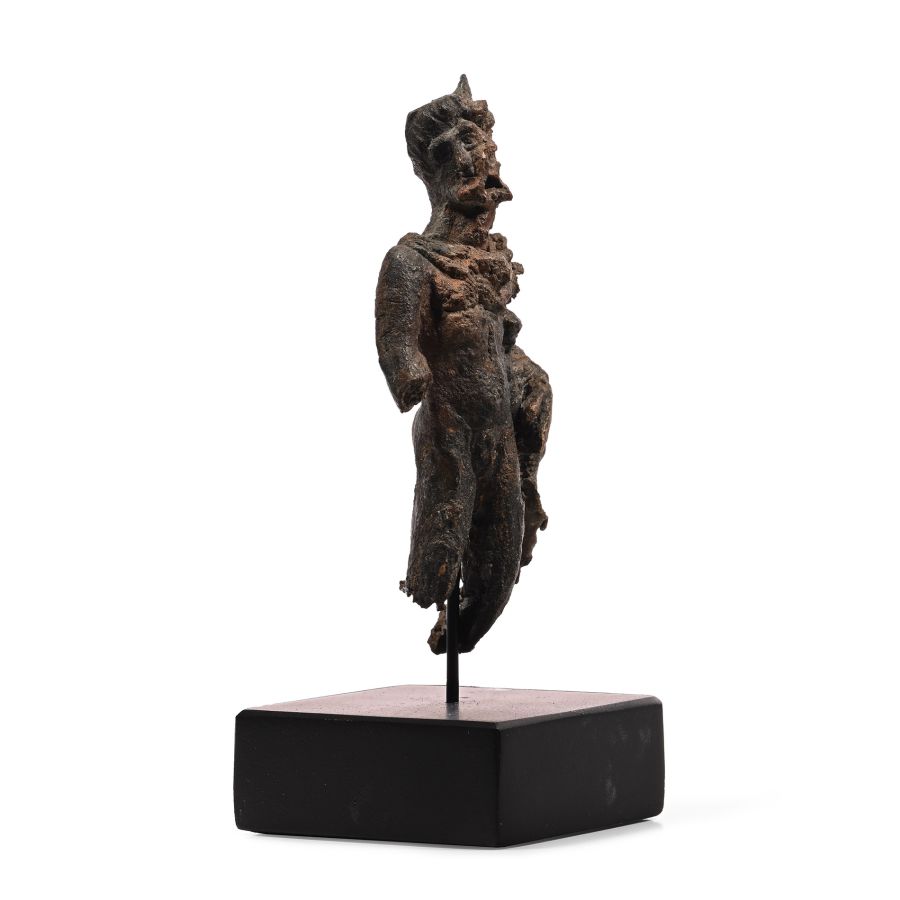
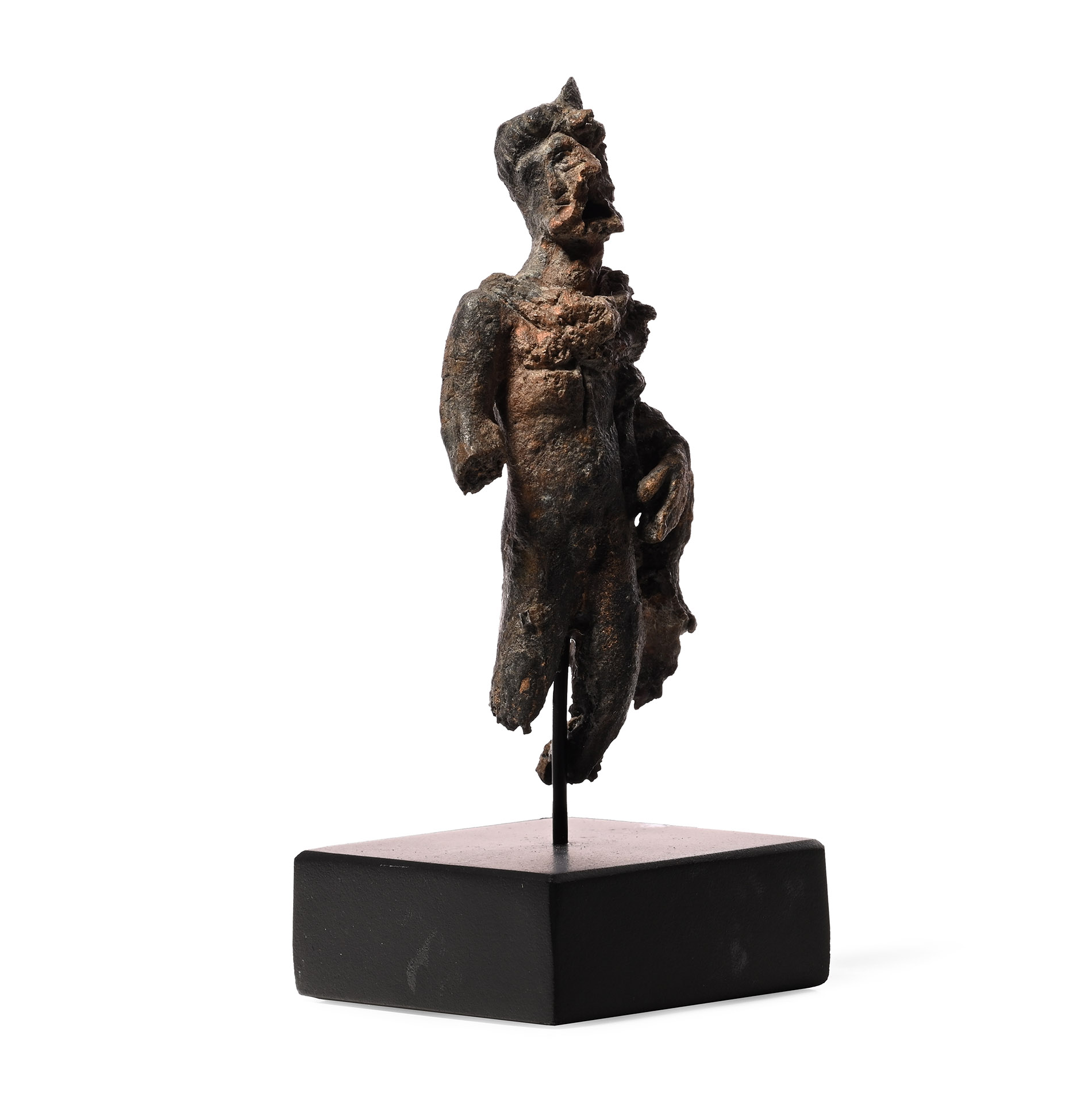
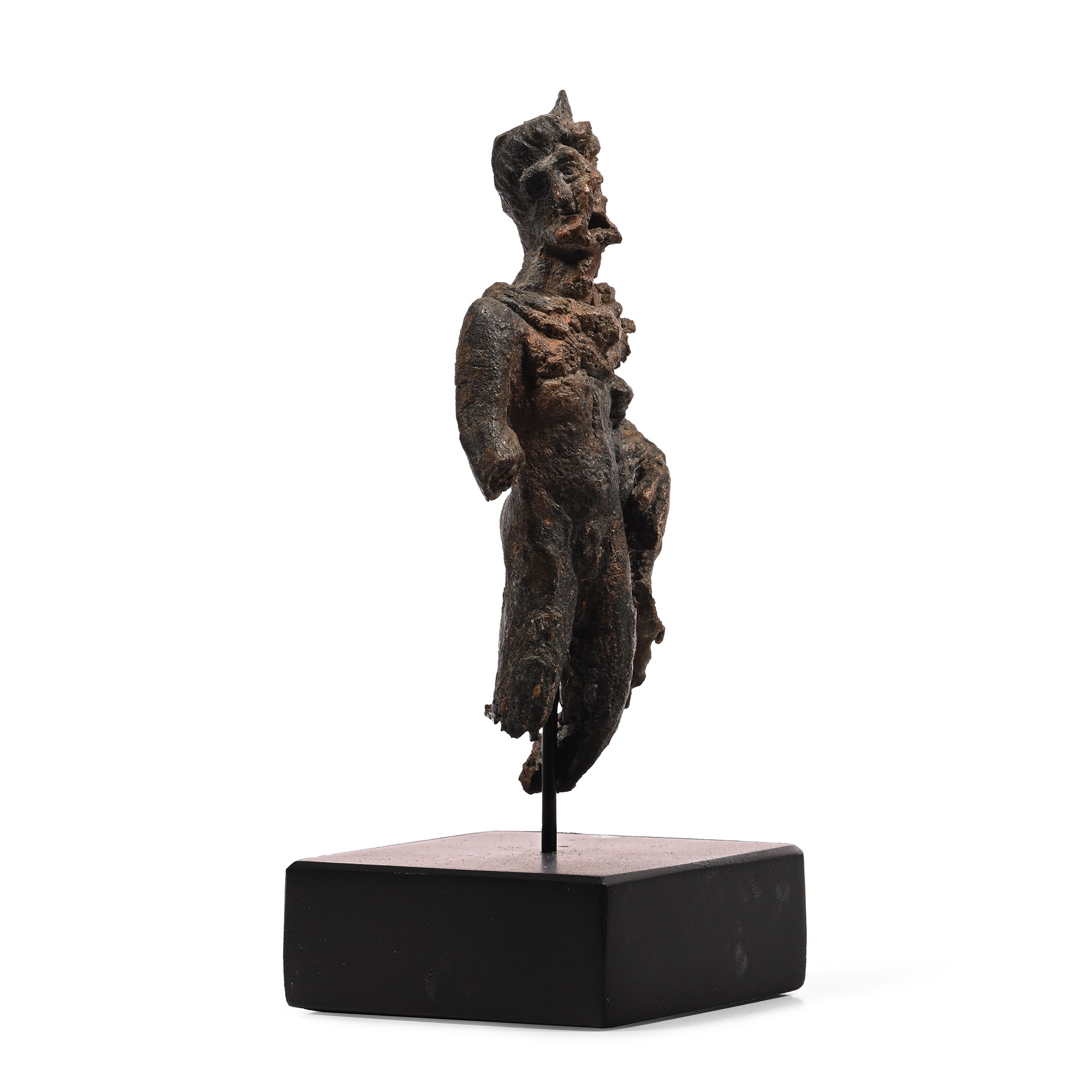
Roman Bronze Statuette of Mercury
2ND-3RD CENTURY A.D.
4 3/4 in. (291 grams, 12.2 cm including stand).
Modelled standing nude with a mantle over his shoulders, winged petasos on his head; mounted on a custom-made stand. [No Reserve]
ProvenanceFrom a collection acquired on the UK art market from various auction houses and collections mostly before 2000.
From an important Cambridgeshire estate; thence by descent.
Cf. Rolland, H., Bronzes Antiques de Haute Provence, Paris, 1965, item 27, for type.
FootnotesThe many statuettes of Mercury found in France and Italy offer many variations: Mercury is sometimes entirely naked, recalling the models of the 4th century B.C., but much more often he wears a paenula or a chlamys rolled up on his left arm. His head can be uncovered, adorned with two wings or covered by the petasos.
CONDITIONTimeLine Auctions follows a vetting process to ensure the authenticity and legality of all items, reinforcing our commitment to integrity and responsible trading. Each antiquity, antique, and coin lot undergoes thorough examination by a vetting committee of at least ten external specialists, professional trade association members, scientists, and archaeologists: Our Vetting Process
AUCTIONS:
TimeLine is a leading auction house specialising in antiquities, ancient art, collectables, natural history, coins, medals, and books. Our auctions offer museums, collectors, historians, and enthusiasts the opportunity to acquire unique and historically significant pieces.
-
Roman Honey-Coloured Cast Glass Flask
1st century A.D.Estimate: £800 - 1,000 (+bp*)
Opening Bid: £444
With piriform body, tubular neck with everted rolled rim, raised rib below the shoulder. 54 grams, 97 mm
From an important London, UK, collection, 1970-1990s. -
Late Roman Bronze Floral Mount
4th-6th century A.D.Sold for (Inc. bp): £65
Discoid with six-petalled flower to the centre, remains of silvering; stud to the reverse. 7.09 grams, 31 mm
Ex German art market, 2000s. Acquired from an EU collector living in London. From the collection of Surrey, UK, gentleman. -
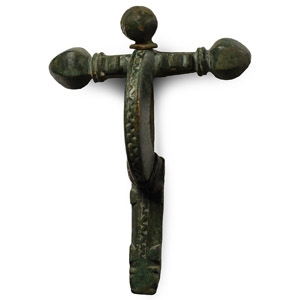
Roman Bronze Crossbow Brooch
4th century A.D.Sold for (Inc. bp): £72
With facetted onion-knop finials, keeled bow with a central decorative panel extending to the footplate, separately made ribbed collar to the bow. 41 grams, 68 mm
Ex German art market, 2000s. Acquired from an EU collector living in London. From the collection of Surrey, UK, gentleman.
