
Loading, please wait...
LOT 0156
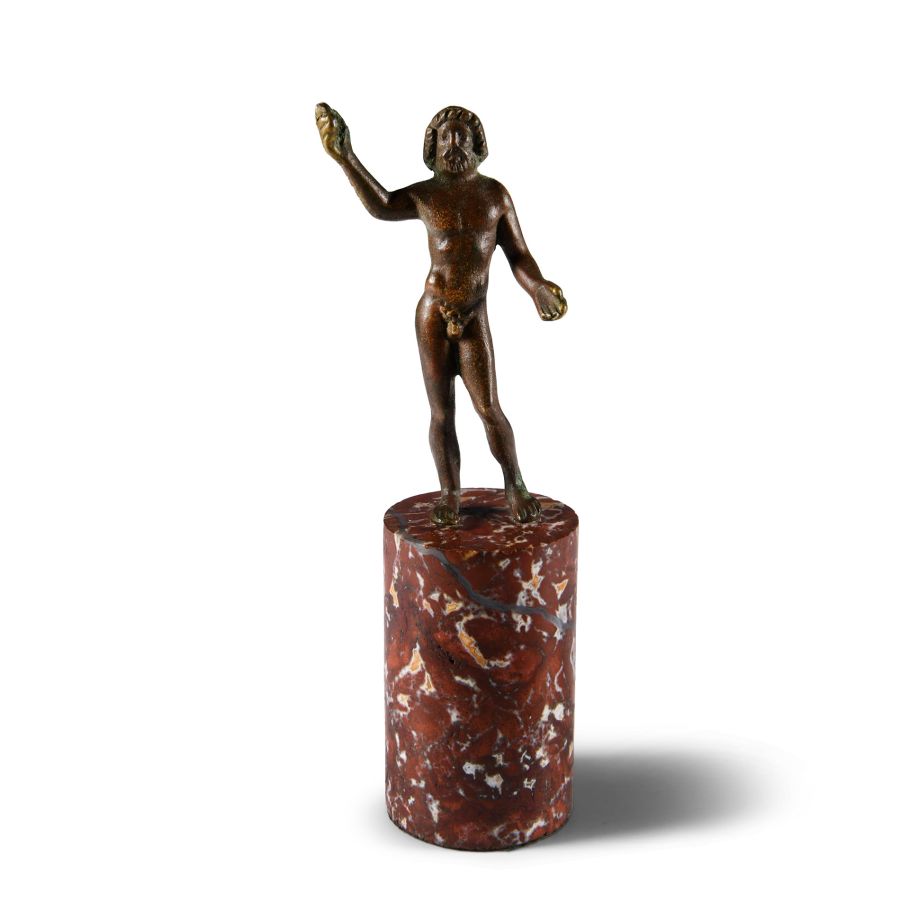
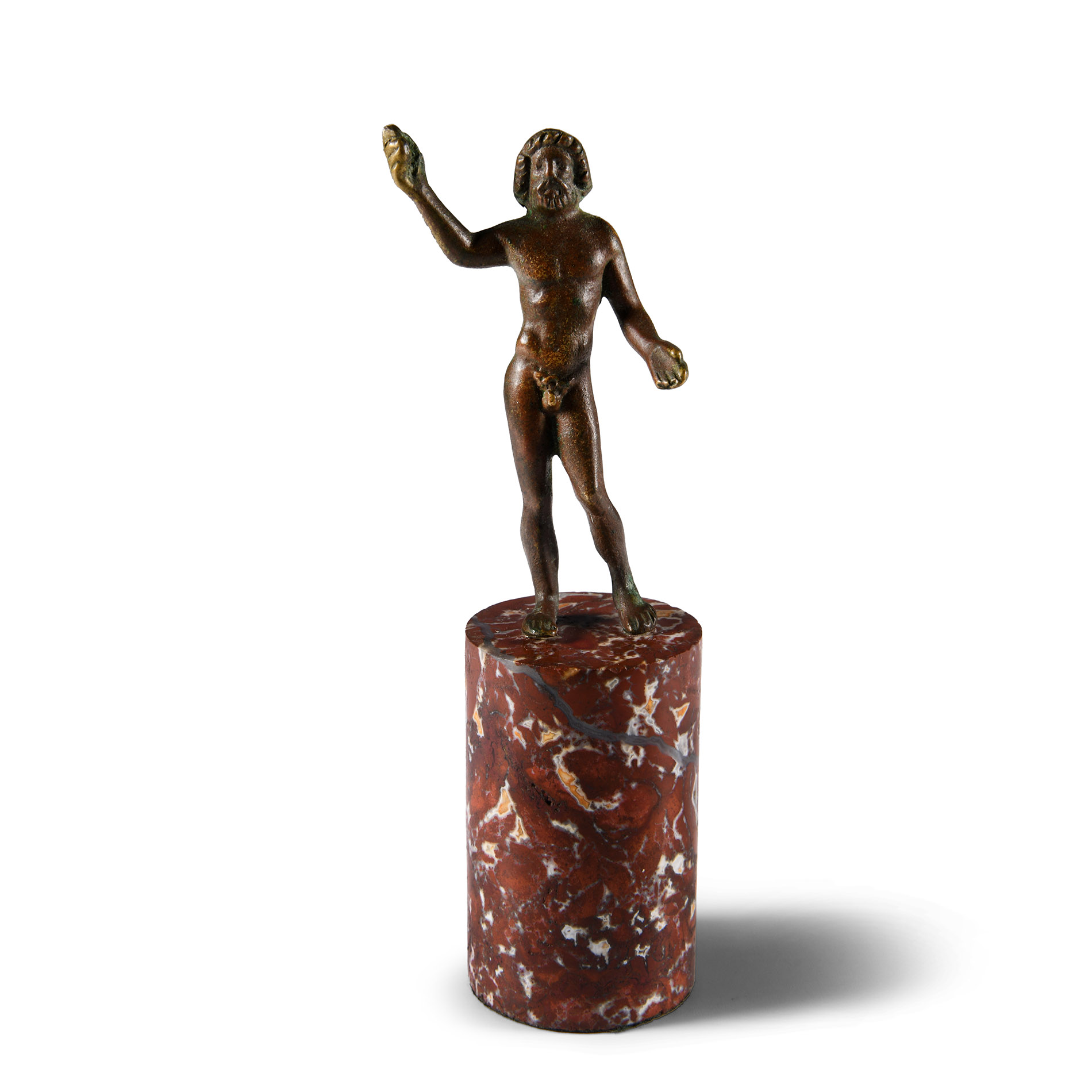
Roman Bronze Statuette of Jupiter
CIRCA 1ST CENTURY A.D.
4 3/4 in. (150 grams, 120 mm including stand).
Standing nude with right arm raised to hurl a thunderbolt for which a slot has been made in the palm, left arm extended, left leg slightly bent; neatly trimmed beard and fringe of curls to the hair; mounted on a polished breccia rossa pillar.
ProvenanceFrom a 19th century collection, based on the stand.
Ex Antiquus, London SW1, 2006.
From the private collection of the late Laurent Lourson, London, UK, 2006-2022.
Accompanied by an original handwritten invoice from Antiquus.
Cf. Rolland, H., Bronzes Antiques de Haute Provence, Paris, 1965, item 2, for type.
CONDITIONTimeLine Auctions follows a vetting process to ensure the authenticity and legality of all items, reinforcing our commitment to integrity and responsible trading. Each antiquity, antique, and coin lot undergoes thorough examination by a vetting committee of at least ten external specialists, professional trade association members, scientists, and archaeologists: Our Vetting Process
AUCTIONS:
TimeLine is a leading auction house specialising in antiquities, ancient art, collectables, natural history, coins, medals, and books. Our auctions offer museums, collectors, historians, and enthusiasts the opportunity to acquire unique and historically significant pieces.
-
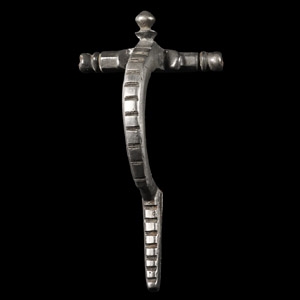
Roman Silver Crossbow Brooch
Circa 4th century A.D.Sold for (Inc. bp): £130
With balustered arms ending in knops and third knop above the bow, remains of hinged pin; deep bow with hatched outer face extending to the tapering footplate with catch to the reverse. 6.48 grams, 48 mm
Acquired at a London Coin Fair in the 1980s. Property of an Essex collector. -
.jpg)
Amethyst Apollo Gemstone
Roman, circa 1st century A.D. or laterEstimate: £1,500 - 2,000 (+bp*)
Opening Bid: £750
With intaglio profile portrait bust with frond; supplied with a museum-quality impression. 1.09 grams, 16 mm
From the collection of a Swiss gentleman formed in Europe from 1970-1980s; thence by descent from the family in London. -
.jpg)
Roman Banded Agate Lion Attack Gemstone
Circa 2nd century A.D.Estimate: £200 - 300 (+bp*)
Opening Bid: £100
With intaglio scene of a lion attacking an ibex; supplied with a museum-quality impression. 1.55 grams, 14 mm
From the collection of a Swiss gentleman formed in Europe from 1970-1980s; thence by descent from the family in London.
