
Loading, please wait...




LOT 0195
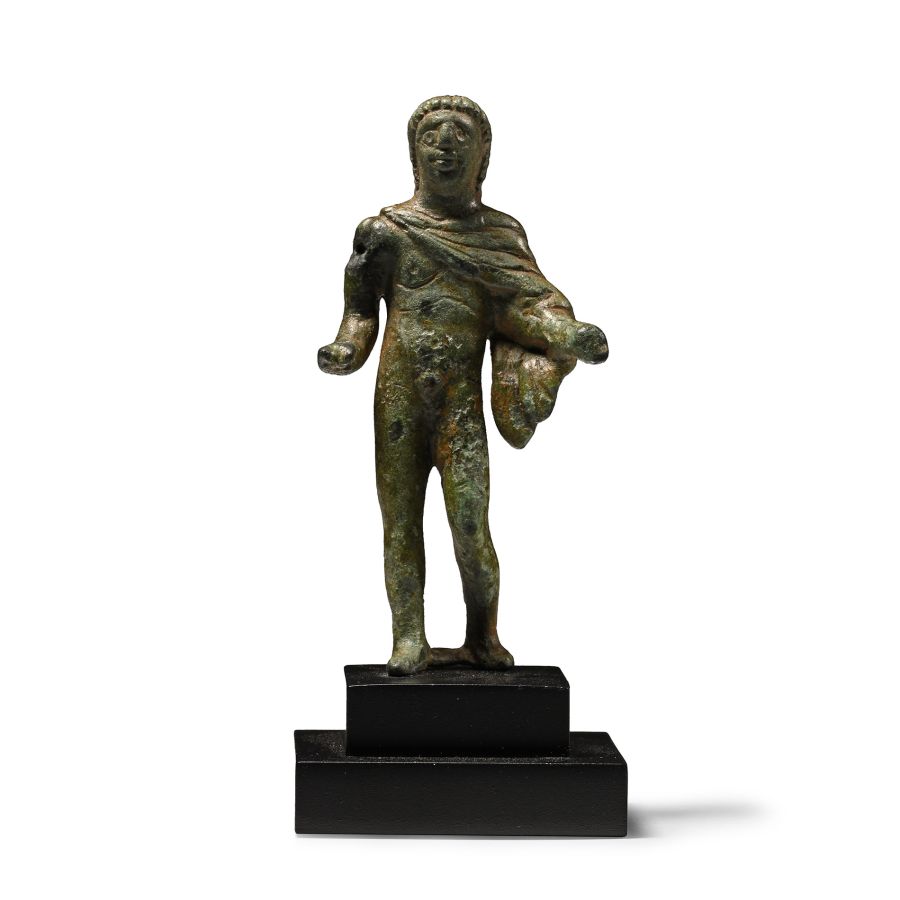
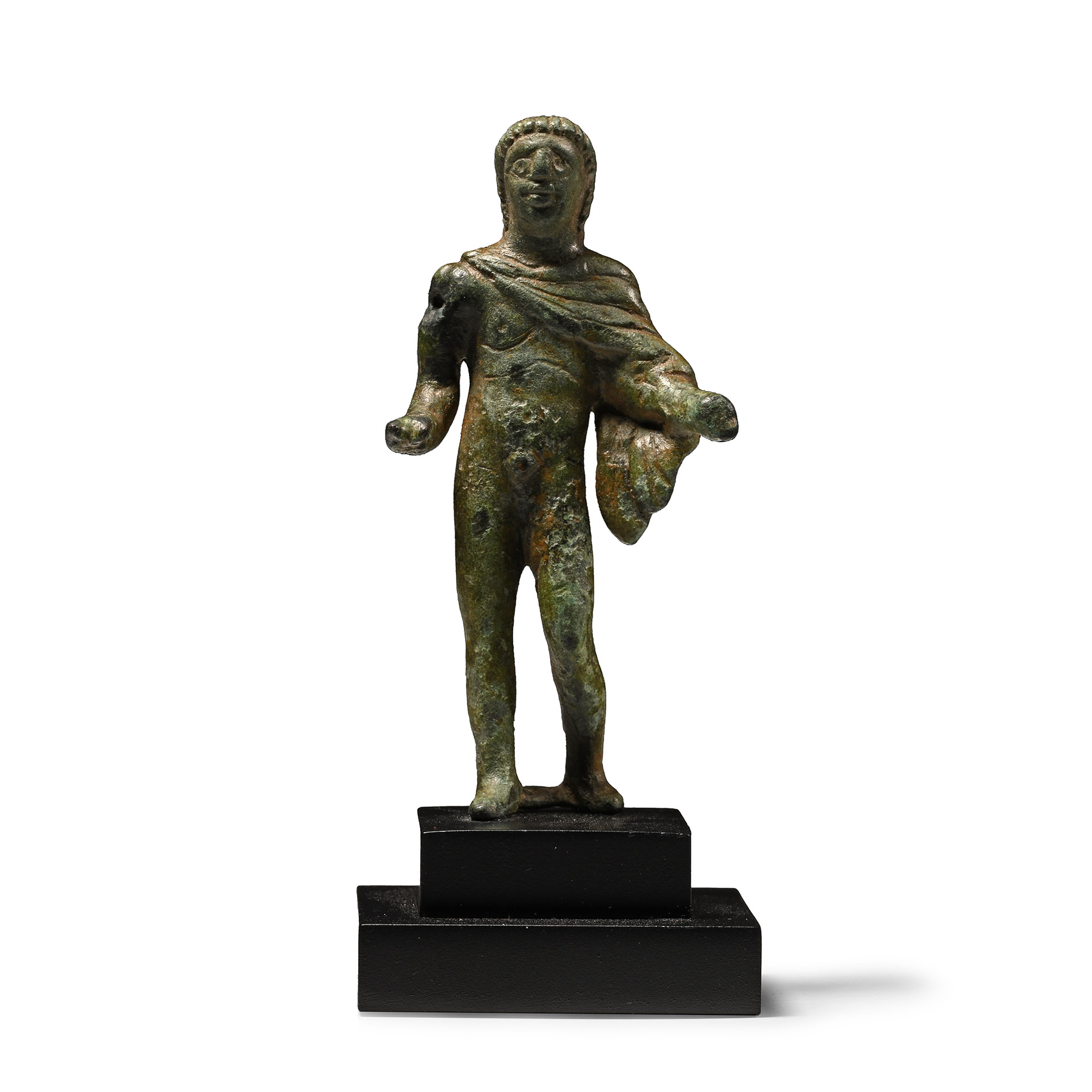
Roman Bronze Statuette of Hermes
2ND-3RD CENTURY A.D.
4 in. (100 grams total, 10 cm including stand).
Standing nude with left leg bent, arms extended, mantle draped from the right shoulder, hair combed forward from the crown; mounted on a custom-made stand. [No Reserve]
ProvenanceFrom a collection acquired on the UK art market from various auction houses and collections mostly before 2000.
From an important Cambridgeshire estate; thence by descent.
Cf. Rolland, H., Bronzes Antiques de Haute Provence, Paris, 1965, item 38, for type.
FootnotesDespite the lack of specific attributes related to Hermes, the pose of the statue, with the right hand advanced to hold the sacculus, the cloak thrown over the right shoulder and then folded over the left would lean towards an interpretation of the statuette as an ex voto related to the god of thieves. The statuette seems to originate from a Gallo-Roman workshop. A similar drapery on the chest is also found on a Mercury/Hermes in the Museum of Besancon.
CONDITIONTimeLine Auctions follows a vetting process to ensure the authenticity and legality of all items, reinforcing our commitment to integrity and responsible trading. Each antiquity, antique, and coin lot undergoes thorough examination by a vetting committee of at least ten external specialists, professional trade association members, scientists, and archaeologists: Our Vetting Process
AUCTIONS:
TimeLine is a leading auction house specialising in antiquities, ancient art, collectables, natural history, coins, medals, and books. Our auctions offer museums, collectors, historians, and enthusiasts the opportunity to acquire unique and historically significant pieces.
-
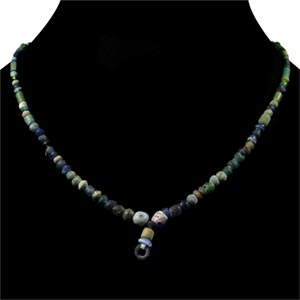
Roman Glass Bead Necklace String
1st-4th century A.D. and laterSold for (Inc. bp): £52
Composed of graduated blue and green beads in various shapes, restrung. 11.8 grams, 39 cm
Ex property of a late Japanese collector, 1970-2000s. -
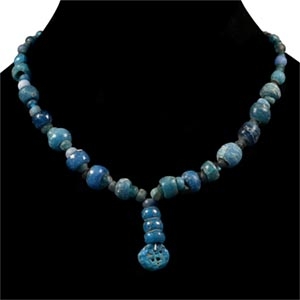
Roman Glass Bead Necklace String
1st-4th century A.D. and laterSold for (Inc. bp): £85
Composed of blue oblate and oval beads interspersed with large beads, restrung to a Y-shape with a central flower-shaped faience bead. 32.3 grams, 35 cm
Ex property of a late Japanese collector, 1970-2000s. -
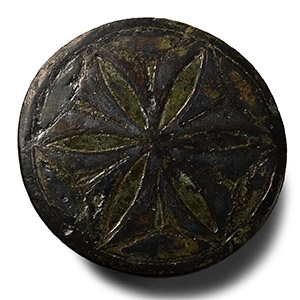
Late Roman Bronze Floral Mount
4th-6th century A.D.Sold for (Inc. bp): £65
Discoid with six-petalled flower to the centre, remains of silvering; stud to the reverse. 7.09 grams, 31 mm
Ex German art market, 2000s. Acquired from an EU collector living in London. From the collection of Surrey, UK, gentleman.
