
Loading, please wait...
LOT 0833
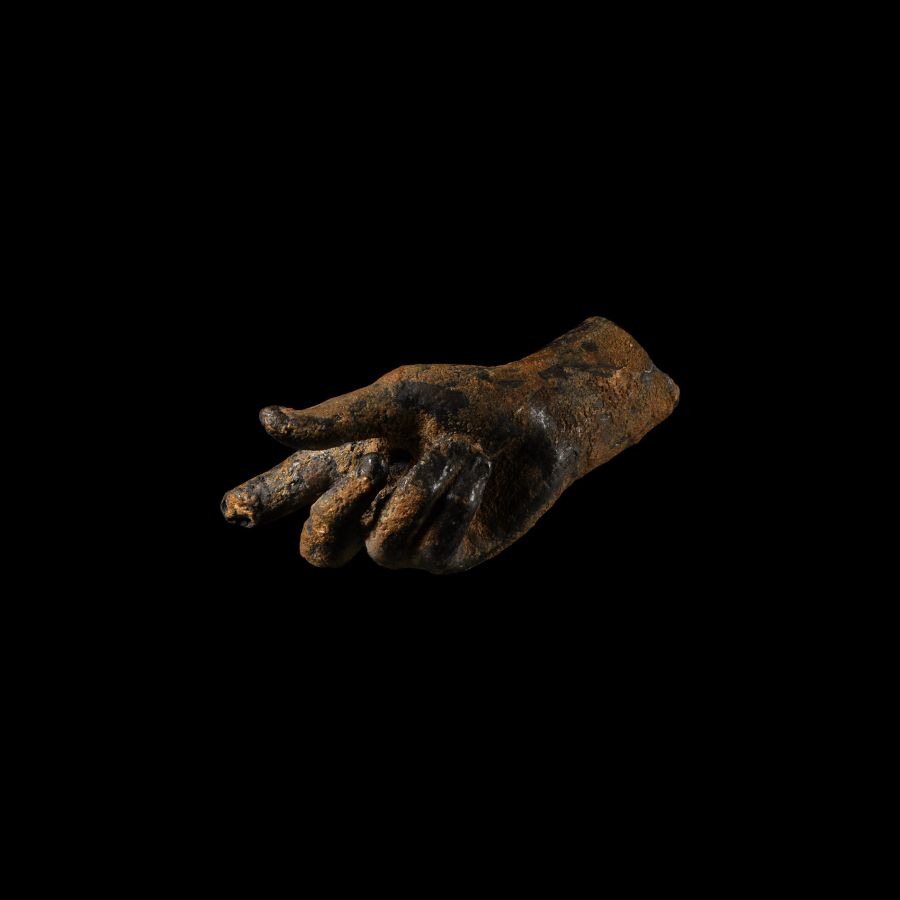
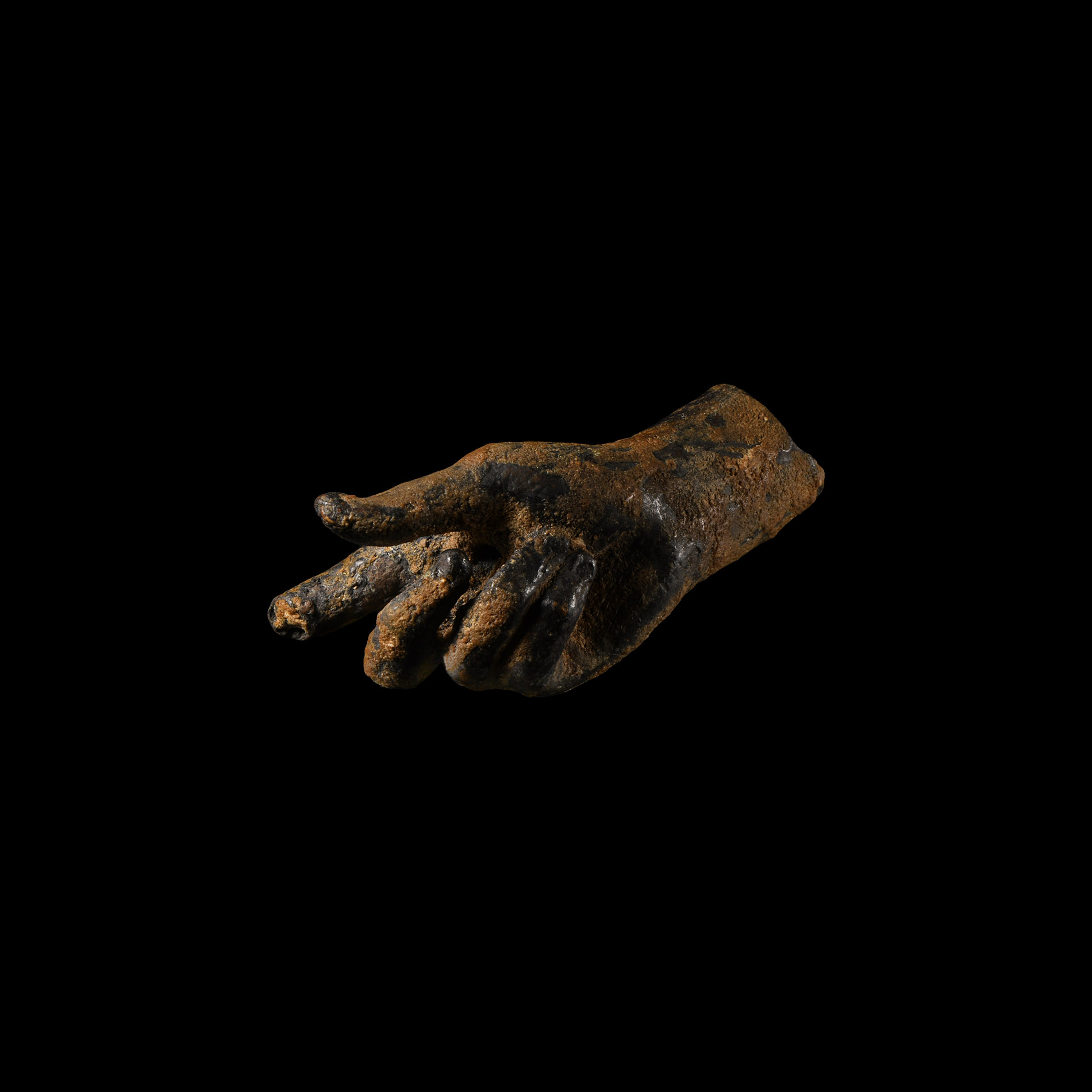
Roman Bronze Statue Right Hand
2ND-3RD CENTURY A.D.
2 7/8 in. (169 grams, 73 mm).
Modelled in the round in a pointing gesture, with semi-naturalistic anatomical and nail detailing; hollow-formed with a piercing through the palm; tip of index finger lost in antiquity. [No Reserve]
ProvenanceAcquired on the UK art market, 1982-1989.
CONDITIONTimeLine Auctions follows a vetting process to ensure the authenticity and legality of all items, reinforcing our commitment to integrity and responsible trading. Each antiquity, antique, and coin lot undergoes thorough examination by a vetting committee of at least ten external specialists, professional trade association members, scientists, and archaeologists: Our Vetting Process
AUCTIONS:
TimeLine is a leading auction house specialising in antiquities, ancient art, collectables, natural history, coins, medals, and books. Our auctions offer museums, collectors, historians, and enthusiasts the opportunity to acquire unique and historically significant pieces.
-
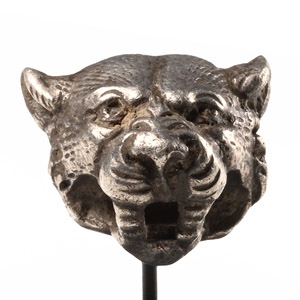
Roman Silver Head of a Panther
1st-2nd century A.D.Sold for (Inc. bp): £390
Modelled with naturalistic detailing, open mouth with large fangs, wide-eyes with pointed ears; angled recess to reverse for attachment. 5.3 grams, 16 mm
‘The Ancient Menagerie Collection’ formerly the property of a Cambridgeshire lady, collected since the 1990s and acquired from auctions and dealers throughout Europe and the USA, now ex London collection. -
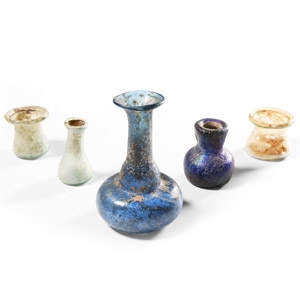
Roman Glass Vessel Collection
1st-4th century A.D. and laterSold for (Inc. bp): £286
Comprising various types including bottles and flasks in blue and pale green. 32 grams total, 21-57 mm
Acquired 1970s-1996. Property of a North American collector. London collection, 2016. -
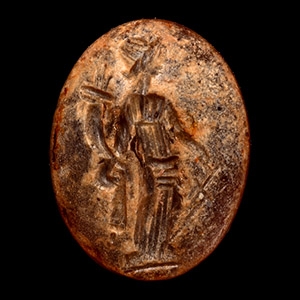
Roman Carnelian Gemstone with Fortuna
1st-2nd century A.D.Estimate: £700 - 900 (+bp*)
Opening Bid: £389
The oval intaglio depicting the goddess standing, facing right, dressed in peplos, holding a steering-oar and cornucopia. 1.33 grams, 16 mm
Acquired in the late 1980s-early 1990s. Important North West London collection.
Fortuna was the Roman equivalent of the Greek Tyche, and was the goddess of fate, chance and luck. The cornucopia symbolises the abundance of good luck that people hoped for in worshipping her and the rudder symbolises her steering the destiny of people. In the city of Rome, she had a temple in the Forum Boarium. The goddess had many aspects such as Fortuna Augusta, the luck of the emperor and the Imperial family, Fortuna Publica, the luck of the people, and Fortuna Obsequens, indulgent fortune, amongst many others.
