
Loading, please wait...



LOT 0117
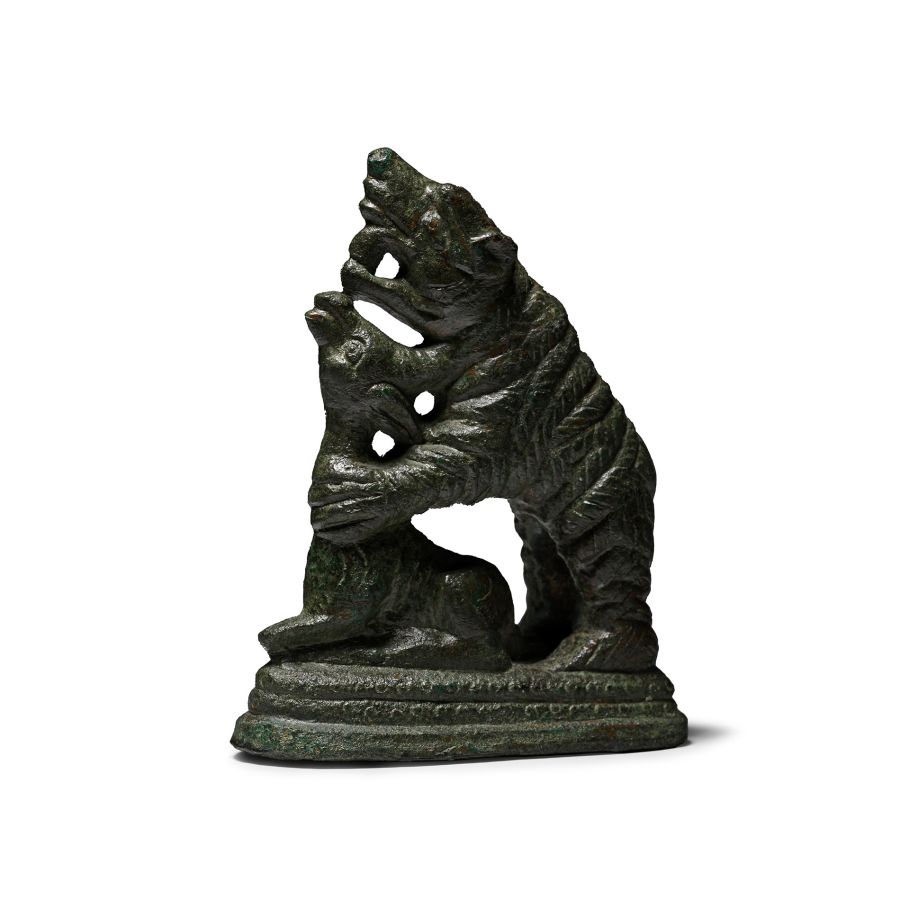
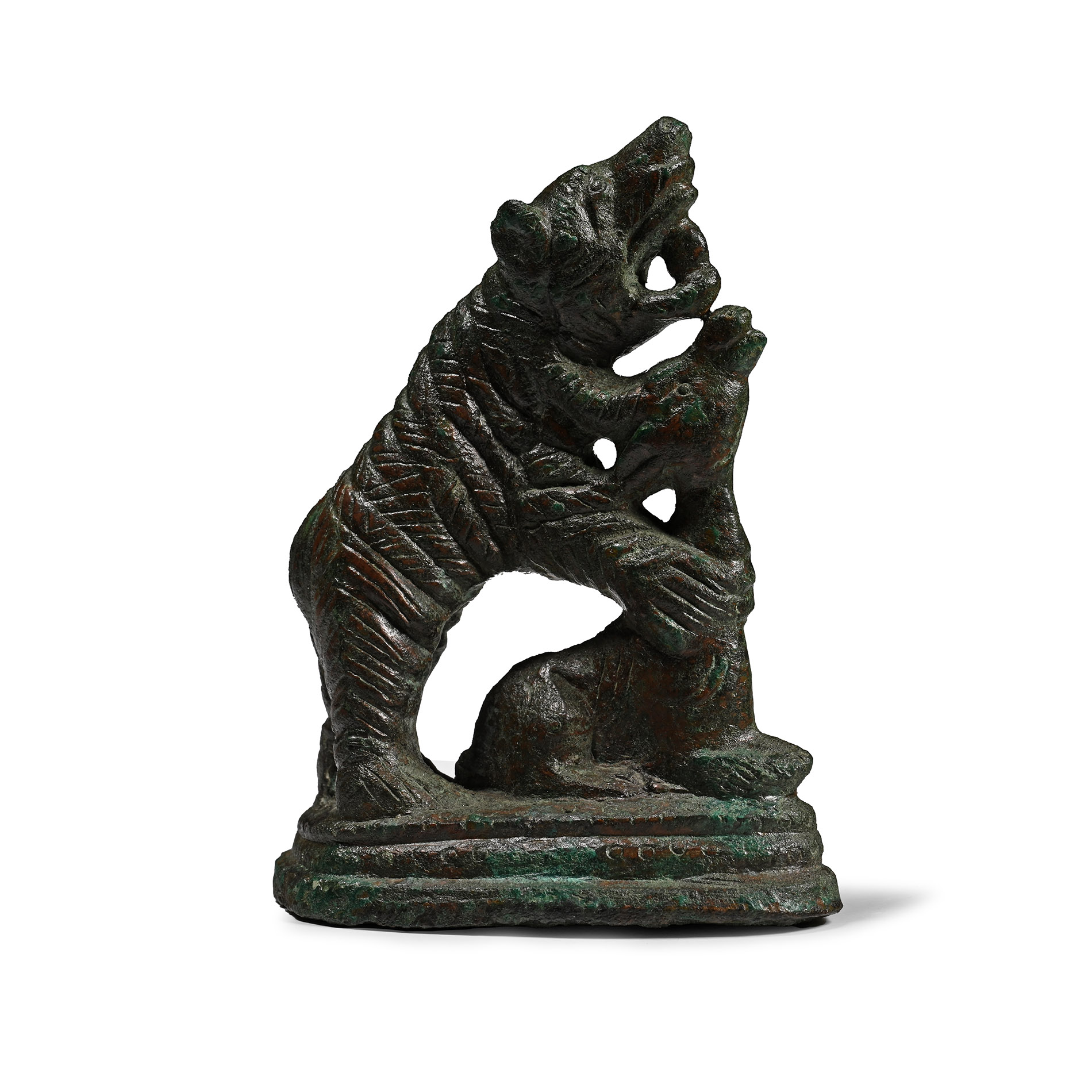
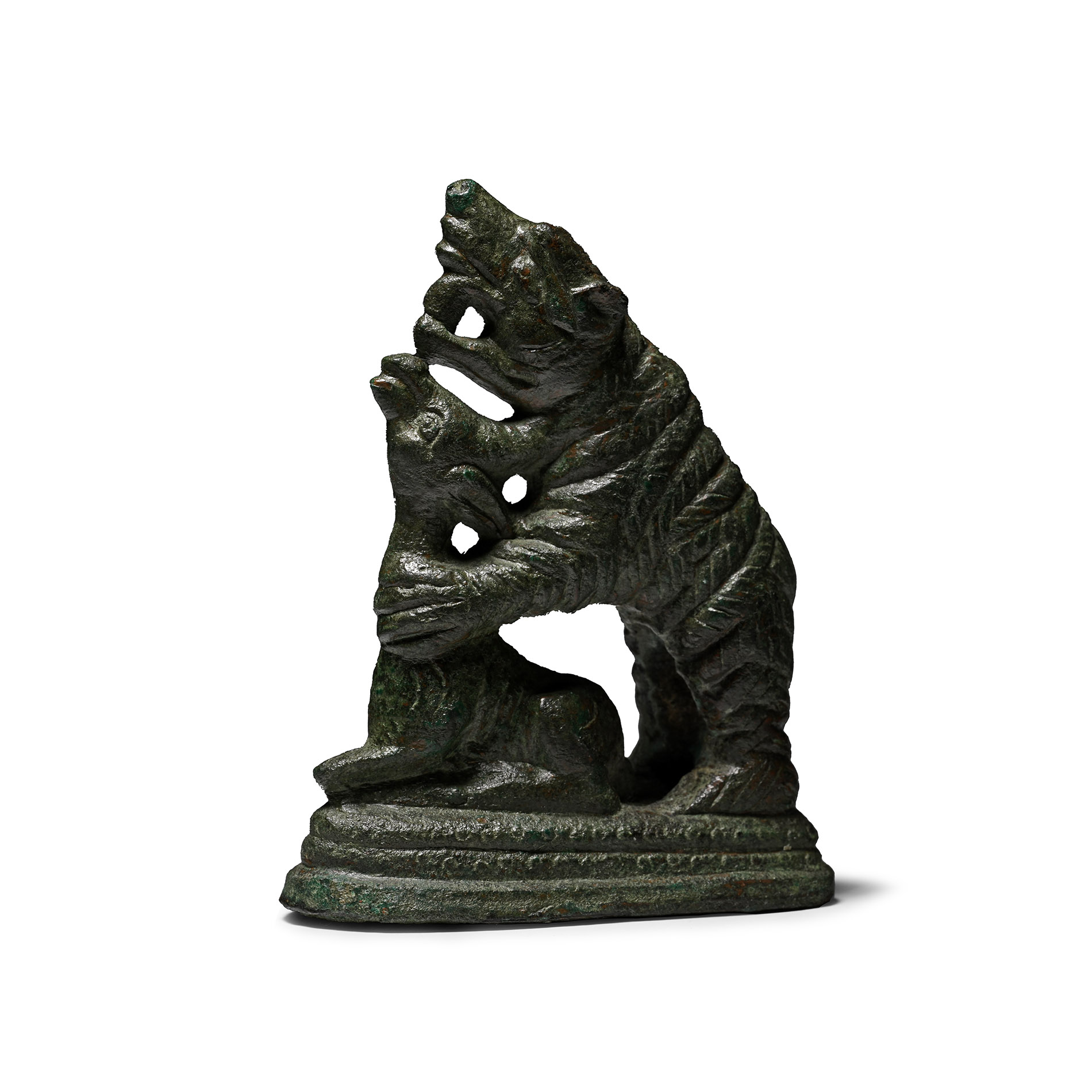
Roman Bronze Statue of a Bear Killing a Deer
1ST-2ND CENTURY A.D.
4 in. (398 grams, 10 cm).
On a stepped triangular base, bear with head raised, forepaws round the neck of a deer with legs folded beneath the body.
ProvenanceNicolas Koutoulakis (1910-1996).
Private collection of Mr K.A.
This lot is accompanied by an illustrated lot declaration signed by the Head of the Antiquities Department, Dr Raffaele D'Amato.
Exhibited at the Harwich Museum, Harwich, Essex, UK, 26th May-15th September 2025; accompanied by a copy of a photograph of the artefacts on display.
LiteratureCf. Avissar, M., "Lod–A Mosaic Floor," in Excavations and Surveys in Israel 17, 1998, pp. 169–172.
FootnotesCombat between large animals was a popular theme in Roman art. The staging of such fights in the Flavian Amphitheatre in the heart of Rome is evidenced. Furthermore, the 3rd-4th century A.D. mosaic floor unearthed at Lod, Israel, in 1996 shows several scenes with ferocious wild animal - a lion and lioness, an elephant, a giraffe, a rhinoceros, a tiger, and a wild bull - all arranging themselves for a colossal fight to the death. The mosaic was lifted intact and is on display in the Metropolitan Museum of Art, New York.
CONDITIONTimeLine Auctions follows a vetting process to ensure the authenticity and legality of all items, reinforcing our commitment to integrity and responsible trading. Each antiquity, antique, and coin lot undergoes thorough examination by a vetting committee of at least ten external specialists, professional trade association members, scientists, and archaeologists: Our Vetting Process
AUCTIONS:
TimeLine is a leading auction house specialising in antiquities, ancient art, collectables, natural history, coins, medals, and books. Our auctions offer museums, collectors, historians, and enthusiasts the opportunity to acquire unique and historically significant pieces.
LOT 0117
Roman Bronze Statue of a Bear Killing a Deer
Estimate £1,000 - 1,700€1,160 - 1,970 (for guidance only)$1,350 - 2,300 (for guidance only)
-
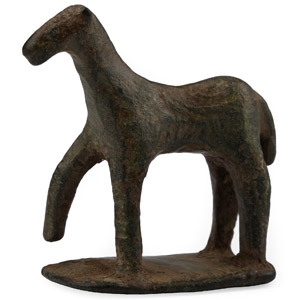
Roman Bronze Horse Statuette
1st-4th century A.D.Sold for (Inc. bp): £130
Standing on a rectangular base with its right front leg raised, small ears and slit mouth. 36.1 grams, 1 5/8 in.40 mm
Ex German art market, 2000s. Acquired from an EU collector living in London. From the collection of a Surrey, UK, gentleman. This lot is accompanied by an illustrated lot declaration signed by the Head of the Antiquities Department, Dr Raffaele D'Amato. -
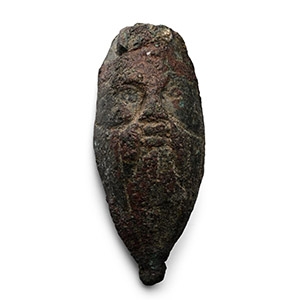
Roman Bronze Silenus Mask
1st-4th century A.D.Sold for (Inc. bp): £52
Lentoid in plan and hollow to the reverse, low-relief mask detailing. 25.9 grams, 43 mm
From the collection of a gentleman, acquired on the London art market in the 1990s. This lot is accompanied by an illustrated lot declaration signed by the Head of the Antiquities Department, Dr Raffaele D'Amato. -
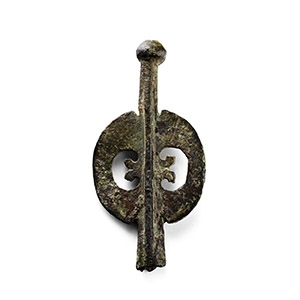
Roman Military Bronze Beneficiarius Insignia Mount
2nd-3rd century A.D.Sold for (Inc. bp): £390
With tapering and collared median spine, two lateral D-shaped flanges with bean-shaped voids. 17.7 grams, 56 mm
Ex Graham Slater (1924-2024) collection, Cambridge, UK; his collection assembled since the 1980s. From a Cambridgeshire, UK, private collection. This lot is accompanied by an illustrated lot declaration signed by the Head of the Antiquities Department, Dr Raffaele D'Amato.
The Beneficiarius was a specially-commissioned soldier whose duties would include undertaking a specific role such as military police. The insignia included a disc with spikes and two circular holes, shown on a military altar.
