
Loading, please wait...
LOT 0133
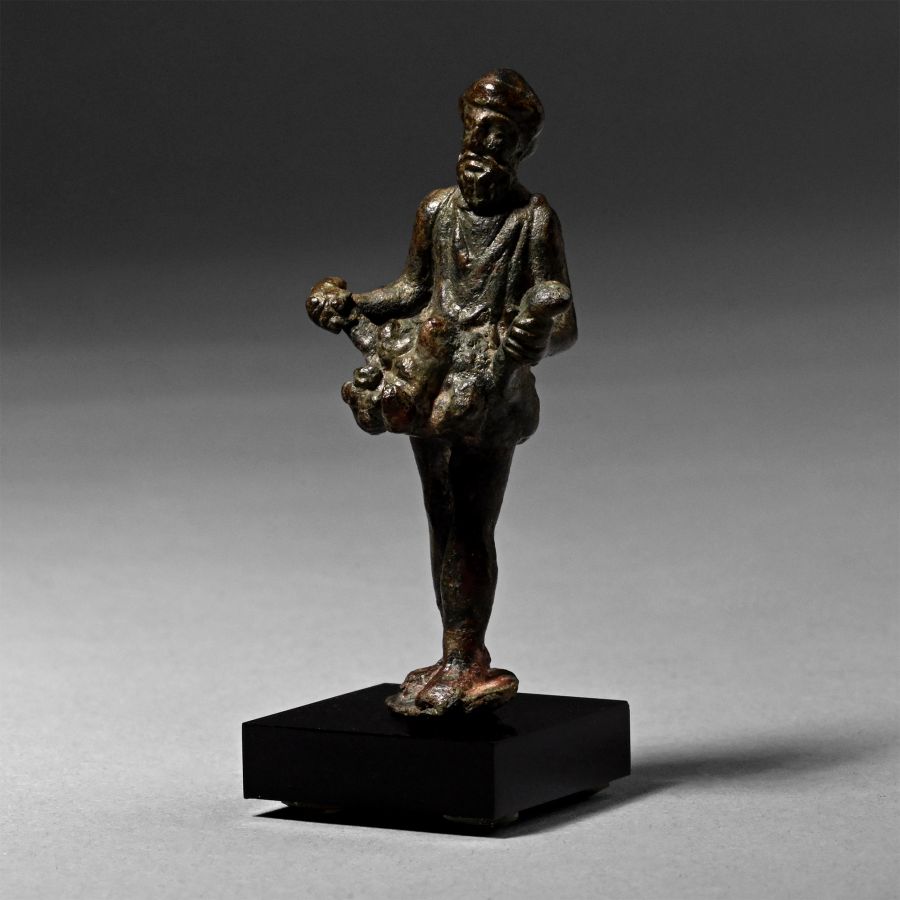
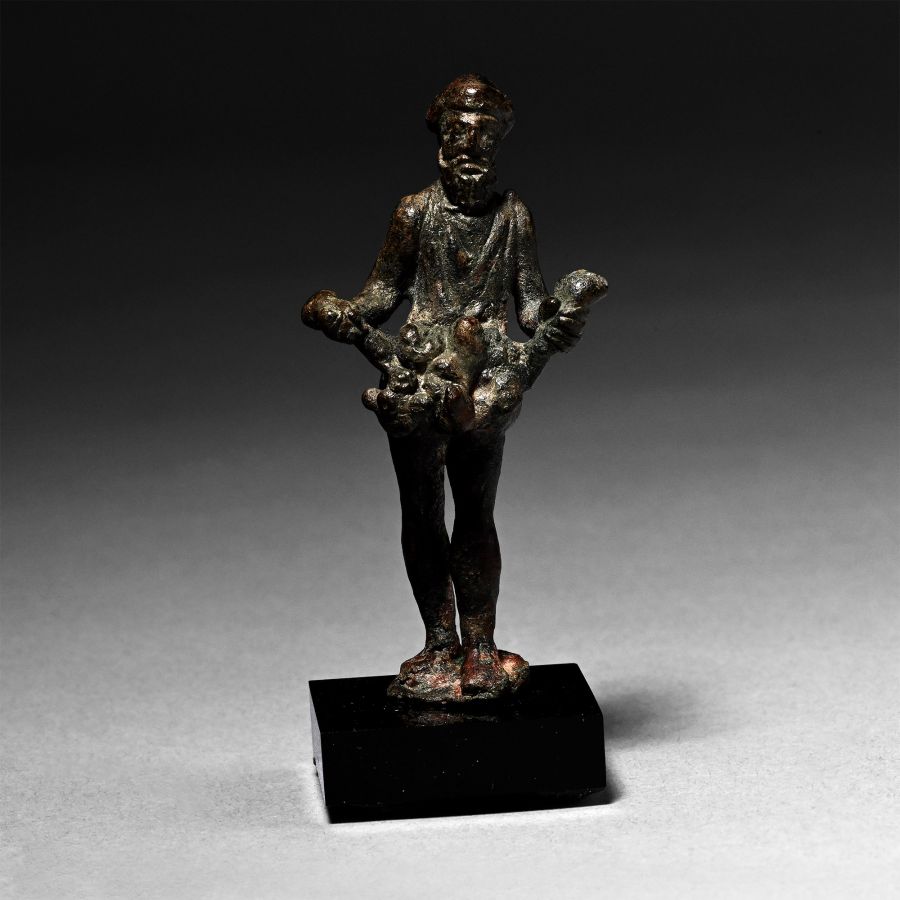
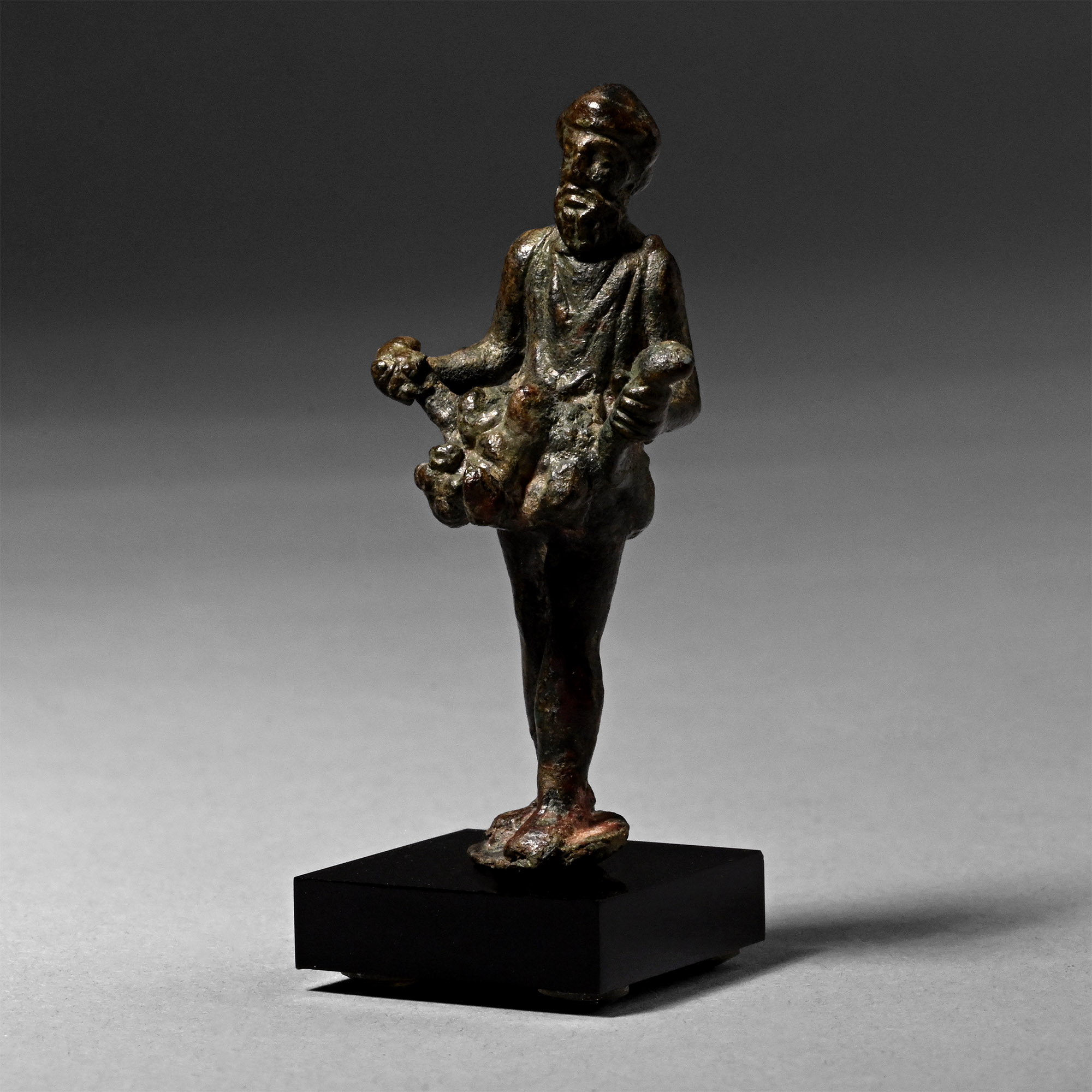
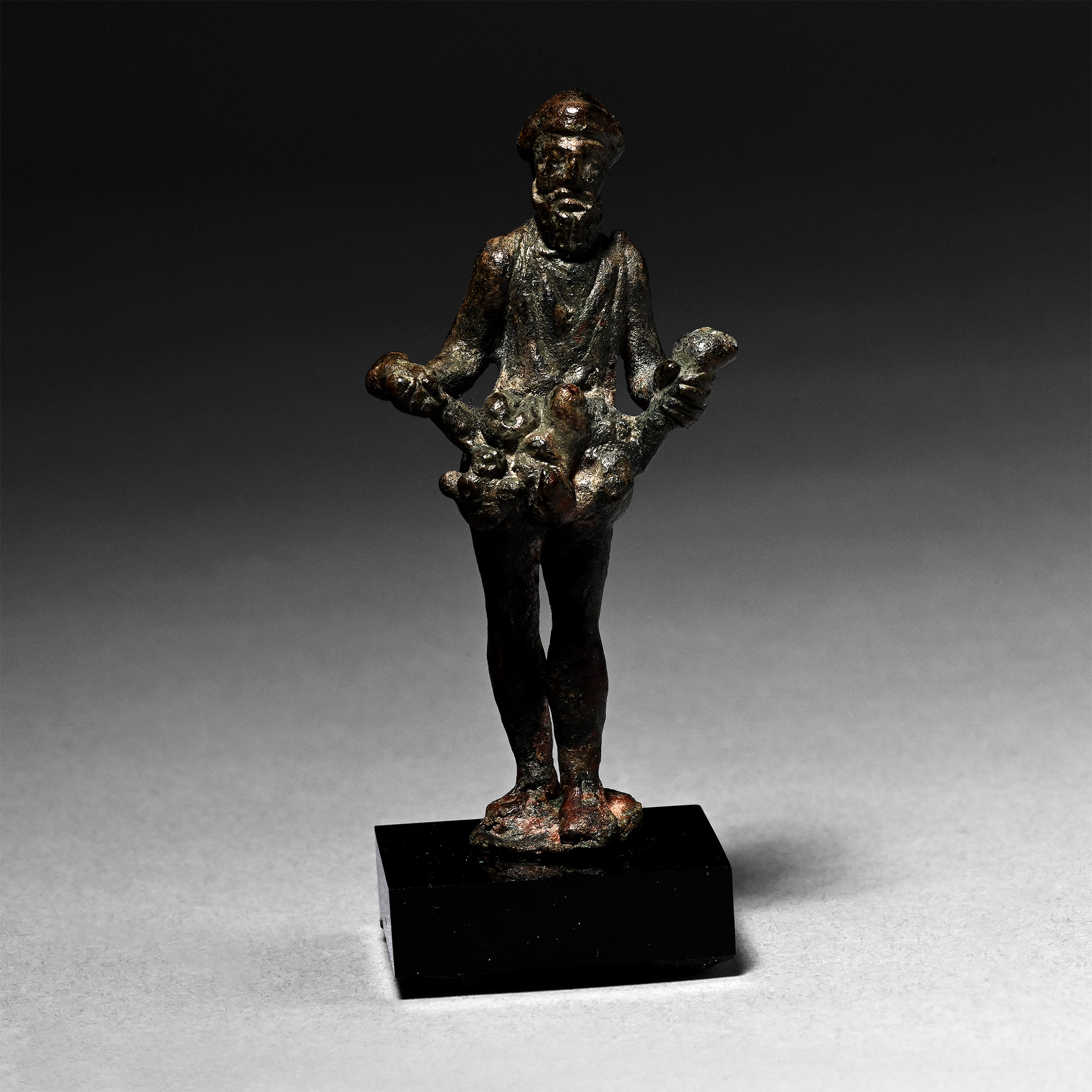
Roman Bronze Standing Figure of Priapus
1ST-2ND CENTURY A.D.
2 1/2 in. (31.7 grams total, 63 mm including stand).
Modelled in the round standing, wearing a paenula, his two hands holding up the hem to support a pile of fruits on his erect penis; mounted on a custom-made stand.
ProvenanceFrom the private collection of Mr K.A., acquired in the 1990s-early 2000s.
This lot is accompanied by an illustrated lot declaration signed by the Head of the Antiquities Department, Dr Raffaele D'Amato.
Cf. Rolland, H., Bronzes Antiques de Haute Provence, Paris, 1965, item 136, for type.
FootnotesThis is one of the most characteristic representations of Priapus: standing, with long, smooth hair, his head covered by a traveller's pilos (usually made of felt). With his hands he raises his tunic revealing his phallus, a symbol of fertility and good luck, and carries the first fruits of the earth on the hem of his tunic.
CONDITIONTimeLine Auctions follows a vetting process to ensure the authenticity and legality of all items, reinforcing our commitment to integrity and responsible trading. Each antiquity, antique, and coin lot undergoes thorough examination by a vetting committee of at least ten external specialists, professional trade association members, scientists, and archaeologists: Our Vetting Process
AUCTIONS:
TimeLine is a leading auction house specialising in antiquities, ancient art, collectables, natural history, coins, medals, and books. Our auctions offer museums, collectors, historians, and enthusiasts the opportunity to acquire unique and historically significant pieces.
-

Roman Vessel Lid with Male Youth Wearing a Chlamys
1st-3rd century A.D.Sold for (Inc. bp): £520
Discoid base supporting a seated youth with legs crossed, wearing a chlamys, his left hand supporting fruit in the folds of the cloth and right hand holding one; base pierced; transverse wire to sides of the head, ring above. 366 grams, 80 mm
From the collection of a gentleman, acquired on the London art market in the 1990s. This lot is accompanied by an illustrated lot declaration signed by the Head of the Antiquities Department, Dr Raffaele D'Amato. -
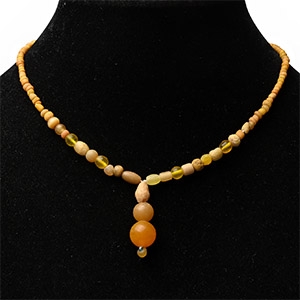
Roman Yellow Glass Bead Necklace String
1st-4th century A.D. and laterSold for (Inc. bp): £104
Composed of graduated oblate, spherical and annular beads, central feature with two large spherical beads; restrung. 10.5 grams, 37.5 cm
From the London, UK, art market in the 1990s. This lot is accompanied by an illustrated lot declaration signed by the Head of the Antiquities Department, Dr Raffaele D'Amato.
In the Roman period there was a strong formal and chromatic diversity of glass beads used for necklaces and bracelets. The most common beads in forms were small biconical (lenticular), barrel-shaped, spherical and annular; the most common colours were dark blue, followed by green and yellow. The succession of glass beads often imitates jewellery made of costly materials (gold, silver, semi-precious and precious stones). -
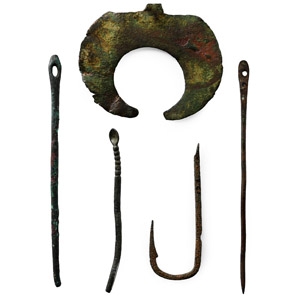
Roman Bronze Artefact Collection
1st-4th century A.D.Sold for (Inc. bp): £46
Including a fishing hook, needles and other items. 15.8 grams total, 50-85 mm
Found near Feltwell, Norfolk, UK. From the private collection of Kenneth Machin (1936-2020), Buckinghamshire, UK; his collection of antiquities and natural history was formed since 1948; thence by descent. This lot is accompanied by an illustrated lot declaration signed by the Head of the Antiquities Department, Dr Raffaele D'Amato.
