
Loading, please wait...
LOT 0782
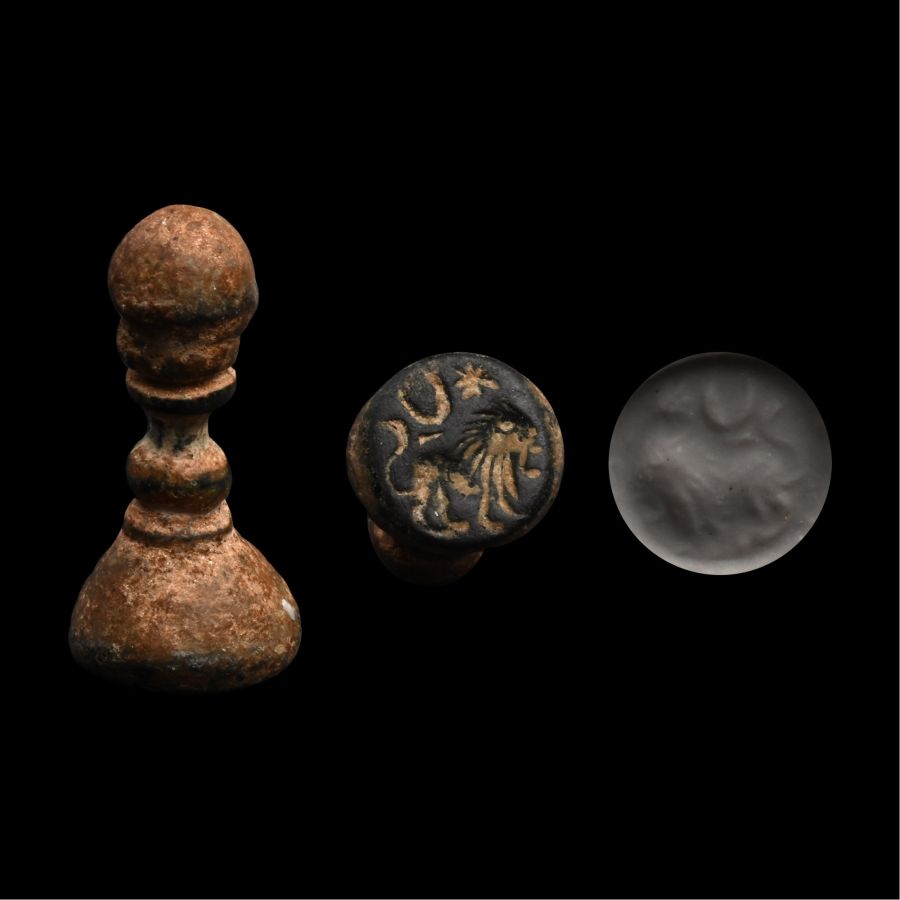
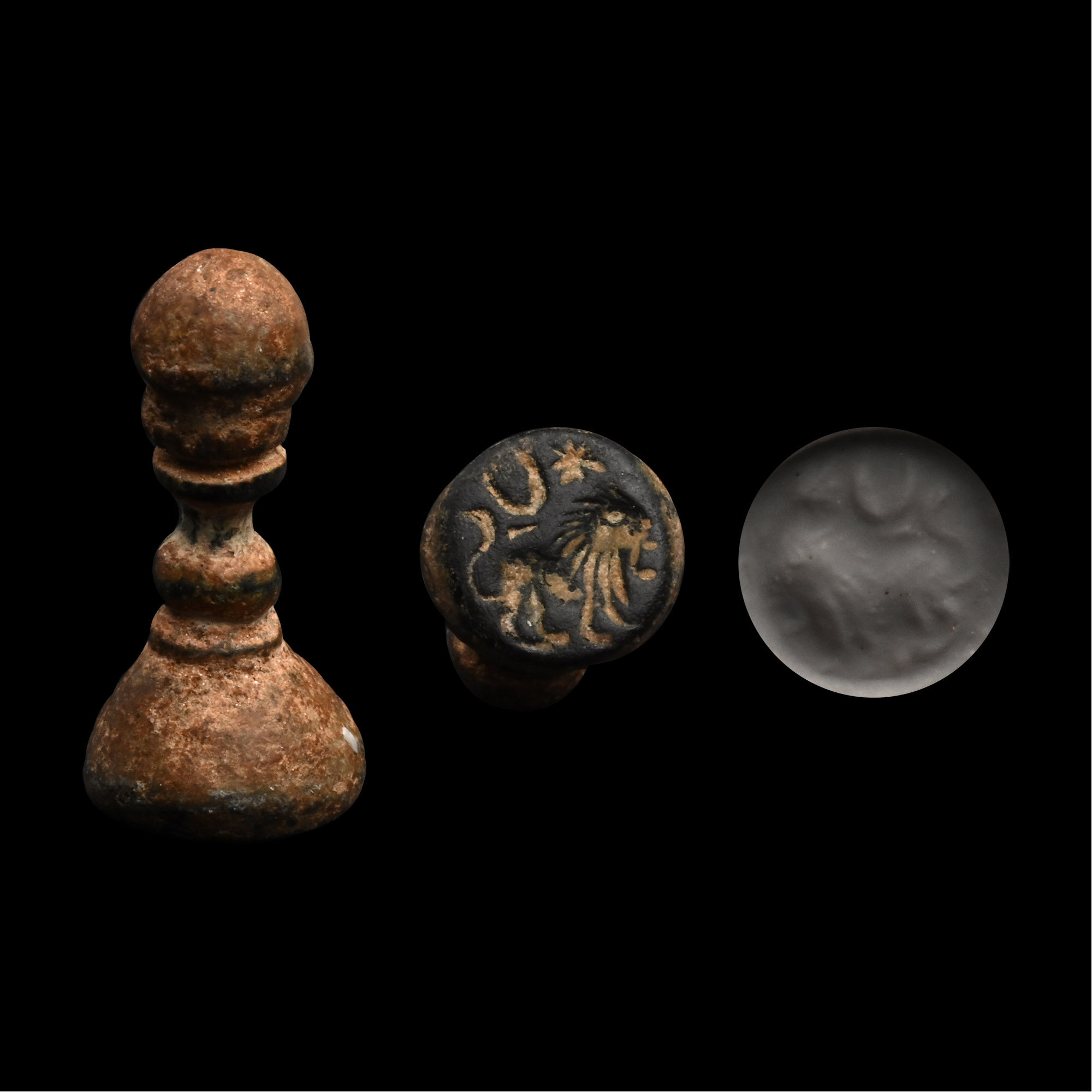
Roman Bronze Stamp Seal with Moon
4TH-5TH CENTURY A.D.
1 in. (4.61 grams, 23 mm).
Of tiered and balustered form with incuse image to underside, lion passant surmounted by a star and crescent moon. [No Reserve]
ProvenanceAcquired in 1993.
Private collection, thence by descent.
Private collection, since the late 1990s.
This lot is accompanied by an illustrated lot declaration signed by the Head of the Antiquities Department, Dr Raffaele D'Amato.
TimeLine Auctions follows a vetting process to ensure the authenticity and legality of all items, reinforcing our commitment to integrity and responsible trading. Each antiquity, antique, and coin lot undergoes thorough examination by a vetting committee of at least ten external specialists, professional trade association members, scientists, and archaeologists: Our Vetting Process
AUCTIONS:
TimeLine is a leading auction house specialising in antiquities, ancient art, collectables, natural history, coins, medals, and books. Our auctions offer museums, collectors, historians, and enthusiasts the opportunity to acquire unique and historically significant pieces.
-
Roman Fresco Wall Plaster Collection
1st century A.D.Sold for (Inc. bp): £104
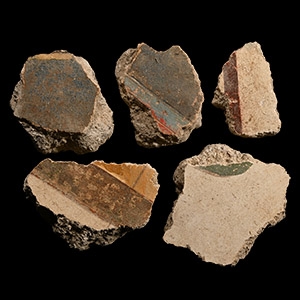
Fragments of wall plaster with rendered surface painted with mainly red, pale blue and white detailing; some with impression of timber laths to the reverse. 882 grams total, 8-11.3 cm
Acquired in the 19th century. Ex Jeger collection, Switzerland. UK gallery, early 2000s. This lot is accompanied by an illustrated lot declaration signed by the Head of the Antiquities Department, Dr Raffaele D'Amato.
These small fragments, for analogies with the fragments of Pompeii, seem to belong to the second style of Roman painting, red panels representing highlight and shadow, decorated with vegetal interlaces. Some panels were probably framed by a red grenade fillet. A fragment shows alternate blue and red colour over a cream background, maybe pertinent to a socle. -
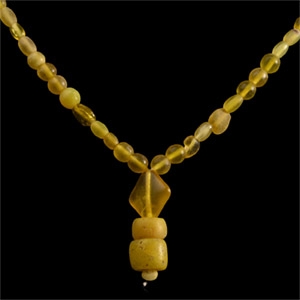
Roman Yellow Glass Bead Necklace String
1st-4th century A.D. and laterSold for (Inc. bp): £72
Composed of graduated oblate, spherical and other beads, central feature with a large tabular lozenge-shaped bead, including recent European moulded bead shapes; restrung. 14.3 grams, 36.5 cm
From the London, UK, art market in the 1990s. This lot is accompanied by an illustrated lot declaration signed by the Head of the Antiquities Department, Dr Raffaele D'Amato.
In the Roman period there was a strong formal and chromatic diversity of glass beads used for necklaces and bracelets. The most common beads in forms were small biconical (lenticular), barrel-shaped, spherical and annular; the most common colours were dark blue, followed by green and yellow. The succession of glass beads often imitates jewellery made of costly materials (gold, silver, semi-precious and precious stones). -
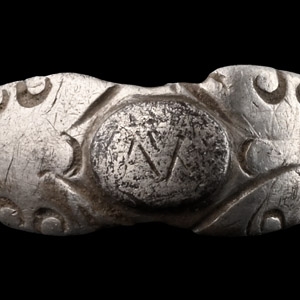
Roman Silver Ring with 'V' Motif
1st-3rd century A.D.Sold for (Inc. bp): £390
With leaf-shaped shoulders punched at the edges, domed bezel with shallow 'V' motif. 3.91 grams, 24.00 mm overall, 20.26 x 18.62 mm internal diameter (approximate size British Q, USA 8, Europe 17.49, Japan 16)
Ex German art market, 2000s. Acquired from an EU collector living in London. From the collection of a Surrey, UK, gentleman. This lot is accompanied by an illustrated lot declaration signed by the Head of the Antiquities Department, Dr Raffaele D'Amato.
