
Loading, please wait...
LOT 0952
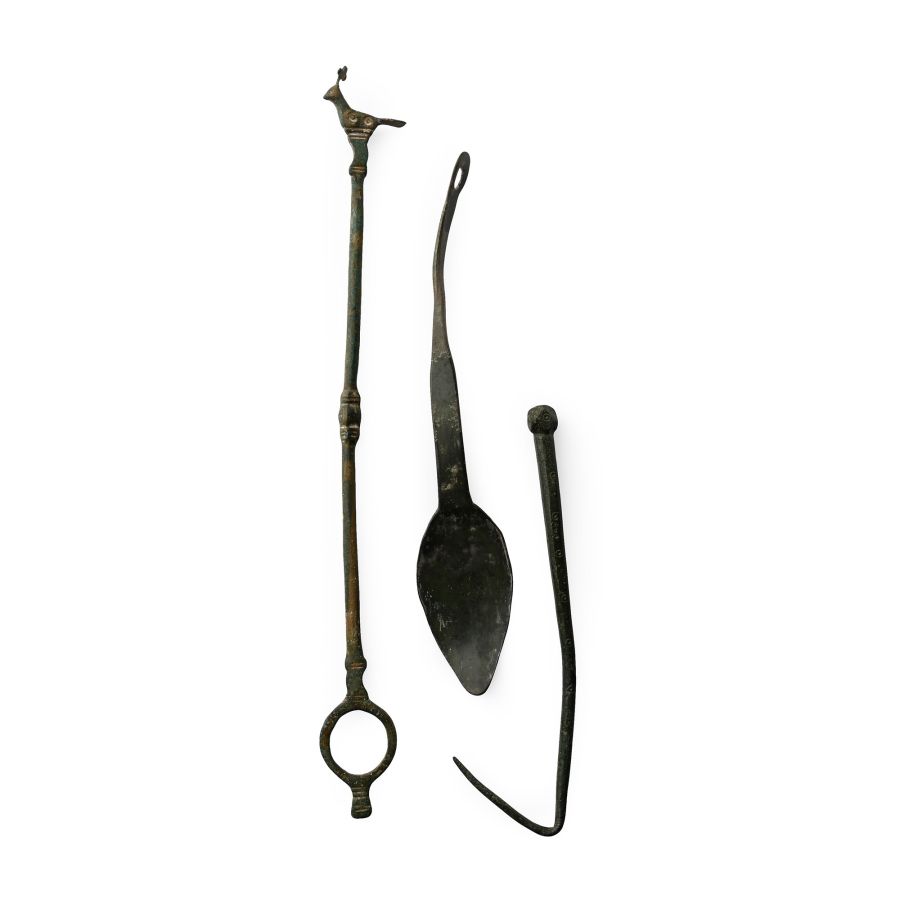
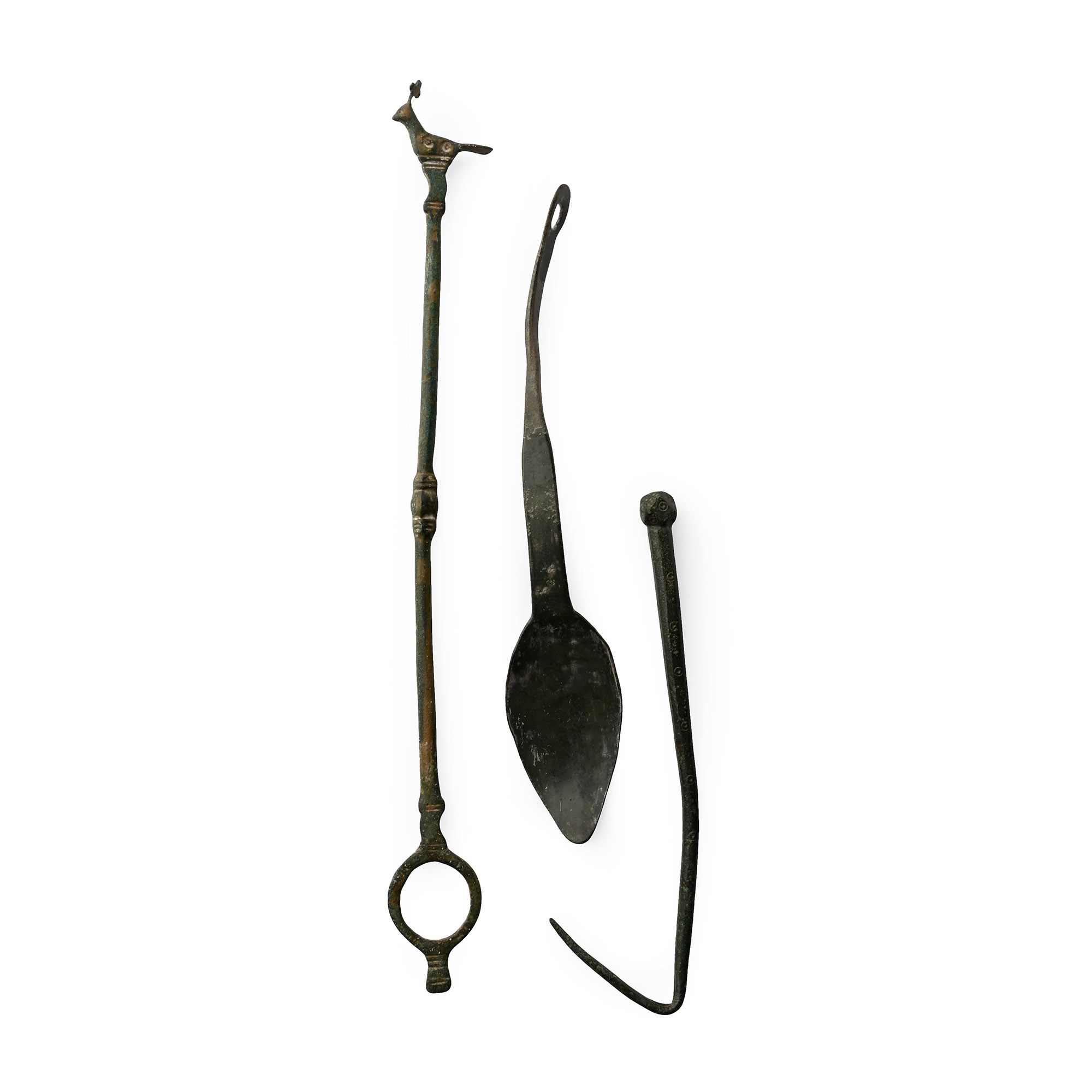
Roman Bronze Spoon, Pin and Distaff
1ST-6TH CENTURY A.D.
4 1/2 - 8 in. (53 grams total, 11.5-20.5 cm).
Comprising a spoon with ovoid, flat bowl; pin with polygonal finial stamped with ring-and-dot motifs, pierced towards the point; distaff with bird finial. [3, No Reserve]
ProvenanceAcquired on the UK art market.
Property of an East Anglia private collector.
This lot is accompanied by an illustrated lot declaration signed by the Head of the Antiquities Department, Dr Raffaele D'Amato.
TimeLine Auctions follows a vetting process to ensure the authenticity and legality of all items, reinforcing our commitment to integrity and responsible trading. Each antiquity, antique, and coin lot undergoes thorough examination by a vetting committee of at least ten external specialists, professional trade association members, scientists, and archaeologists: Our Vetting Process
AUCTIONS:
TimeLine is a leading auction house specialising in antiquities, ancient art, collectables, natural history, coins, medals, and books. Our auctions offer museums, collectors, historians, and enthusiasts the opportunity to acquire unique and historically significant pieces.
-
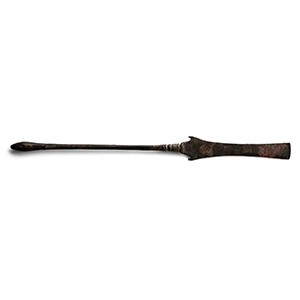
Roman Bronze Cosmetic Implement
1st-4th century A.D.Sold for (Inc. bp): £52
Comprising a flat blade with lateral spurs at the junction with the round-section shank terminating in a bulbous probe. 11.3 grams, 15.3 cm
Acquired on the UK art market during the late 20th century. From the private collection of David King (1940-2024), Hoddesdon, Hertfordshire, UK. This lot is accompanied by an illustrated lot declaration signed by the Head of the Antiquities Department, Dr Raffaele D'Amato. -
.jpg)
Roman Gold Boat-Shaped Earring Pair
1st-3rd century A.D.Sold for (Inc. bp): £520
Matched pair, each a hollow-formed crescent with filigree closure, cluster of hollow granules to the underside. 5.06 grams total, 28-29 mm
Acquired in the 1994. Private collection, Switzerland, thence by descent. Private collection, since the late 1990s. This lot is accompanied by an illustrated lot declaration signed by the Head of the Antiquities Department, Dr Raffaele D'Amato. -
.jpg)
Roman Iron Knife with Bronze Hilt
4th century A.D.Sold for (Inc. bp): £169
Single-edged iron blade with scooped tip and octagonal-section bronze handle with dog-head finial and beaded collar. 37 grams, 16 cm
Ex German art market, 2000s. Acquired from an EU collector living in London. From the collection of a Surrey, UK, gentleman. This lot is accompanied by an illustrated lot declaration signed by the Head of the Antiquities Department, Dr Raffaele D'Amato.
