
Loading, please wait...
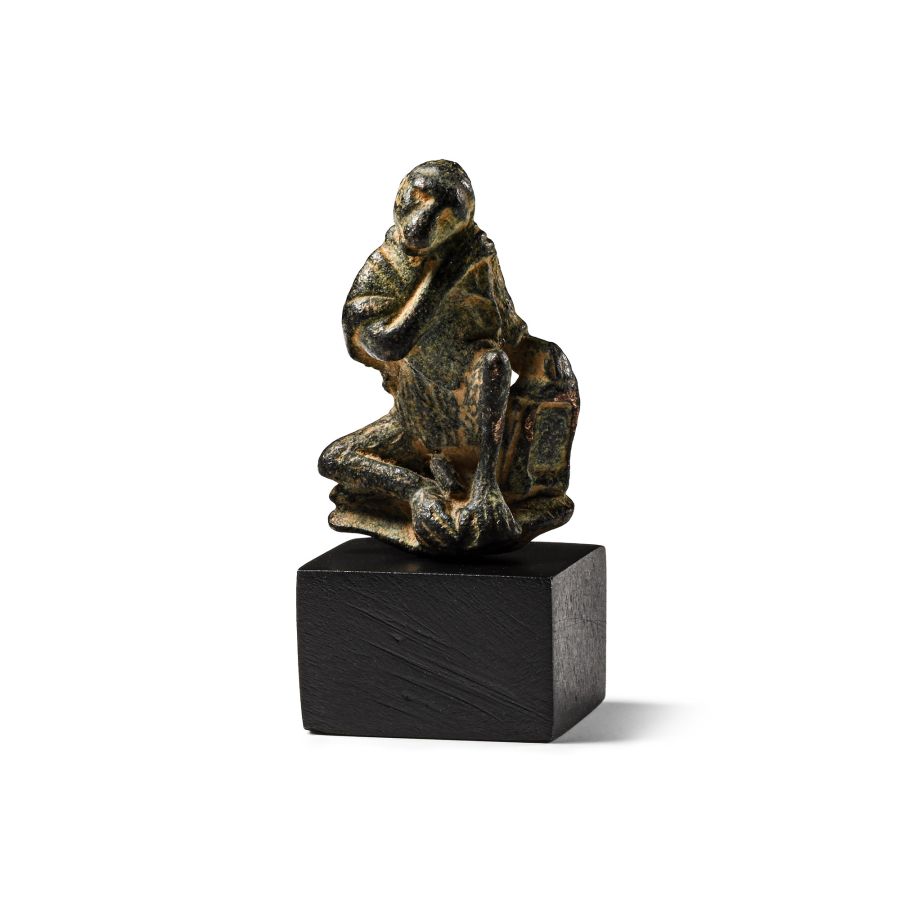


LOT 0178
Roman Bronze Spanish Military Monkey Statuette
4TH CENTURY A.D.
1 3/8 in. (23.9 grams, 34 mm).
Modelled seated on a polygonal base wearing a paenula, the right hand placed on the left shoulder, head tilted to one side, right hand placed on a stela or lantern.
Provenance‘The Ancient Menagerie Collection’ formerly the property of a Cambridgeshire lady, collected since the 1990s and acquired from auctions and dealers throughout Europe and the USA, now ex London collection.
LiteratureSee Rolland, H., Bronzes Antiques De Haute Provence, Paris, 1965, item 262, for a Roman example of small ape statuette.
FootnotesThe monkey is bearing a military sagum with cucullus and is holding beside him a squared lucerna. This representation can be a Roman military mascot or simply a grotesque. In 2001 in Spain, at Llivia, remains of Barbary apes with military belt buckles typically related to the late Roman period were discovered. The discovery of this type of belt buckle in a human grave would suggest that they were once a part of this army, so the fact that some were given to a Barbary ape means that the apes may have played a military role, for example, acted as targets to distract the enemy, or had a combat or defence role. Apes were also a common form of pet in the Graeco-Roman world.
CONDITIONTimeLine Auctions follows a vetting process to ensure the authenticity and legality of all items, reinforcing our commitment to integrity and responsible trading. Each antiquity, antique, and coin lot undergoes thorough examination by a vetting committee of at least ten external specialists, professional trade association members, scientists, and archaeologists: Our Vetting Process
AUCTIONS:
TimeLine is a leading auction house specialising in antiquities, ancient art, collectables, natural history, coins, medals, and books. Our auctions offer museums, collectors, historians, and enthusiasts the opportunity to acquire unique and historically significant pieces.
LOT 0178
Roman Bronze Spanish Military Monkey Statuette
Estimate £800 - 1,000€930 - 1,160 (for guidance only)$1,080 - 1,350 (for guidance only)
-
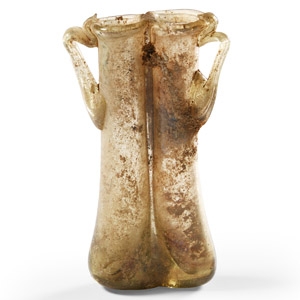
Roman Glass Double Unguentarium with Handles
4th century A.D.Estimate: £300 - 400 (+bp*)
Opening Bid: £150
Pale green with two flared tubes with everted rims, triangular-shaped lateral handles. 57 grams, 10.2 cm
Acquired 1980-2015. Ex Abelita family collection. -
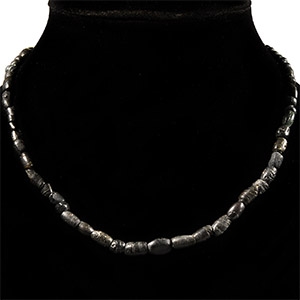
Roman Black Glass Bead Necklace String
1st-4th century A.D.Sold for (Inc. bp): £52
Restrung; composed of graduated opaque black glass beads of various types. 13.7 grams, 42 cm long
Acquired on the UK art market. Property of a Ruislip, UK, gentleman, by inheritance. -
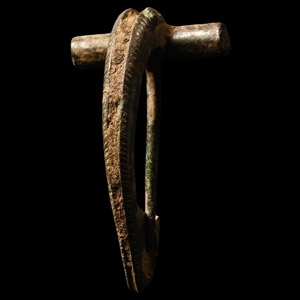
Romano-British Colchester-Derivative Bow Brooch
Circa 1st-2nd century A.D.Sold for (Inc. bp): £72
With hinge at the cross-bar and pin beneath, deep bow with vertical channel; notched detailing. 12.9 grams, 47 mm
Found East Lindsey, Lincolnshire, UK. Ex private Merseyside, UK, collection. Accompanied by a copy of the British Museum's Portable Antiquities Scheme report no.SWOR-A26E93.
