
Loading, please wait...
LOT 0742
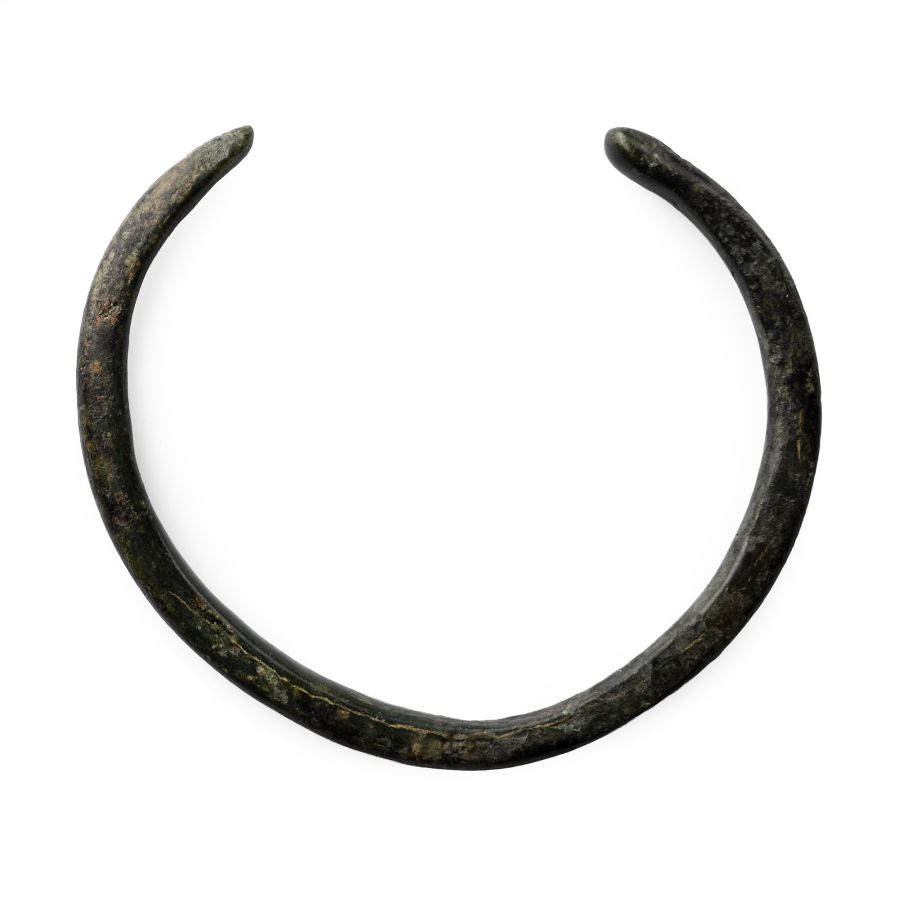
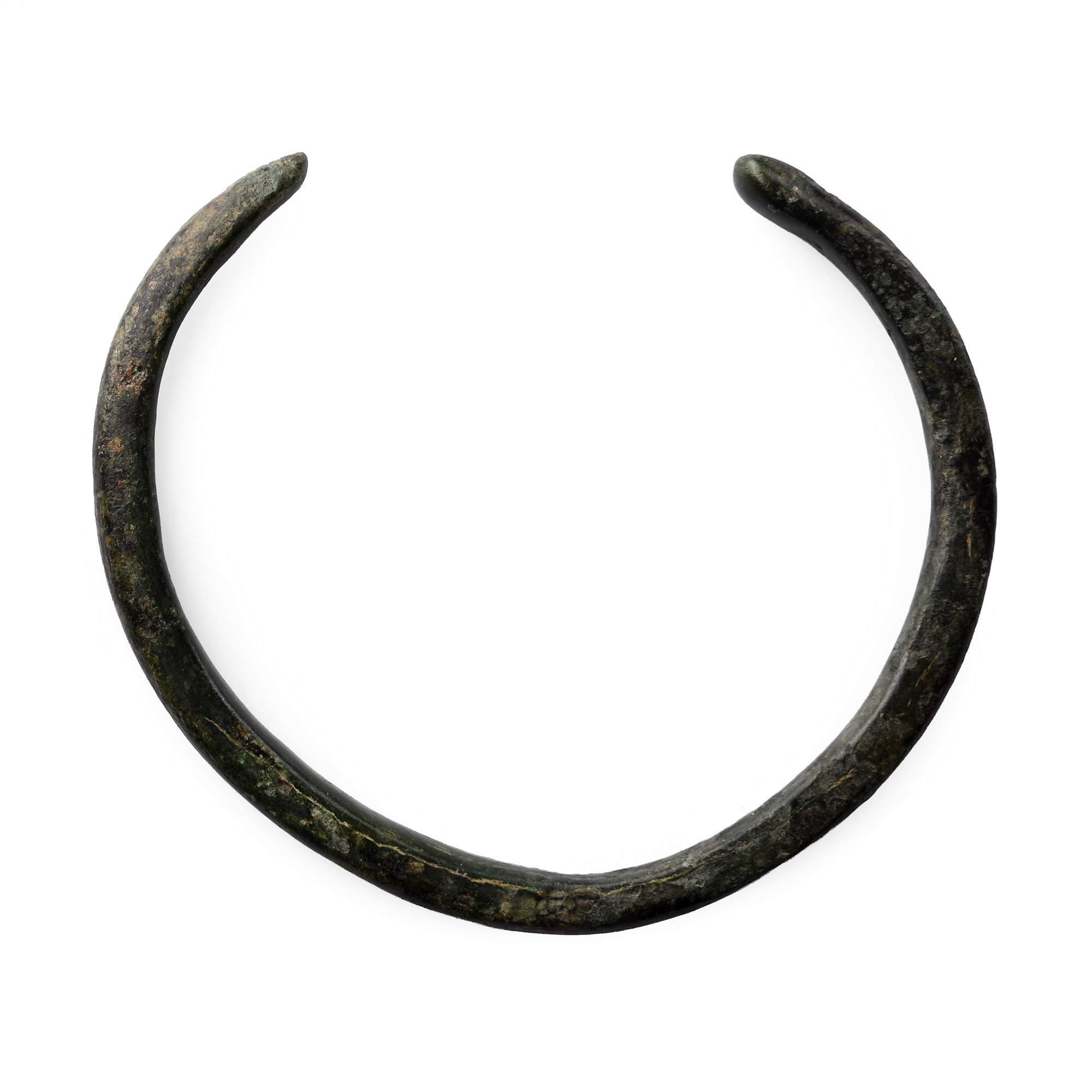
Roman Bronze Snake-Headed Bracelet
1ST-4TH CENTURY A.D.
2 3/8 in. (16.5 grams, 60 mm).
Penannular rectangular-section bracelet with stylised snake-head finials. [No Reserve]
ProvenanceEx German art market, 2000s.
Acquired from an EU collector living in London.
From the collection of a Surrey, UK, gentleman.
This lot is accompanied by an illustrated lot declaration signed by the Head of the Antiquities Department, Dr Raffaele D'Amato.
TimeLine Auctions follows a vetting process to ensure the authenticity and legality of all items, reinforcing our commitment to integrity and responsible trading. Each antiquity, antique, and coin lot undergoes thorough examination by a vetting committee of at least ten external specialists, professional trade association members, scientists, and archaeologists: Our Vetting Process
AUCTIONS:
TimeLine is a leading auction house specialising in antiquities, ancient art, collectables, natural history, coins, medals, and books. Our auctions offer museums, collectors, historians, and enthusiasts the opportunity to acquire unique and historically significant pieces.
-
.jpg)
Roman Silver-Gilt Military Mount with Mars Ultor
2nd century A.D.Sold for (Inc. bp): £2,210
D-shaped plaque with bust modelled in the round with openwork foliage to the border. 18.79 grams, 32 mm
UK private collection, acquired in New York in the 1980s. This lot has been cleared against the Art Loss Register database, and is accompanied by an illustrated lot declaration signed by the Head of the Antiquities Department, Dr Raffaele D'Amato. -
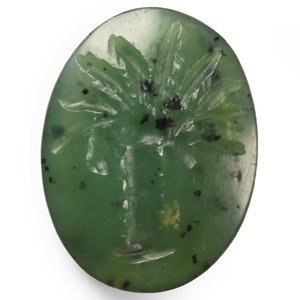
Roman Green Agate Gemstone Depicting a Palm Tree
1st-2nd century A.D.Estimate: £150 - 200 (+bp*)
Opening Bid: £75
Biconvex with intaglio palm-tree motif. 0.2 grams, 10 mm
From the private collection of Mr K.A., acquired in the 1990s-early 2000s. This lot is accompanied by an illustrated lot declaration signed by the Head of the Antiquities Department, Dr Raffaele D'Amato.
Diverse and sometimes exotic imagery can be found on Roman gemstones, like the ones from sites like Caerleon, showing a Roman gemstone in agate depicting a palm tree with dates. These gemstones, often featuring bucolic scenes and symbols of prosperity, were sometimes made of materials coming from the different corners of the empire or even distant lands like Cyprus, Egypt, India, and Sri Lanka. Palm trees were symbols of abundance and fertility, and were a common motif on Roman gemstones even before the advent of Christianity, when the palm tree was associated with the glorious entrance of God in Jerusalem. They were sometimes depicted with other elements like parrots, further highlighting the exotic nature of some Roman gemstone designs. -
.jpg)
Roman Bronze Trumpet Whorl Brooch
Circa 2nd century A.D.Sold for (Inc. bp): £104
S-shaped La Tène scroll with trumpet and bulb detailing, catch and pin to the reverse. 8.89 grams, 33 mm
From the collection of a Suffolk, UK, gentleman, established from the early 2000s. This lot is accompanied by an illustrated lot declaration signed by the Head of the Antiquities Department, Dr Raffaele D'Amato.
