Loading, please wait...

Roman Bronze Sitting Dog Lamp Lid Roman Bronze Sitting Dog Lamp Lid Roman Bronze Sitting Dog Lamp Lid Roman Bronze Sitting Dog Lamp Lid Roman Bronze Sitting Dog Lamp Lid Roman Bronze Sitting Dog Lamp Lid
Use mousewheel to zoom in and out, click to enlarge
Details

LOT 0809

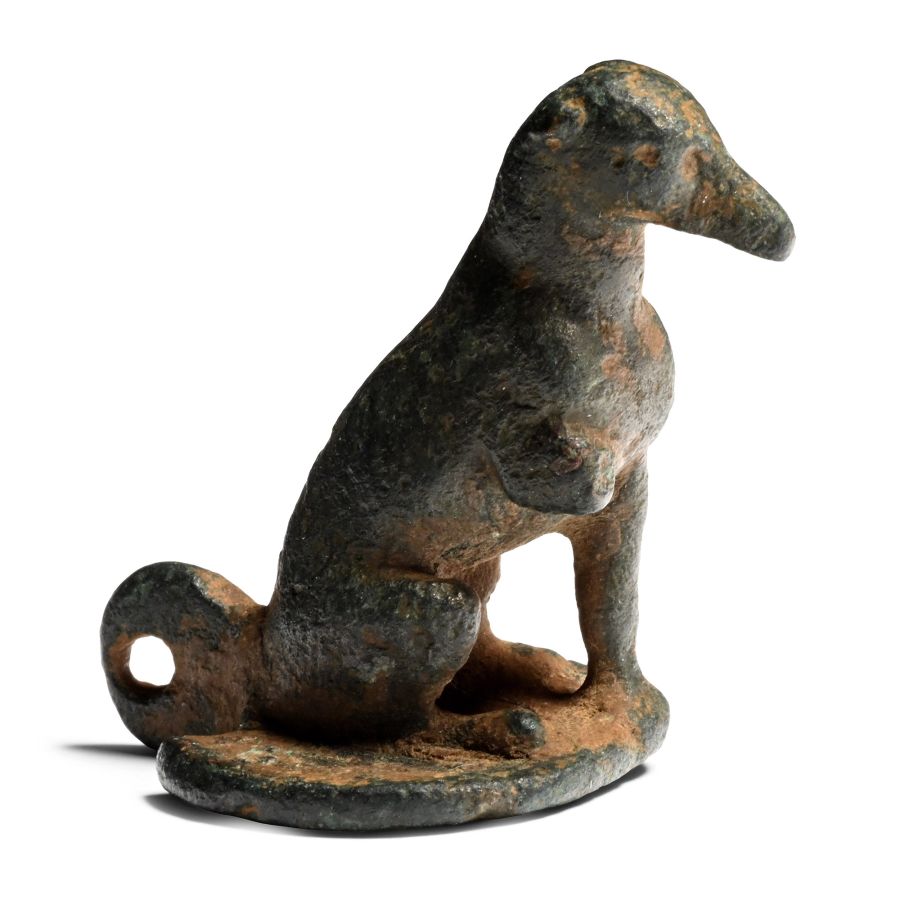
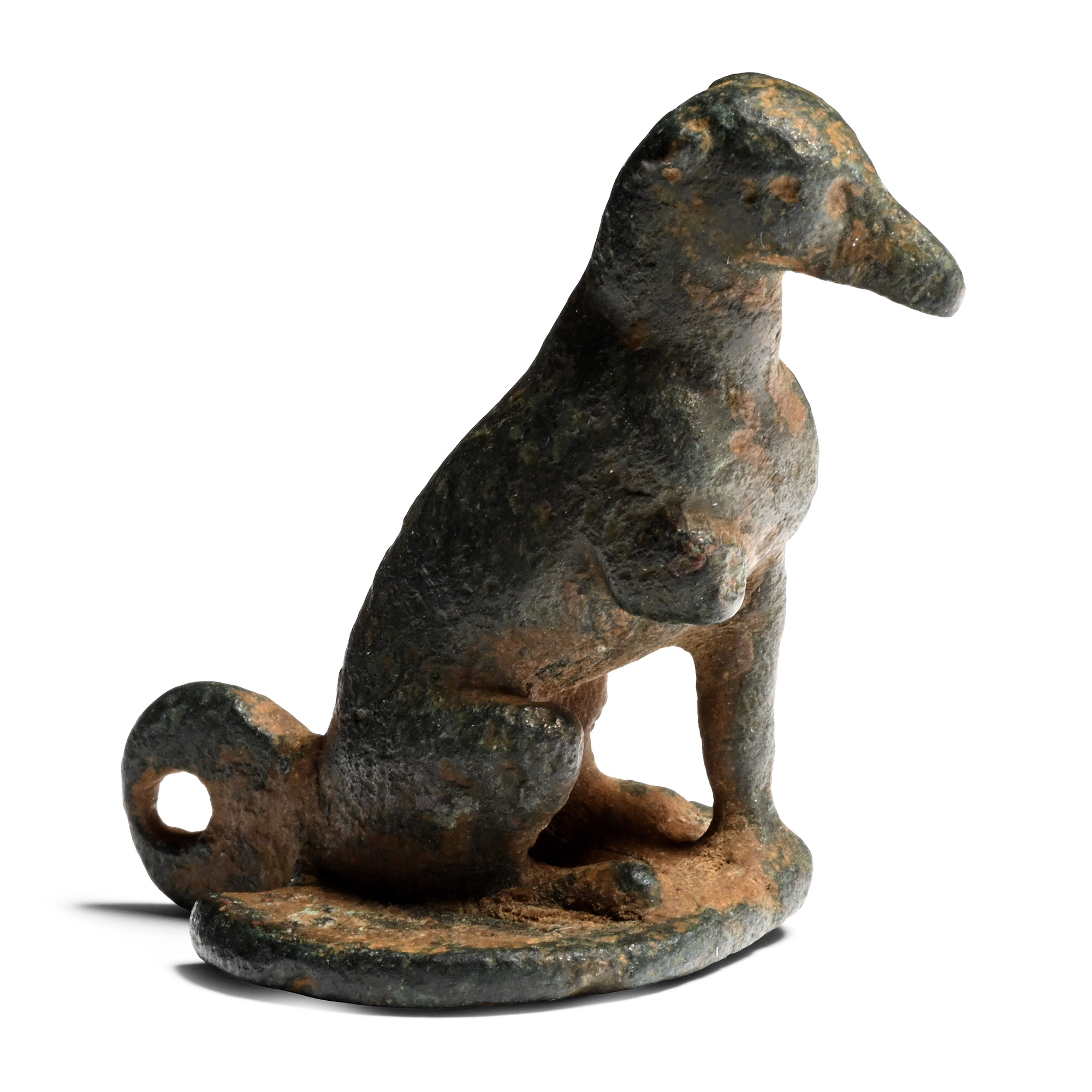
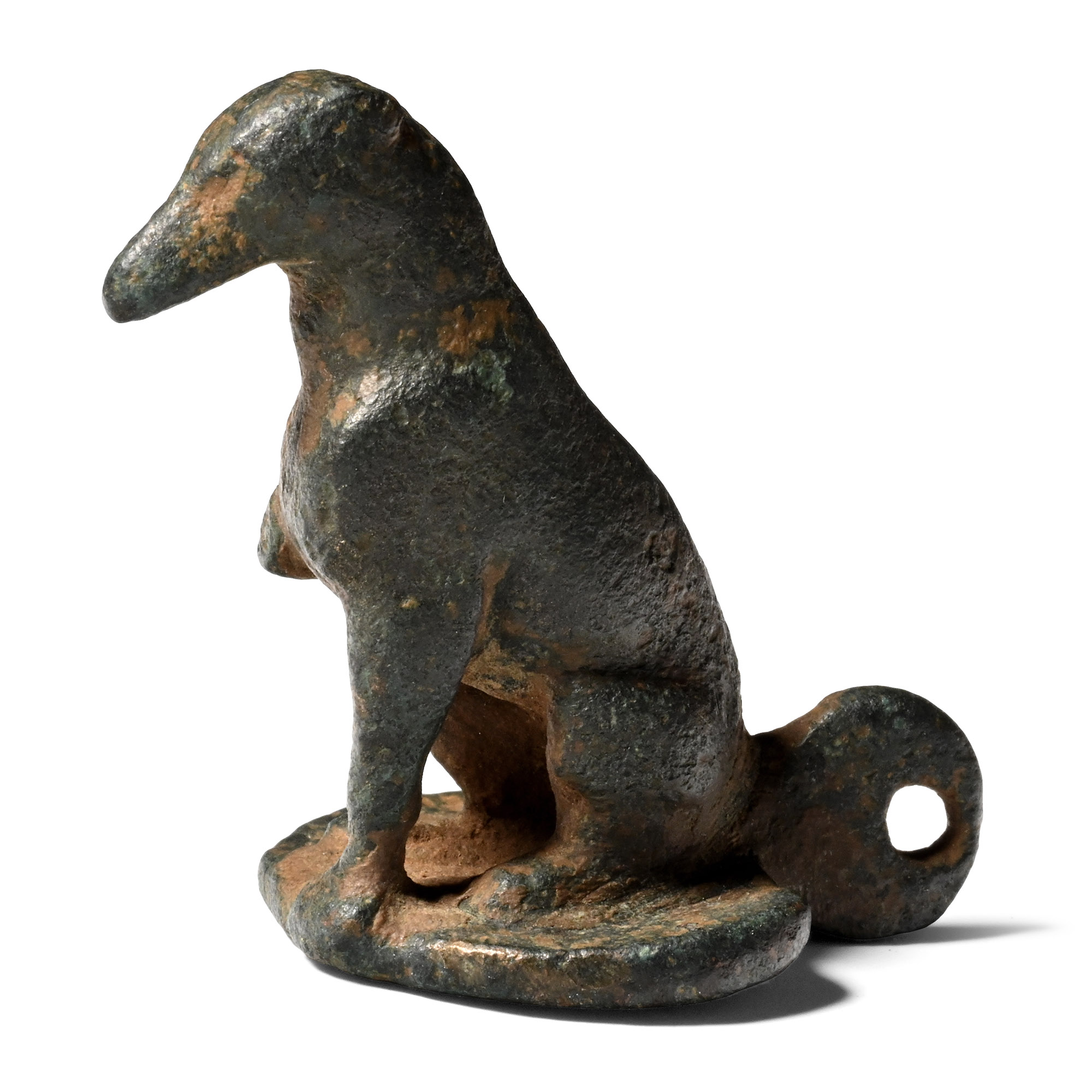
Roman Bronze Sitting Dog Lamp Lid

1ST-2ND CENTURY A.D.

1 1/2 in. (48.1 grams, 39 mm).

The hound sitting on a flat lid with a loop to the rear, muscular body and a long, slender snout, right front leg raised (now absent).

Provenance

Ex German art market, 2000s.
Acquired from an EU collector living in London.
From the collection of a Surrey, UK, gentleman.

CONDITION
VETTING:

TimeLine Auctions follows a vetting process to ensure the authenticity and legality of all items, reinforcing our commitment to integrity and responsible trading. Each antiquity, antique, and coin lot undergoes thorough examination by a vetting committee of at least ten external specialists, professional trade association members, scientists, and archaeologists: Our Vetting Process


AUCTIONS:

TimeLine is a leading auction house specialising in antiquities, ancient art, collectables, natural history, coins, medals, and books. Our auctions offer museums, collectors, historians, and enthusiasts the opportunity to acquire unique and historically significant pieces.

LOT 0809

Roman Bronze Sitting Dog Lamp Lid

Estimate £100 - 140€120 - 160 (for guidance only)$140 - 190 (for guidance only)

Opening Bid
£50 (EUR 58; USD 68) +BP*

Sign in to Bid

Please enter a e-mail
Please enter a password
Or Create Account here.
Please confirm to accept TC and Privacy policy

Bids: 0
RELATED LOTS
  • Roman Agate Cameo with Devouring Hound
    Roman Agate Cameo with Devouring Hound
    Circa 1st-2nd century A.D.

    Estimate: £300 - 400 (+bp*)

    Bids: 3   |   Current Bid: £15

    Black-and-white cameo featuring a raised image of a hunting dog devouring a hare with its long ears pulled against the neck, detailed ribs and claws on the back paw. 0.81 grams, 15 mm


    From the private collection of a European gentleman (1942-2024), formed since the 1970s.

    Lot Details

  • Etrusco-Italic Bronze Figure of Young Hercules
    Etrusco-Italic Bronze Figure of Young Hercules
    Archaic Style, circa 4th-3rd century B.C.

    Estimate: £2,500 - 3,500 (‡+bp*)

    Opening Bid: £1,250

    Modelled in the round figure standing in advancing pose with the right hand raised and fist clenched; left shoulder and arm covered with the skin of the Nemean lion and left hand modelled hollow; hair cut short and textured. 307 grams, 12 cm


    Acquired in the mid 1980s-1990s. Private collection, Switzerland, thence by descent. Private collection, since the late 1990s. Accompanied by an academic report by Dr Raffaele D'Amato. This lot has been checked against the Interpol Database of stolen works of art and is accompanied by a search certificate number no.12515-232159.

    There were several cult sites of Hercules in Etruria and old Latium, particularly in the Sabellian region, and the bronze statuettes discovered here exhibit a wide range of styles. Etruscan bronzes of the half-god usually represent him with the lion skin draped over his arm (Metropolitan accession number 96.9.419).

    Lot Details

  • Roman Bronze Figure of Hercules with Lion-Skin Headdress
    Roman Bronze Figure of Hercules with Lion-Skin Headdress
    2nd century B.C.

    Estimate: £700 - 900 (+bp*)

    Opening Bid: £350

    Depicting Hercules in heroic nudity, standing with his legs slightly apart, the right leg set back and the left, slightly bent, advanced outward; his right arm raised, the forearm bent at a right angle, while the clenched hand originally held a club, now lost; the left arm extending forward and supporting the lion skin; the left hand, also clenched, probably held a further attribute; the stylised lion skin draped over the hero's head, terminating in two pointed flaps at either side, and fastened across the chest with the so-called 'Heracles knot', beneath which the forepaws of the lion are rendered with deeply incised claw; accompanied by a display stand. 443 grams total, 14 cm including stand

    The surface retains a thick, undisturbed green patina. Minor losses are present and may plausibly be interpreted as the result of ritual damage in antiquity.

    Acquired in Germany before 2000s. English private collection. Bertolami Fine Art, London, Auction 85, 14 December 2020, no.11. This lot has been checked against the Carabinieri Database of stolen works of art.

    The sculpture reproduces the iconographic type of the charging Hercules, a motif widely attested in ancient Italy, particularly in the Umbro-Sabellian region, and ultimately derived from the Magna Graecia artistic tradition. The widespread adoption of this iconographic scheme, repeated with only minor variations, reflects the development of local cults dedicated to the hero, who was at times assimilated to indigenous deities. It has also been suggested that this type ultimately derives from a bronze original identified as the Herakles Alexikakos, attributed to the Argive sculptor Hageladas, active between the late 6th and early 5th century B.C.

    Lot Details