
Loading, please wait...
LOT 0919
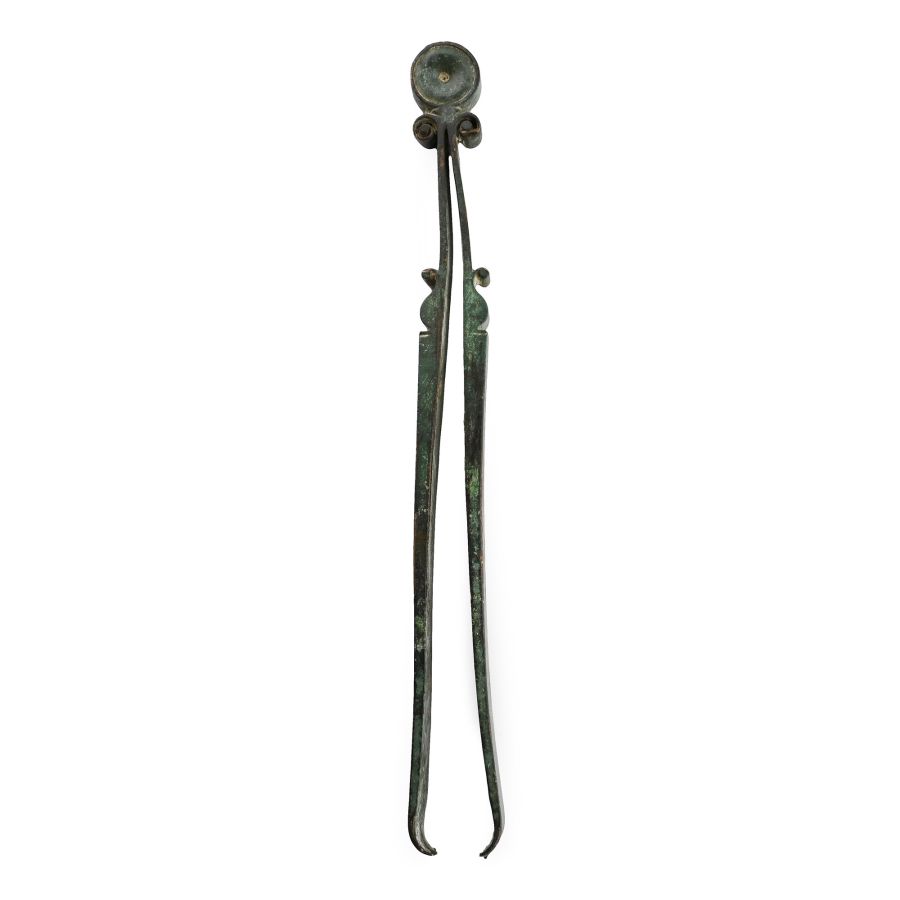
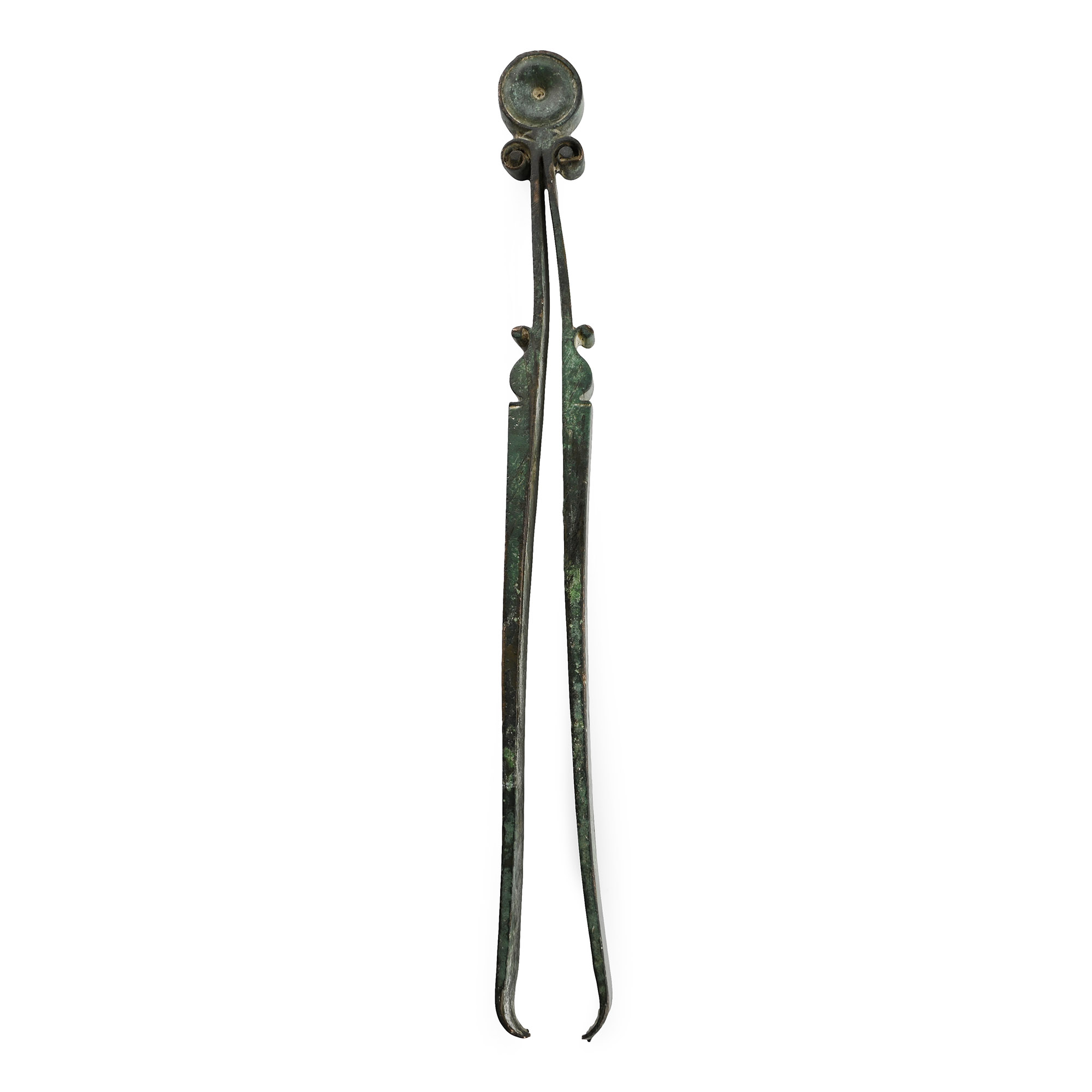
Roman Bronze Serrated Medical Forceps
1ST-2ND CENTURY A.D.
5 5/8 in. (46 grams, 14.2 cm).
With long rectangular-section arms serrated at the end, finial formed as a disc with scroll decoration; accompanied by a slip reading 'Roman, Decorated Bronze Forceps, C. 1st-2nd century AD. Large, finely decorated pair of bronze forceps, with long, slightly expanding arms & serrated grips, indicating it may have been used as a medical instrument. Provenance: O'Bee Collection, acquired in the 1980's & believed to have been found in East Anglia. Published in Bennets R-22-0106, pg 232. ref. Similar example in Metropolitan Museum of Art, no: 74.51.5435.' [No Reserve]
ProvenanceBelieved found in East Anglia, UK.
Ex M. O'Bee collection; acquired in the 1980s.
Ex Noonans, London, UK.
Accompanied by a previous catalogue information slip.
Hammond, A., Artefacts of England and the United Kingdom, Benet's fourth edition, p.368, item R22-0106.
LiteratureSee The British Museum, item registration number 2001,0302.5.
CONDITIONTimeLine Auctions follows a vetting process to ensure the authenticity and legality of all items, reinforcing our commitment to integrity and responsible trading. Each antiquity, antique, and coin lot undergoes thorough examination by a vetting committee of at least ten external specialists, professional trade association members, scientists, and archaeologists: Our Vetting Process
AUCTIONS:
TimeLine is a leading auction house specialising in antiquities, ancient art, collectables, natural history, coins, medals, and books. Our auctions offer museums, collectors, historians, and enthusiasts the opportunity to acquire unique and historically significant pieces.
-
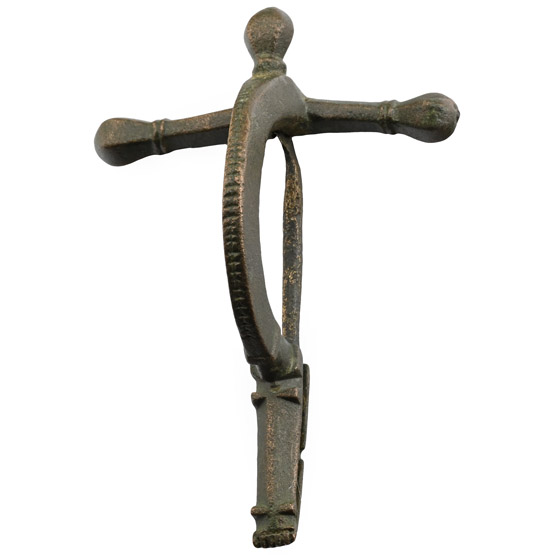
Roman Bronze Crossbow Brooch
4th century A.D.Sold for (Inc. bp): £117
Early type with lemon-shaped knop above the square-section crossbar, facetted bow with impressed triangles to the outer edge and faceted knop finials, D-section footplate with lateral chamfered edges and catchplate to reverse, hinged pin behind the crossbar. 23.7 grams, 68 mm
Ex German art market, 2000s. Acquired from an EU collector living in London. From the collection of a Surrey, UK, gentleman. -
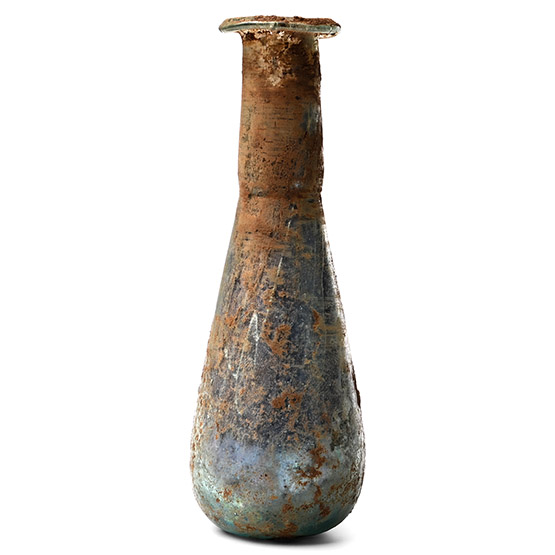
Roman Blue Glass Flask
Circa 1st-4th century A.D.Sold for (Inc. bp): £117
Piriform body with a short tubular neck and rolled rim. 72 grams, 10.9 cm
From a London, UK, collection of glass, 1970-2000s. -
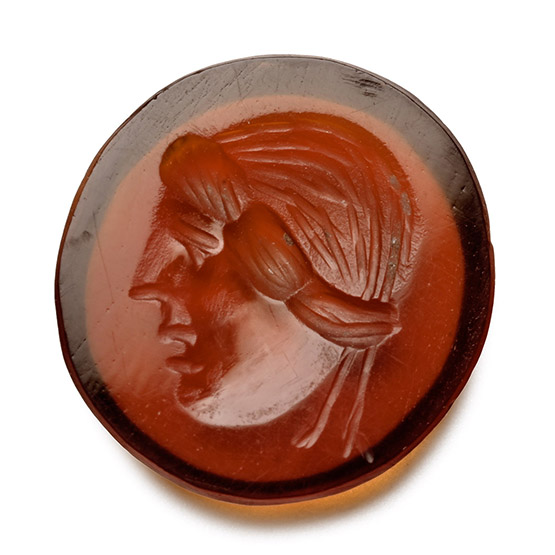
Roman Sard Gemstone with a Maenad Mask
1st century B.C.-1st century A.D.Sold for (Inc. bp): £338
With intaglio profile bust of a woman facing left; supplied with a museum-quality impression. 0.49 grams, 11 mm
Private English collection, formed between the late 1970s and early 1990s. Private collection, London, UK.
