Loading, please wait...
LOT 0836
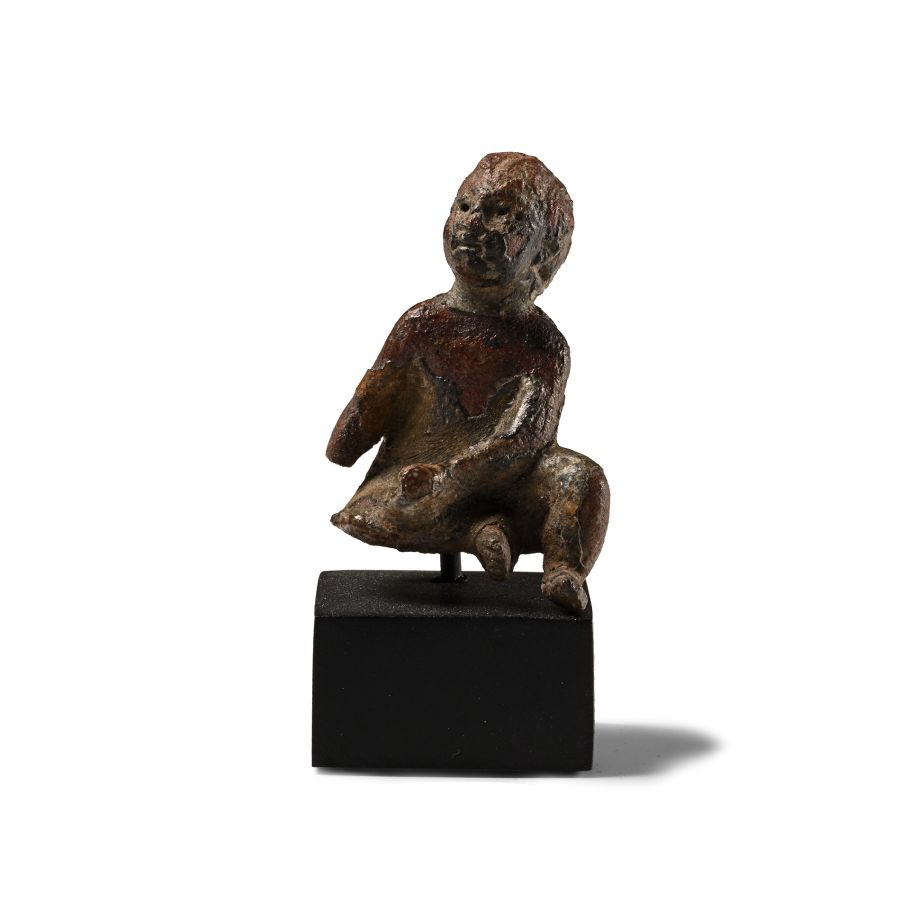
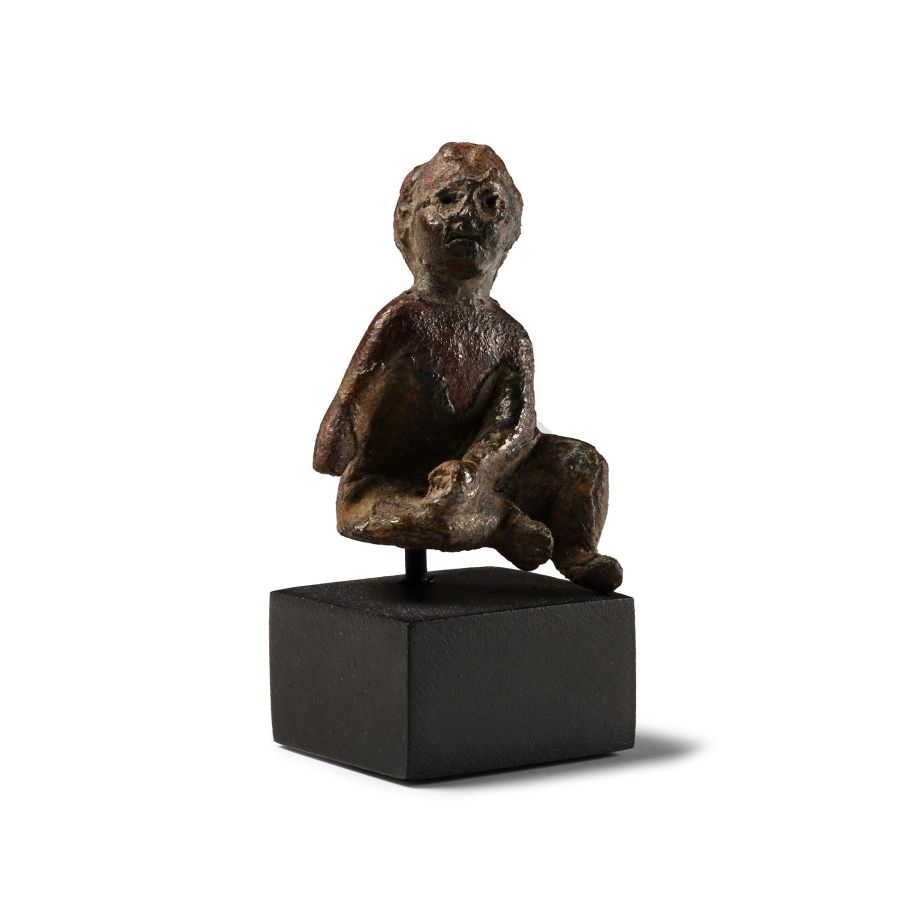
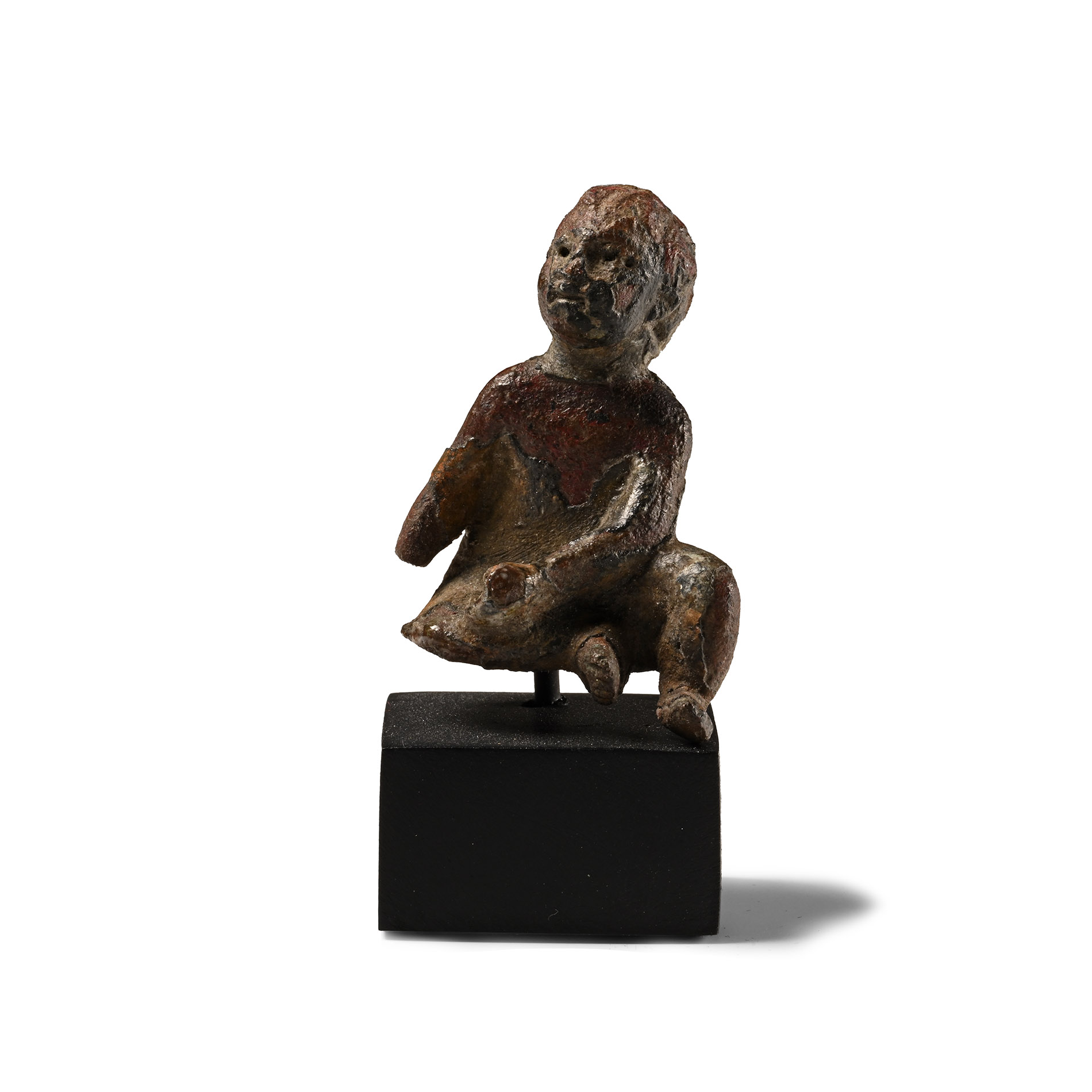
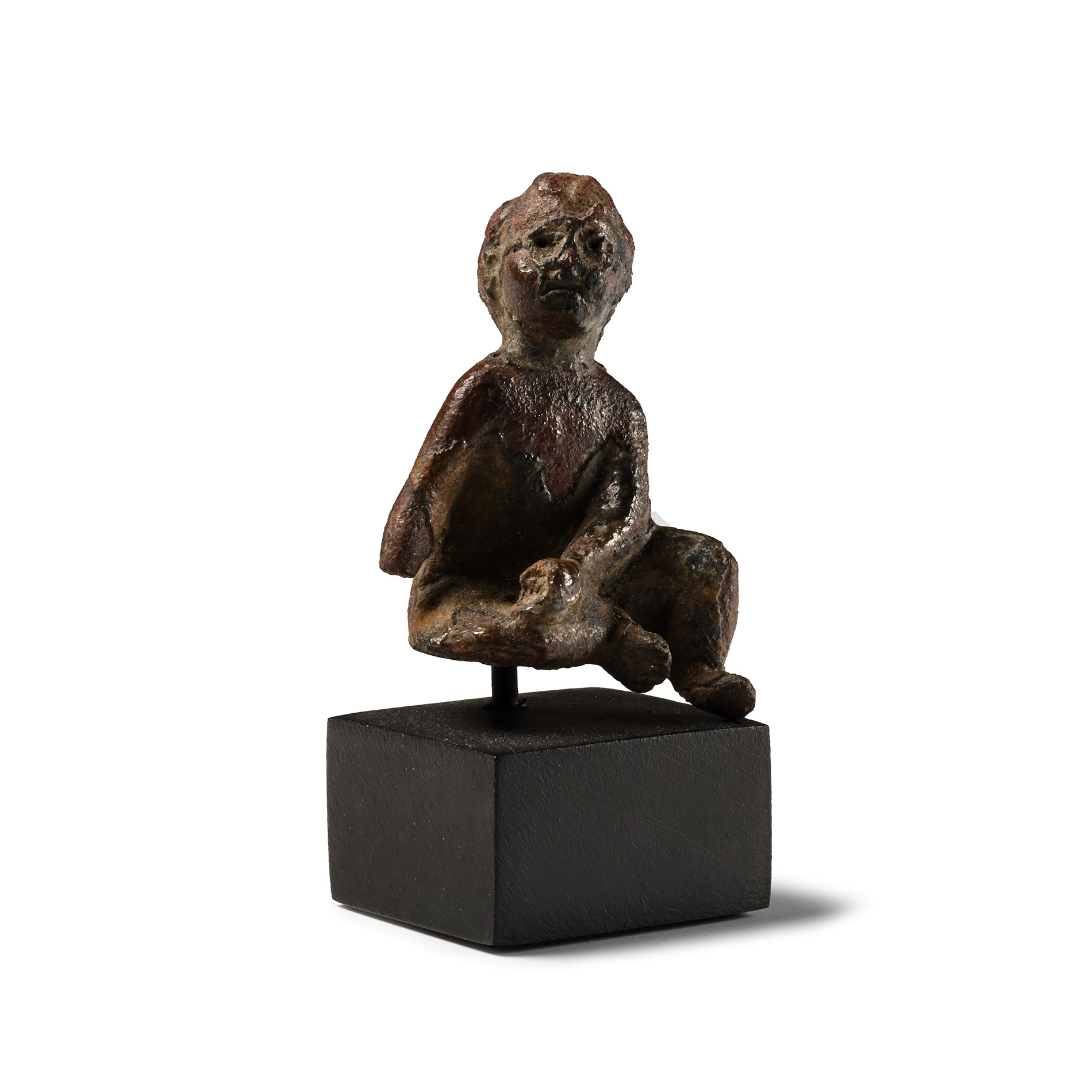
Roman Bronze Seated Child Statuette
1ST-2ND CENTURY A.D.
2 1/4 in. (55.5 grams total, 57 mm including stand).
Modelled in the round seated and with the head turned slightly upwards, left hand modelled open to grip a separate object; mounted on a custom-made stand. [No Reserve]
ProvenanceFrom a collection acquired on the UK art market from various auction houses and collections mostly before 2000.
From an important Cambridgeshire estate; thence by descent.
Cf. Rolland, H., Bronzes Antiques de Haute Provence, Paris, 1965, item 215, for type.
CONDITIONTimeLine Auctions follows a vetting process to ensure the authenticity and legality of all items, reinforcing our commitment to integrity and responsible trading. Each antiquity, antique, and coin lot undergoes thorough examination by a vetting committee of at least ten external specialists, professional trade association members, scientists, and archaeologists: Our Vetting Process
AUCTIONS:
TimeLine is a leading auction house specialising in antiquities, ancient art, collectables, natural history, coins, medals, and books. Our auctions offer museums, collectors, historians, and enthusiasts the opportunity to acquire unique and historically significant pieces.
-
Large Roman Harness Mount Bronze Trumpet Whorl Mount Pair
2nd-3rd century A.D.Sold for (Inc. bp): £104
Each a D-section disc with central triskele and coiled arms, segmented detailing to the outer face. 340 grams total, 10-10.2 cm
From a collection acquired on the UK art market from various auction houses and collections mostly before 2000. From an important Cambridgeshire estate; thence by descent.
The two mounts are elements of horse harness decorating the antilena and postilena of the horse, as intersection fittings of the main straps. According to Alfoldi, these horse harnesses were the product of a metallurgy that was the fruit of a Gallo-Roman revival, and not exclusively of military nature. The military adopted similar elements fruit of the revival of this Celtic-Roman decorative art, since such harnesses have also been discovered in border fortresses. But the large industrial centers, which worked for export, manufactured objects primarily for the Danubian regions where both the soldiers and the civilian population, without distinction of class, used them as habitual objects. -
Roman Gemstone with Victory Scene
2nd-3rd century A.D.Estimate: £400 - 600 (+bp*)
Opening Bid: £200
Ellipsoid in plan with chamfered sides, intaglio scene with soldier or gladiator standing with a spear, figure to his rear holding a wreath above his head; supplied with a museum-quality impression. 2.18 grams, 19 mm
From a London, UK, based collection, 1990s. -
Large Roman Bronze Military Mount
2nd-3rd century A.D.Estimate: £120 - 170 (+bp*)
Opening Bid: £65
Composed of a central domed boss and openwork volutes to the sides; for a sword belt or a chariot, one corner separated. 69 grams, 14 cm wide
Good condition, very rare
Acquired 1960s-1990s. Late Alison Barker collection, a retired London barrister.
In 3rd century A.D. the sword (spatha) was mainly carried suspended from a broad baldric usually on the soldier’s left side. This sword’s shoulder belt, visible on many monuments related to the 3rd century, was composed from a leather strap, reinforced on the rims. The four specimens of Vimose provided valuable information about the shape of the baldric: one end was broad and finished in a straight edge, the other tapered to a narrow strip. They were decorated with silver disks (phalerae) of circa 6.4 cm. of diameter, with rings on the reverse for fastening. These phalerae were of different shapes, styles and decorations: we can observe a range from simple copper-alloy discs to bronze openwork pieces fitted with a plate or an openwork disc showing elaborate figures. They were usually attached at about 29-30 cm from the wider and squared top of the baldric. One of the finial parts of the baldric was in fact very wide and ended with a straight edge, upon which could be placed a hinged rectangular openwork terminal plate (like our specimen), attached to a belt terminal pendant. The lack, in our specimen, of holes for the attachment rivets could also support the thesis that the piece is not for a baldric, but a mount for cart or chariot as some examples in a similar style found in Roman North Africa.