
Loading, please wait...
_900x900.jpg "Roman Bronze Seal Box with Phallus")
_200x200.jpg "Roman Bronze Seal Box with Phallus")
.jpg "Roman Bronze Seal Box with Phallus")
LOT 0587
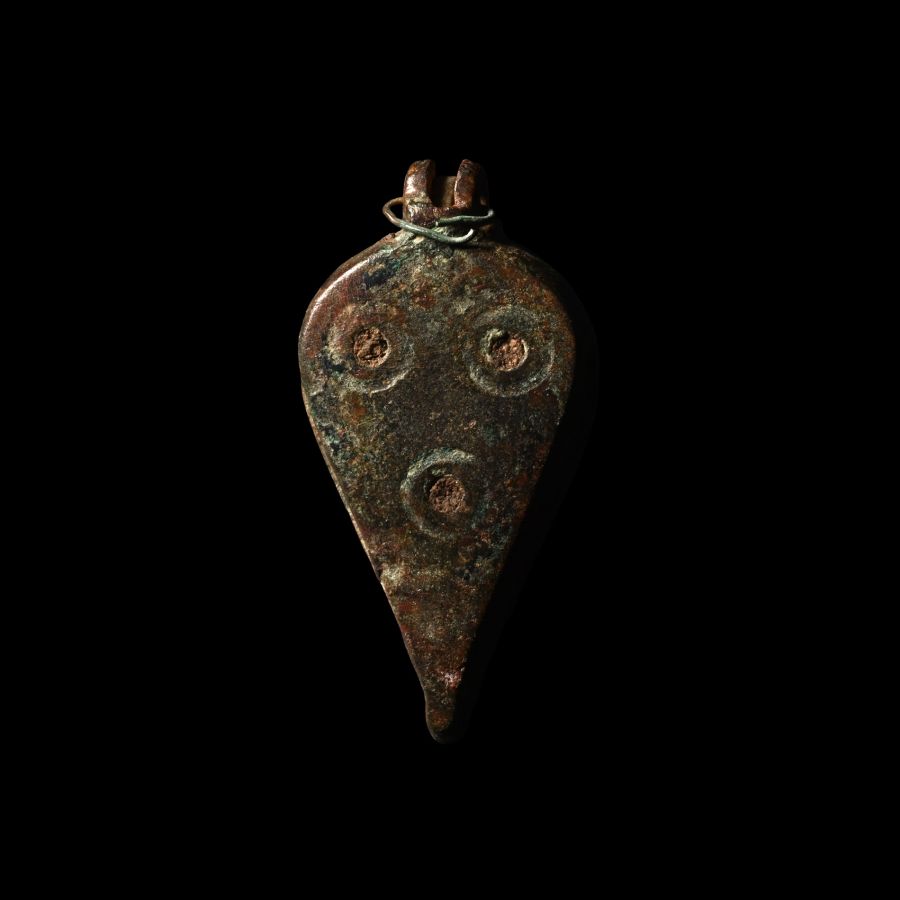
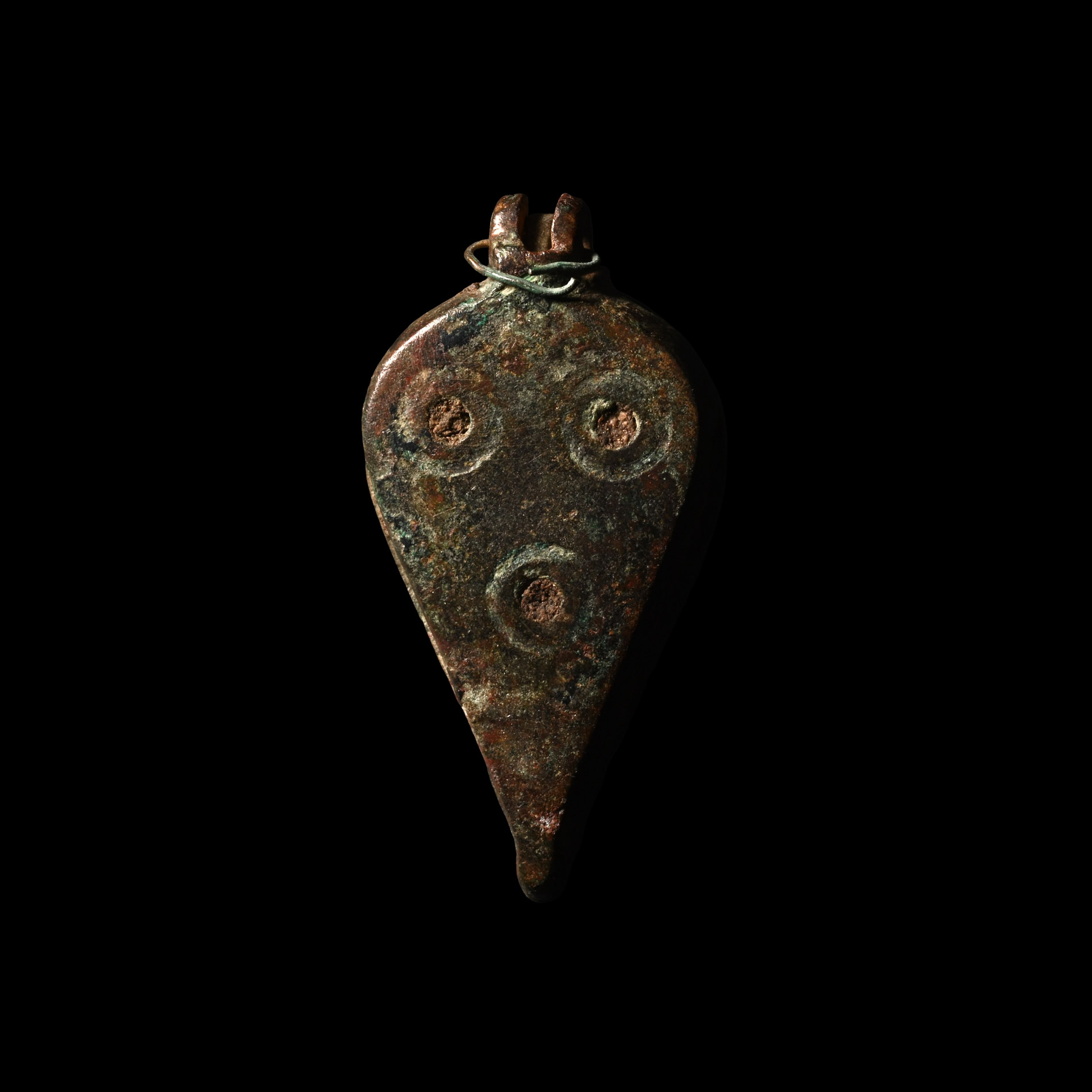
Roman Bronze Seal Box with Phallus
2ND CENTURY A.D.
1 5/8 in. (12.2 grams, 42 mm).
The box with a piriform body and hinged lid, three holes to the underside; the face with inset chevron and ring of mosaic glass, high-relief stylised phallus to the centre with enamel panel. [No Reserve]
ProvenanceAcquired in the early 1970s.
Ex property of a Surrey, UK, collector.
TimeLine Auctions follows a vetting process to ensure the authenticity and legality of all items, reinforcing our commitment to integrity and responsible trading. Each antiquity, antique, and coin lot undergoes thorough examination by a vetting committee of at least ten external specialists, professional trade association members, scientists, and archaeologists: Our Vetting Process
AUCTIONS:
TimeLine is a leading auction house specialising in antiquities, ancient art, collectables, natural history, coins, medals, and books. Our auctions offer museums, collectors, historians, and enthusiasts the opportunity to acquire unique and historically significant pieces.
LOT 0587
Roman Bronze Seal Box with Phallus
Estimate £100 - 140€120 - 160 (for guidance only)$140 - 190 (for guidance only)
-
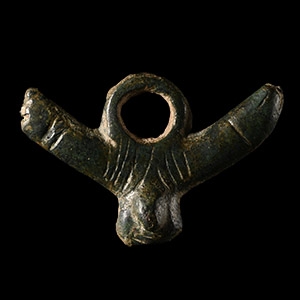
Roman Bronze Phallic Pendant
2nd-3rd century A.D.Sold for (Inc. bp): £169
Comprising a crescent formed from a phallus and an arm with the hand in the fica gesture, loop above and male genitals below. 35.4 grams, 67 mm
Property of a London gentleman, 1990s. -
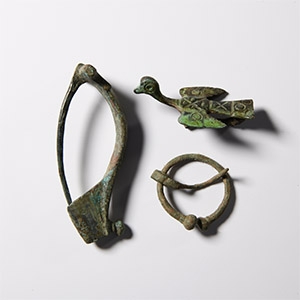
Roman Bronze Brooch Group
1st-4th century A.D.Sold for (Inc. bp): £98
Comprising: a bird-in-flight with incised annulets and X-motifs to the body, accompanied by a typed ticket 'Roman bronze brooch of bird in flight, beautifully incised decoration, iron pin intact, 2nd century AD, authenticated by British Museum, 30/5/2006'; a penannular brooch with clubbed terminals; a bow brooch with carinated bow. 31 grams total, 31-63 mm
Acquired in the 1980s-1990s. Property of a Nottinghamshire gentleman. -
.jpg)
Roman Clear Cut-Glass Beaker
Circa 4th century A.D.Estimate: £700 - 900 (+bp*)
Opening Bid: £350
Translucent glass with wheel-cut bands creating registers of ellipses and circles. 189 grams, 11 cm wide
Fine condition, repaired.
Acquired on the French art market, 1990s-early 2000s. From an important Paris gallery, France. Ex private Parisian collection.
