
Loading, please wait...
LOT 0942
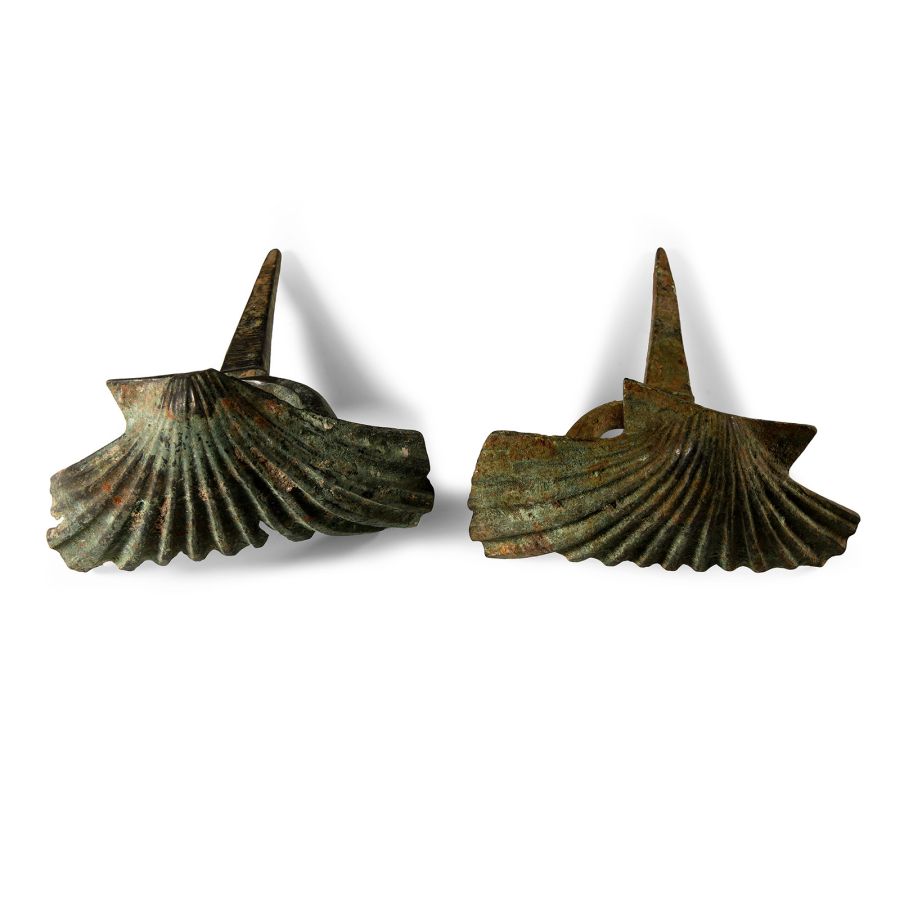
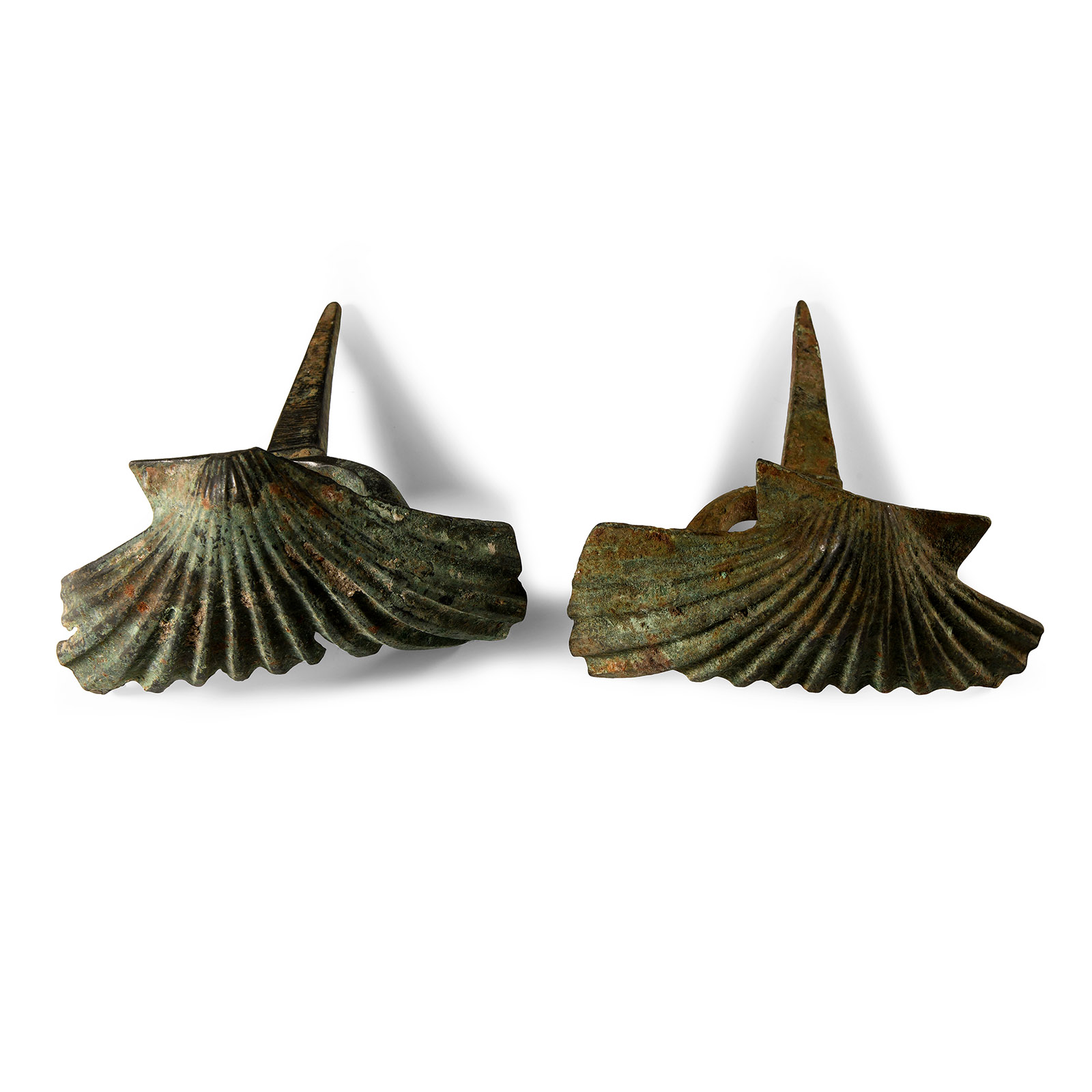
Roman Bronze Scallop Shell 'Door Key' Pair
2ND-3RD CENTURY A.D.
5 in. (343 grams total, 12.5 cm each).
Each composed of shell-shaped body with a D-shaped lug to reverse, the lug with tapering spike to the centre. [2]
ProvenancePrivate collection, Rosenheim, Germany, 1960s.
LiteratureCf. Boucher, S., Inventaire des Collections Publiques Françaises - 17 Vienne: Bronzes Antiques, Paris, 1971, items 658ff, pp.200-201.
FootnotesThis pair could have been used as a double key or door lock, based on comparison with some keys from the territory of Gaul (Boucher, 1971, pp.200-201). They comprised a strong ring with polygonal-section stem and a rectangular point.
CONDITIONTimeLine Auctions follows a vetting process to ensure the authenticity and legality of all items, reinforcing our commitment to integrity and responsible trading. Each antiquity, antique, and coin lot undergoes thorough examination by a vetting committee of at least ten external specialists, professional trade association members, scientists, and archaeologists: Our Vetting Process
AUCTIONS:
TimeLine is a leading auction house specialising in antiquities, ancient art, collectables, natural history, coins, medals, and books. Our auctions offer museums, collectors, historians, and enthusiasts the opportunity to acquire unique and historically significant pieces.
-
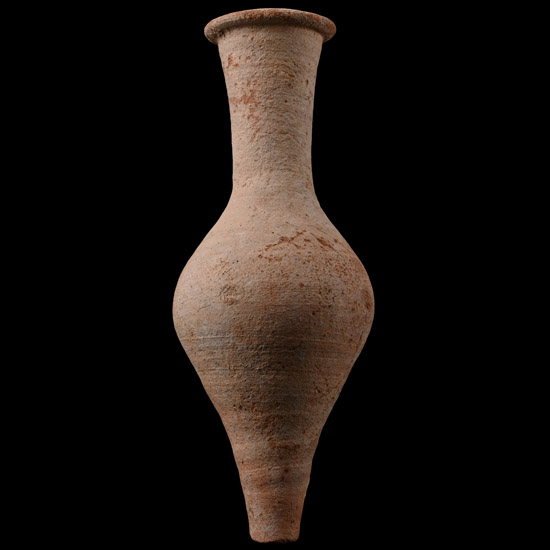
Roman Terracotta Perfume Unguentarium
Circa 3rd-5th century A.D.Sold for (Inc. bp): £78
Piriform body with a narrow base, trumpet-shaped neck with everted rim. 85.7 grams, 12.4 cm
From the private collection of Mr Brian Edwards, New Malden, Surrey, UK, formed from the late 1970s-early 1980s; thence by descent. Accompanied by the original collector's data sheet with reference no.A20. -
.jpg)
Roman Carnelian Gemstone with Man and Goat
2nd-3rd century A.D.Sold for (Inc. bp): £85
With intaglio scene of a man sitting behind a goat browsing on leaves; supplied with a museum-quality impression. 0.26 grams, 10.42 mm
From the private collection of a European gentleman (1942-2024), formed since the 1970s. -
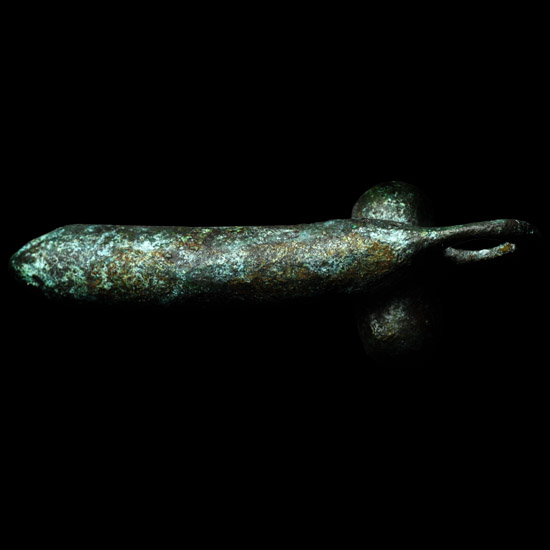
Roman Britain Bronze Phallic Pendant
Suffolk, 1st-4th century A.D.Sold for (Inc. bp): £195
Elongated round-section body with a suspension loop at the rear. 18 grams, 49 mm
Found Suffolk, UK. Acquired on the UK art market from the 1990s. From the private collection of a Lincolnshire, UK, gentleman.
