
Loading, please wait...
LOT 0132
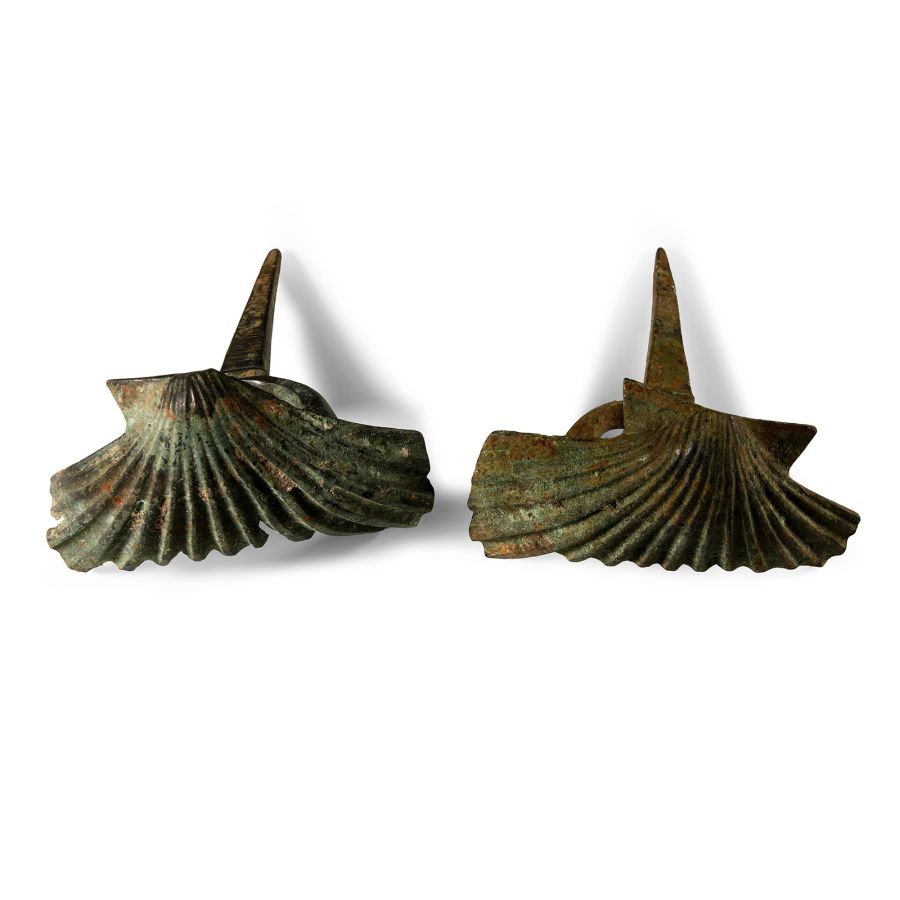
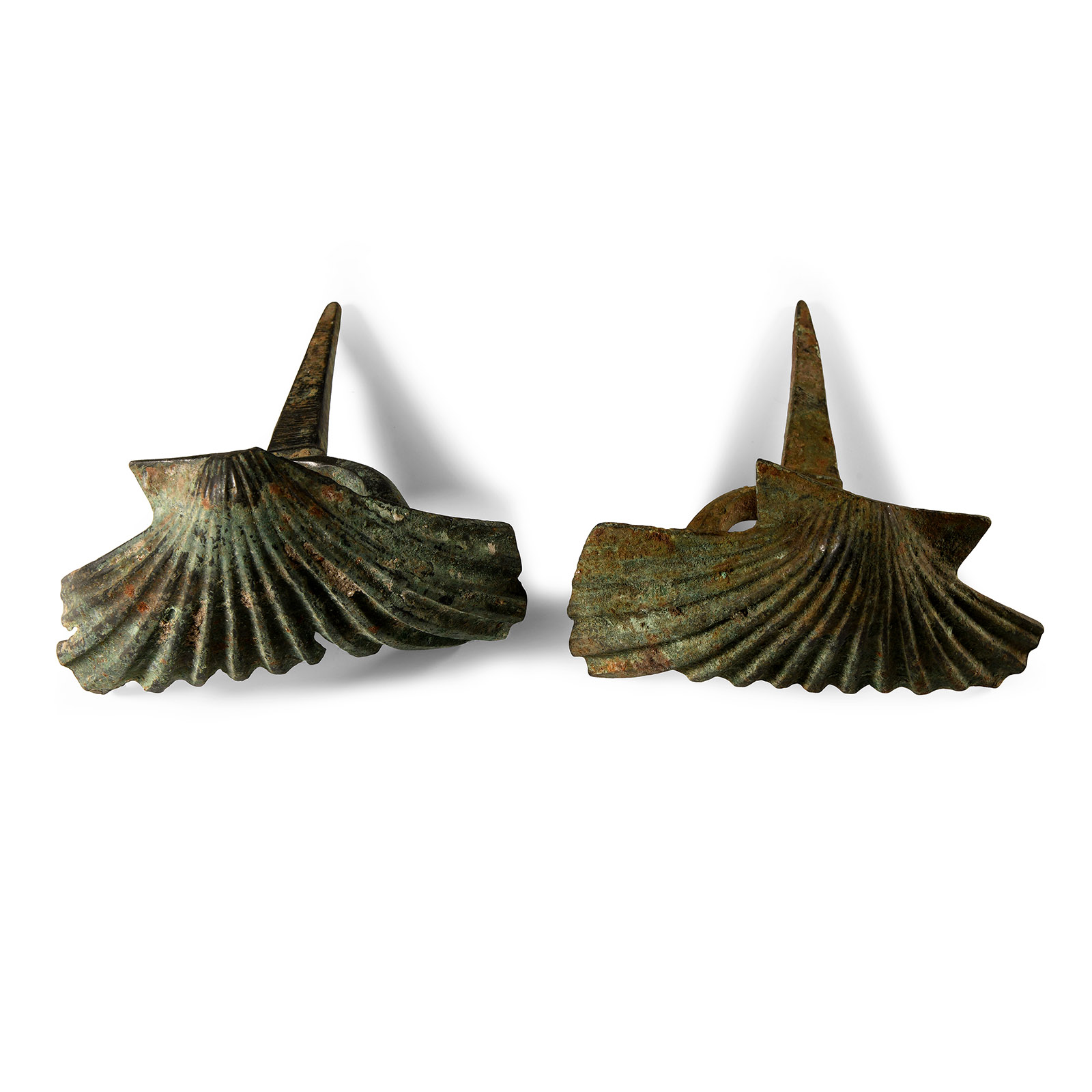
Roman Bronze Scallop Shell Attachment Pair
CIRCA 2ND-3RD CENTURY A.D.
5 in. (343 grams total, 12.5 cm each).
Each composed of shell-shaped body with a D-shaped lug to reverse, the lug with tapering spike to the centre. [2]
ProvenancePrivate collection, Rosenheim, Germany, 1960s.
LiteratureCf. Boucher, S., Inventaire des Collections Publiques Françaises - 17 Vienne: Bronzes Antiques, Paris, 1971, items 658ff., pp.200-201.
FootnotesThis pair could have been used as a double key or door lock, based on comparison with some keys from the territory of Gaul (Boucher, 1971, pp.200-201). They comprised a strong ring with polygonal-section stem and a rectangular point.
CONDITIONTimeLine Auctions follows a vetting process to ensure the authenticity and legality of all items, reinforcing our commitment to integrity and responsible trading. Each antiquity, antique, and coin lot undergoes thorough examination by a vetting committee of at least ten external specialists, professional trade association members, scientists, and archaeologists: Our Vetting Process
AUCTIONS:
TimeLine is a leading auction house specialising in antiquities, ancient art, collectables, natural history, coins, medals, and books. Our auctions offer museums, collectors, historians, and enthusiasts the opportunity to acquire unique and historically significant pieces.
LOT 0132
Roman Bronze Scallop Shell Attachment Pair
Estimate £1,200 - 1,700€1,390 - 1,970 (for guidance only)$1,620 - 2,300 (for guidance only)
-
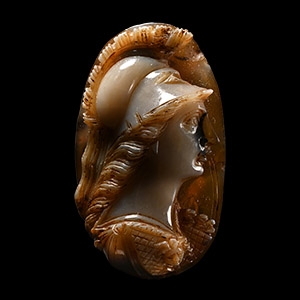
Roman Agate Cameo of Minerva
2nd-early 3rd century A.D.Sold for (Inc. bp): £2,470
With reserved classical profile female bust wearing a crested Corinthian helmet, and a stola fastened on the shoulder by a disc brooch, small mask (gorgoneion) to the breast; reverse degraded. 19 grams, 42 mm
UK private collection, 1980s. This lot has been checked against the Interpol Database of stolen works of art and is accompanied by search certificate no.11960-209860. -
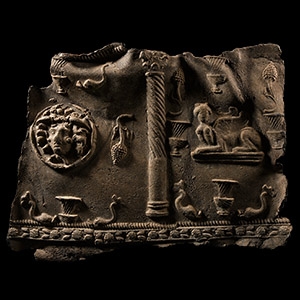
Roman Lead Sarcophagus Panel with Sphinxes, Dolphins and Masks of Medusa
2nd-3rd century A.D.Sold for (Inc. bp): £4,420
Decorated with a high-relief pattern comprising sphinxes, dolphins and masks of Medusa in fields between columns; ropework and floral border strips with laurel leaves. 6.4 kg, 41 cm wide
From a West Sussex, UK, collection, 1990s.
There were many ways of burying bodies during the Roman Empire. Although the majority were buried without coffins, there is evidence for wooden coffins, lead-framed wooden coffins, tile burials and lead and stone coffins. This item belongs to types widespread in the Eastern Mediterranean. The panel is decorated with a columned structure, and within each section are symbols of the outer-world, including gorgons, sphinx and dolphins. The sphinx, having a human head and breasts, legs and paws of a lion, and wings of a bird, was generally associated with protecting imperial tombs and temples. The roundels featuring the head of Medusa, known for her potent gazes that could turn one to stone, was favoured on sarcophagi and architectural ornaments because it was believed that her image would protect those within. The dolphin was considered to ferry the souls of the dead to the afterlife. Very often these sarcophagi were connected by a pipe to the ground above so that mourners could pour in offerings into the grave. -
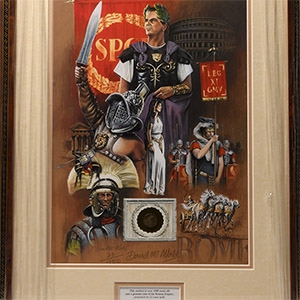
Roman Coin and Limited Edition Framed Print
3rd century A.D. and laterSold for (Inc. bp): £26
The coin mounted on 22 carat gold foil, framed with an art print signed by the artist David McAllister, depicting scenes of Roman military activity; limited edition number 23/1150. 1.3 kg total, 48.5 x 36.5 cm
UK gallery, early 2000s. Accompanied by an old certificate of authenticity.
David McAllister's exciting design is a 'one of a kind' work that portrays the might and riches of the Roman civilisation. This limited edition print is a celebration of the award winning artist's lifetime dedication to historical paintings of the ancient world. To enhance appreciation of this rare and historic work, each individual print is signed and numbered by the artist.
