
Loading, please wait...
LOT 0868
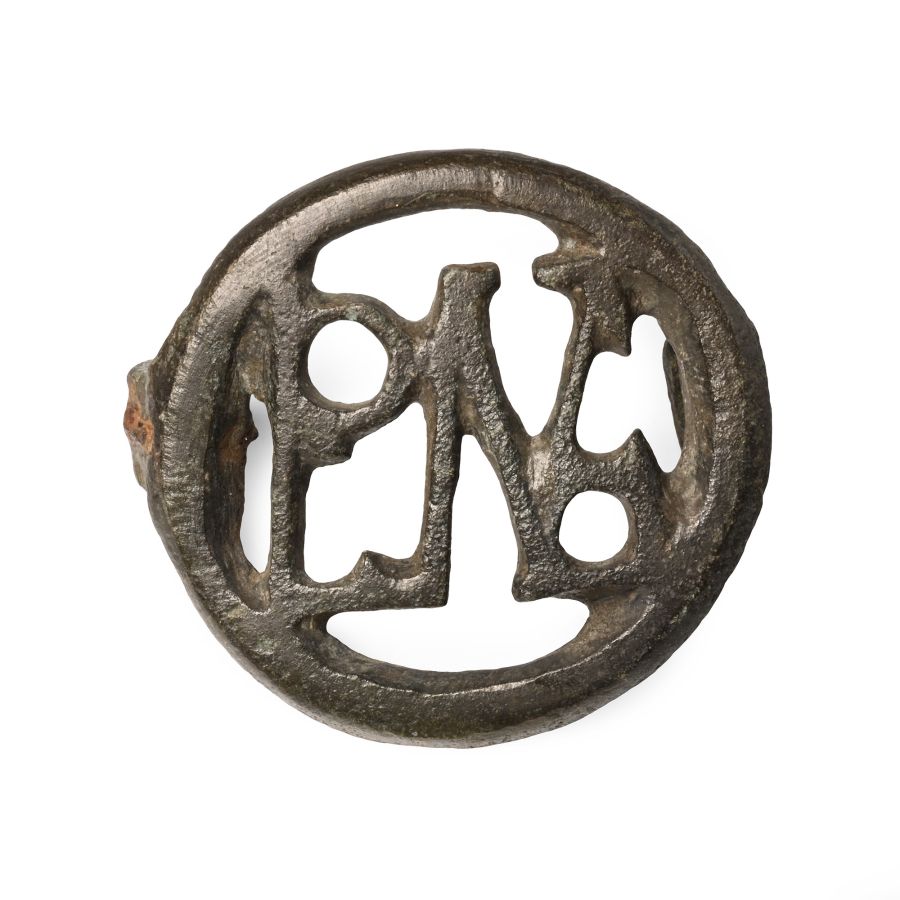
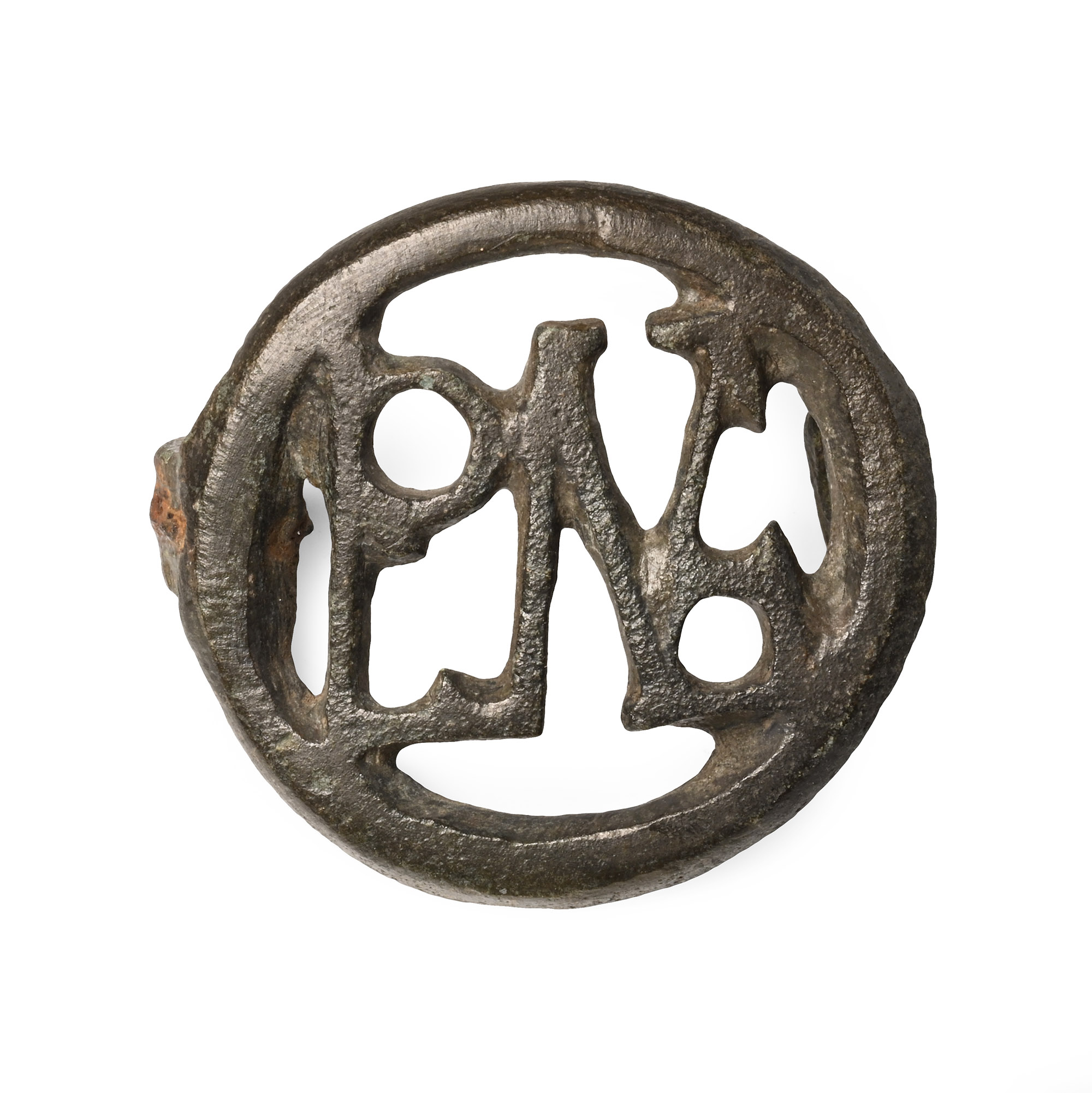
Roman Bronze ROMA Brooch
2ND-3RD CENTURY A.D.
1 3/8 in. (14.86 grams, 35 mm).
Discoid body formed as an openwork monogram 'ROMA' in capitals, the M and A ligated, the O formed by the brooch frame itself; pin-lug and catch to reverse; minor losses to lettering. [No Reserve]
ProvenanceEx German art market, 2000s.
Acquired from an EU collector living in London.
From the collection of a Surrey, UK, gentleman.
TimeLine Auctions follows a vetting process to ensure the authenticity and legality of all items, reinforcing our commitment to integrity and responsible trading. Each antiquity, antique, and coin lot undergoes thorough examination by a vetting committee of at least ten external specialists, professional trade association members, scientists, and archaeologists: Our Vetting Process
AUCTIONS:
TimeLine is a leading auction house specialising in antiquities, ancient art, collectables, natural history, coins, medals, and books. Our auctions offer museums, collectors, historians, and enthusiasts the opportunity to acquire unique and historically significant pieces.
-
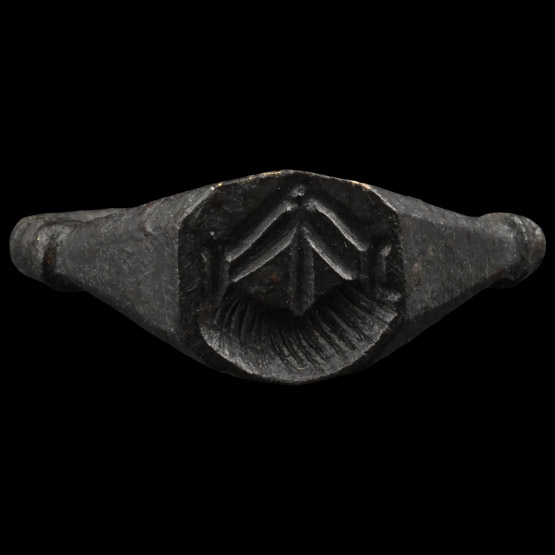
Late Roman Bronze Ring with Galley
5th-6th century A.D.Sold for (Inc. bp): £111
With notched shoulders and conical bezel, incuse image of a galley with oars mounted. 4.50 grams, 24.95 mm overall, 18.53 mm internal diameter (approximate size British Q, USA 8, Europe 17.49, Japan 16)
Ex German art market, 2000s. Acquired from an EU collector living in London. From the collection of a Surrey, UK, gentleman. -
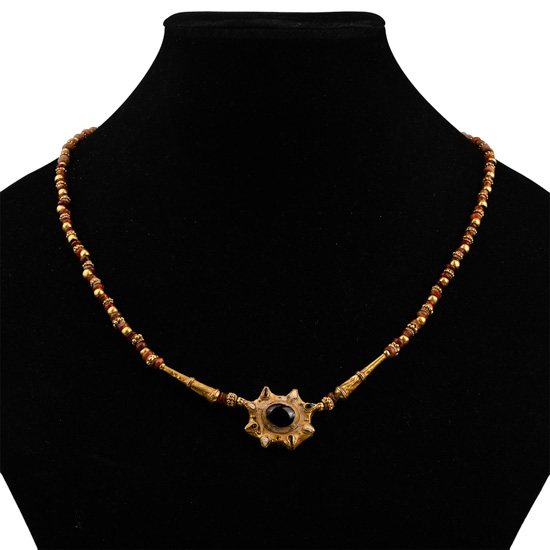
Greek Gold and Carnelian Necklace with Garnet-Set Pendant
5th-4th century B.C.Estimate: £3,000 - 4,000 (+bp*)
Opening Bid: £1,500
A restrung necklace comprising carinated carnelian beads interspersed with sheet-gold beads of plain and granulated types, two tapering round-section beads with collars and domed finials, a central gold polygonal pendant with eight concave sides, polished oval garnet cabochon at the centre, granulated collar around base, raised tear-shaped cell to each corner also with granulated border, alternately set with enamel and garnet cabochons, a single applied bead between each; modern hook-and-eye clasp. 39.16 grams, 53 cm
Acquired in the mid-1980s to early 1990s. Private collection, London, UK. This lot has been checked against the Interpol Database of stolen works of art and is accompanied by search certificate number no.13124-246808. -
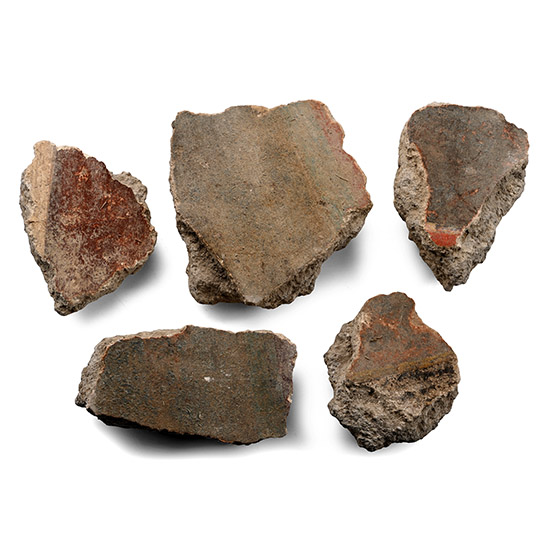
Roman Fresco Wall Plaster Collection
1st century A.D.Sold for (Inc. bp): £48
Fragments of wall plaster with rendered surface painted with mainly Pompeii red, pale blue and white detailing; some with impression of timber laths to the reverse. 690 grams total, 7.9-10.5 cm
Acquired in the 19th century. Ex Jeger collection, Switzerland. UK gallery, early 2000s.
These small fragments, for analogies with the fragments of Pompeii, seem to belong to the second style of Roman painting, red panels representing highlight and shadow, decorated with vegetal interlaces. Some panels were probably framed by a red grenade fillet. A fragment shows alternate blue and red colour over a cream background, maybe pertinent to a socle
