
Loading, please wait...
LOT 0890
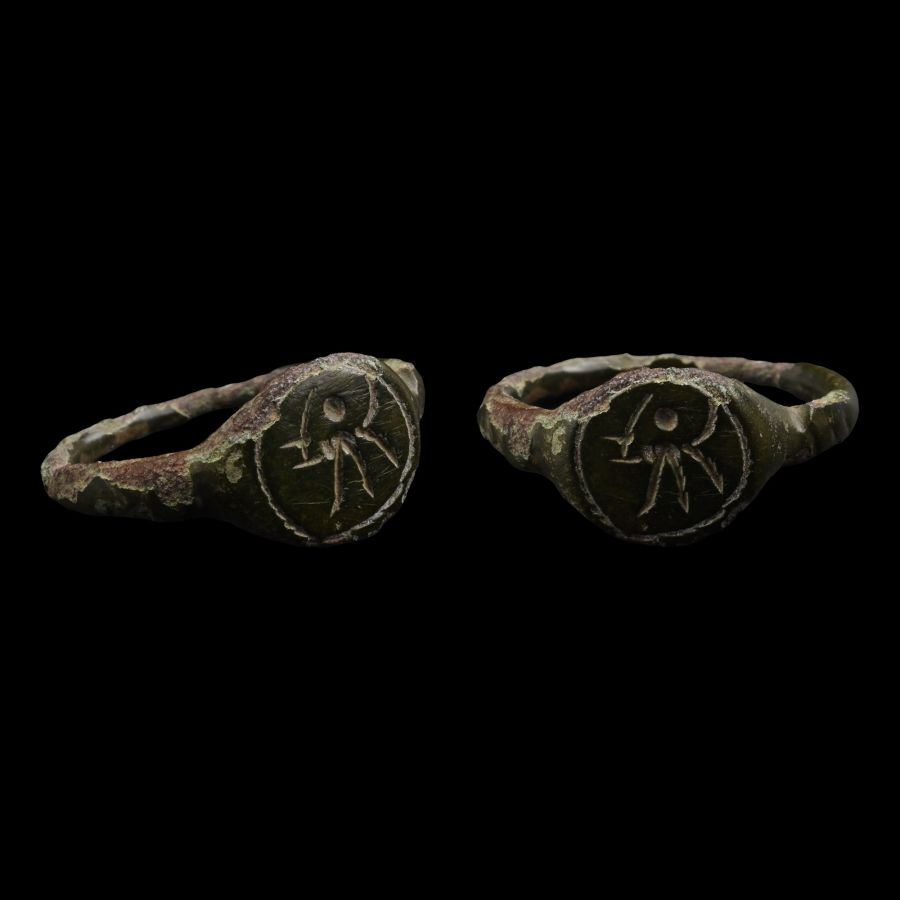
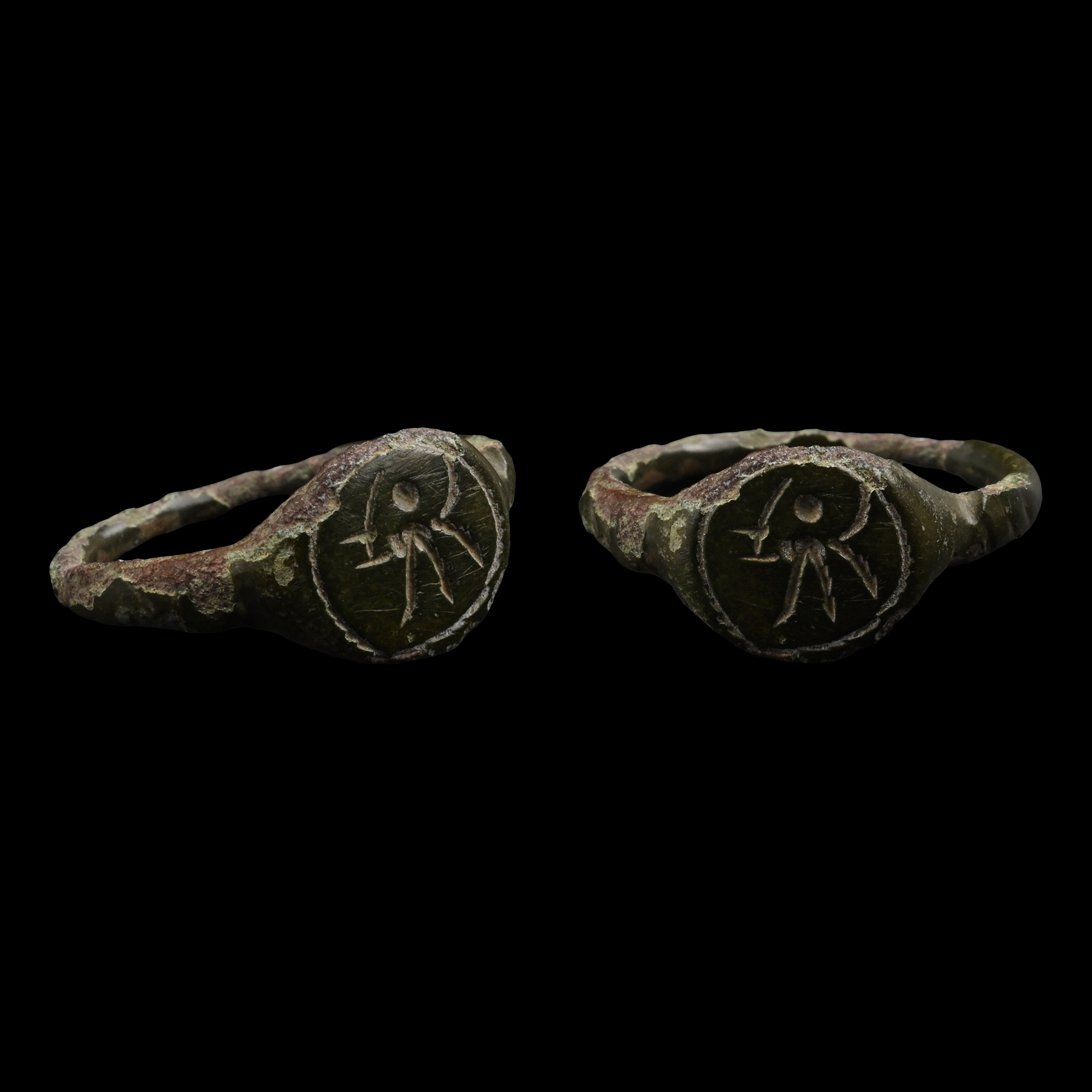
Roman Bronze Ring with Warrior
280-400 A.D.
3/4 in. (3.35 grams, 21.58 mm overall, 17.38 mm internal diameter (approximate size British N, USA 6 1/2, Europe 13.72, Japan 13)).
Comprising a slender hoop and a discoid bezel with a stylised figure holding a sword. [No Reserve]
ProvenanceAcquired on the UK and EU art market before 2000.
From the private collection of a Surrey, UK, gentleman.
Cf. similar ring in PAS, BERK-51ECCF.
FootnotesThe small copper-alloy Roman finger ring seems to be of Guiraud Type 4f (similar to Henig Type II) and dates from the 3rd to early 5th century A.D. The size of the ring suggests it may have been worn on the end of the finger, but most probably used by a child.
CONDITIONTimeLine Auctions follows a vetting process to ensure the authenticity and legality of all items, reinforcing our commitment to integrity and responsible trading. Each antiquity, antique, and coin lot undergoes thorough examination by a vetting committee of at least ten external specialists, professional trade association members, scientists, and archaeologists: Our Vetting Process
AUCTIONS:
TimeLine is a leading auction house specialising in antiquities, ancient art, collectables, natural history, coins, medals, and books. Our auctions offer museums, collectors, historians, and enthusiasts the opportunity to acquire unique and historically significant pieces.
-
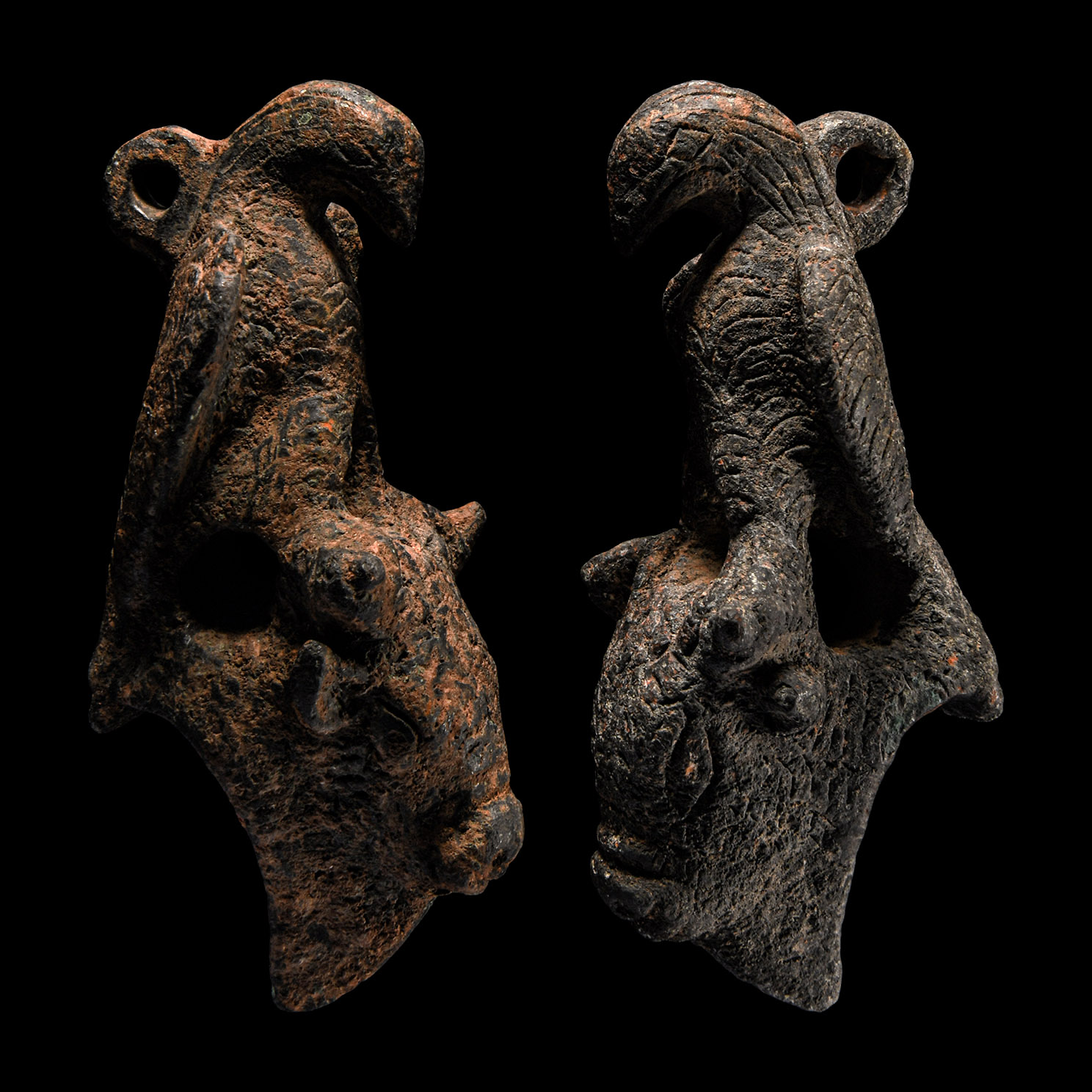
Roman Bronze Jupiter Dolichenus Eagle Pair
2nd-3rd century A.D.Sold for (Inc. bp): £1,170
Formed as imperial birds modelled in the round, each standing on the head of a horned bull, wings partially spread; semi-naturalistic detailing to the head and feathers; suspension loop behind the neck. 482 grams total, 86-92 mm
Acquired in Europe before 1992. Private collection, UK. -
.jpg)
Roman Nicolo Gemstone with Seated Jupiter with Eagle in Gold Ring
2nd century A.D.Estimate: £2,000 - 3,000 (+bp*)
Opening Bid: £1,000
Ellipsoid nicolo cloison with profile figure of Jupiter enthroned and an eagle at his feet; set into a later gold ring; supplied with a museum-quality impression. 8.55 grams, 24.77 mm overall, 19.08 x 19.94 mm internal diameter (approximate size British S, USA 9, Europe 20, Japan 19)
with Gallery Desmet, Belgium. Private collection, England. -
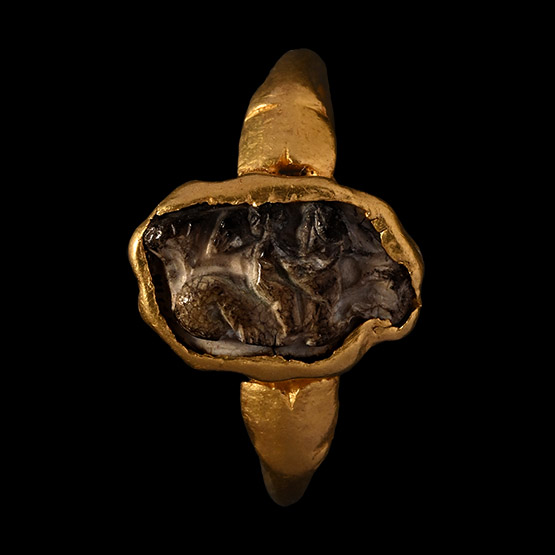
Roman Gold Ring with Burnt Agate Cameo of Eros, the Greek God of Love Riding a Hippocampus
2nd-3rd century A.D.Estimate: £1,500 - 2,000 (+bp*)
Opening Bid: £750
D-section hoop with ellipsoid cell, inset cameo with Eros on a hippocamp. 3.59 grams, 20.92 mm overall, 16.98 mm internal diameter (approximate size British M, USA 6, Europe 12.46, Japan 12)
Private collection, Europe. Acquired on the English art market.
