
Loading, please wait...
LOT 0764
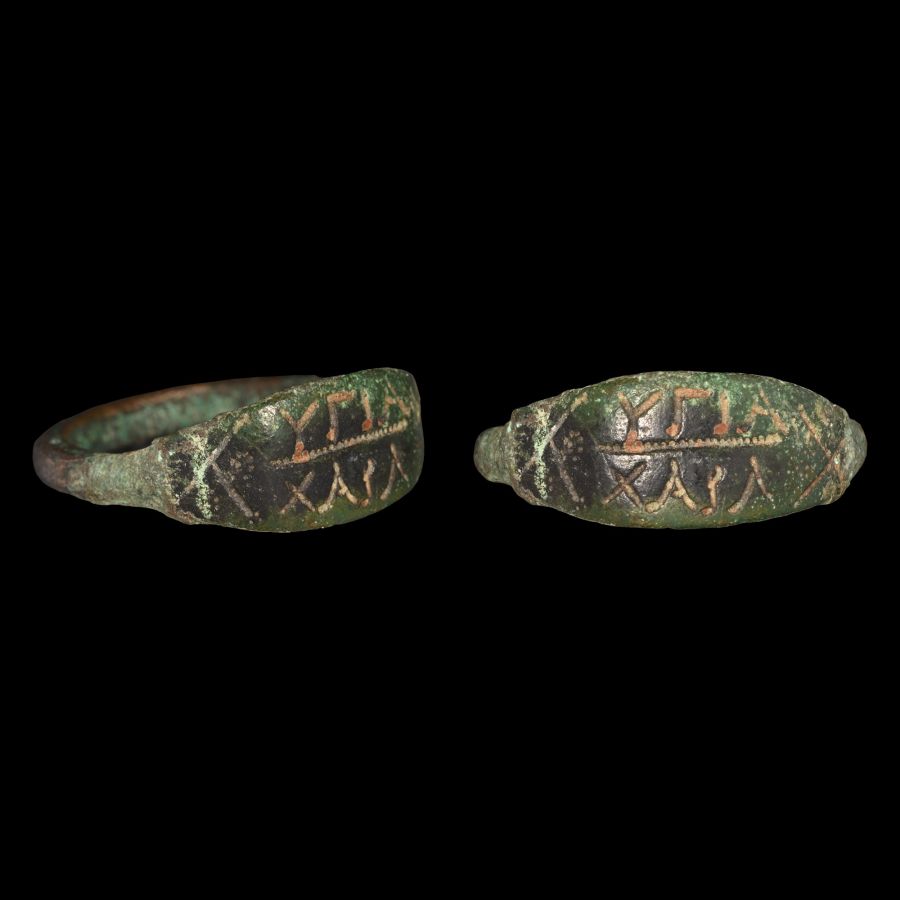
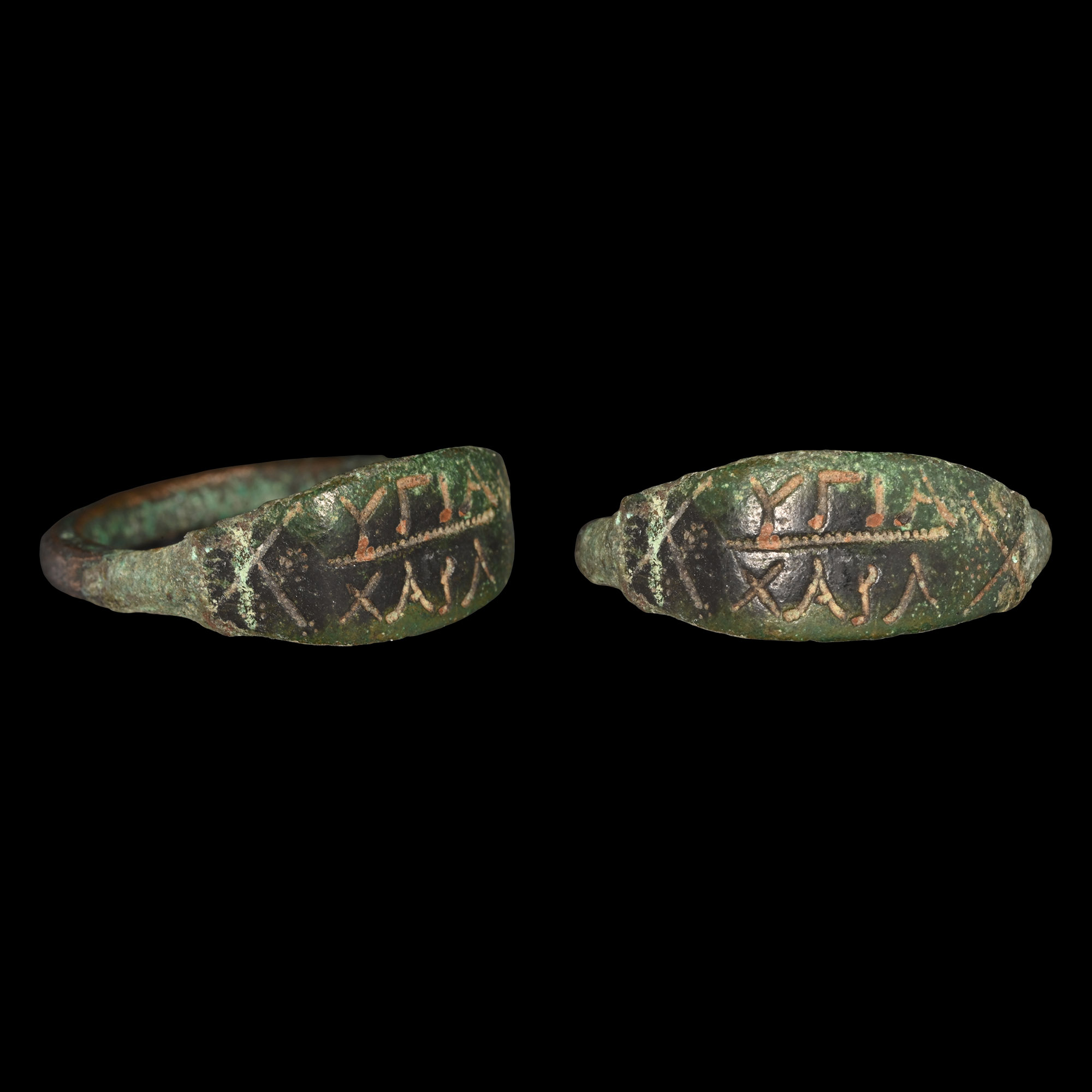
Roman Bronze Ring with Two Line Greek Inscription
2ND-4TH CENTURY A.D.
7/8 in. (4.04 grams, 22.89 mm overall, 16.37 mm internal diameter (approximate size British L, USA 5 3/4, Europe 11.24, Japan 10)).
D-section hoop and raised bezel flanked by X-motifs, two-line Greek inscription 'YΓIA / XAPA' for 'good health'. [No Reserve]
ProvenanceFrom the private collection of a European gentleman (1942-2024), formed since the 1970s.
CONDITIONTimeLine Auctions follows a vetting process to ensure the authenticity and legality of all items, reinforcing our commitment to integrity and responsible trading. Each antiquity, antique, and coin lot undergoes thorough examination by a vetting committee of at least ten external specialists, professional trade association members, scientists, and archaeologists: Our Vetting Process
AUCTIONS:
TimeLine is a leading auction house specialising in antiquities, ancient art, collectables, natural history, coins, medals, and books. Our auctions offer museums, collectors, historians, and enthusiasts the opportunity to acquire unique and historically significant pieces.
-
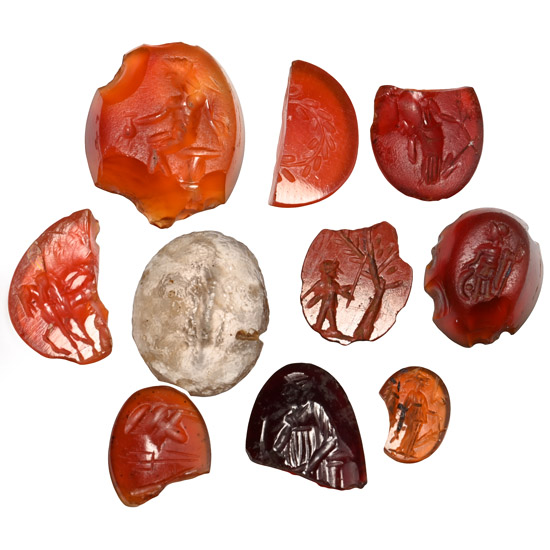
Roman Gemstone Group
2nd-3rd century A.D.Sold for (Inc. bp): £85
Including Mercury seated with marsupium, a robed female figure, a boy beating a tree to dislodge fruit, Neptune with trident and other types; each supplied with a museum-quality impression. 5.46 grams total, 8-17 mm
From the private collection of a European gentleman (1942-2024), formed since the 1970s. -
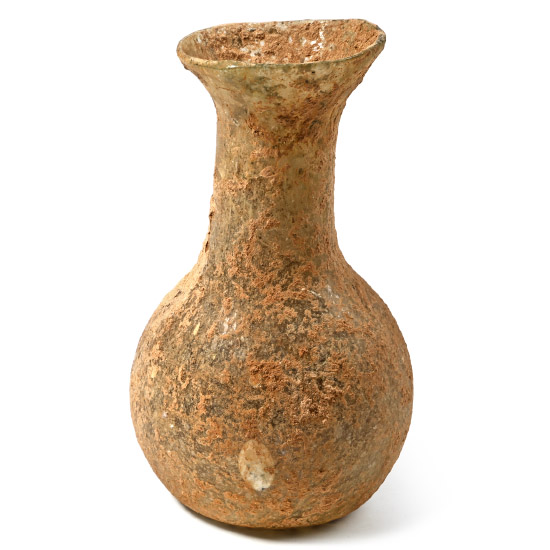
Roman Glass Flask with Flared Neck
3rd-4th century A.D.Sold for (Inc. bp): £117
Bulbous body with a tubular neck and a flared rim. 69 grams 11.7 cm
Acquired in the 1990s from London dealerships and auction houses. From the Lonson collection. -
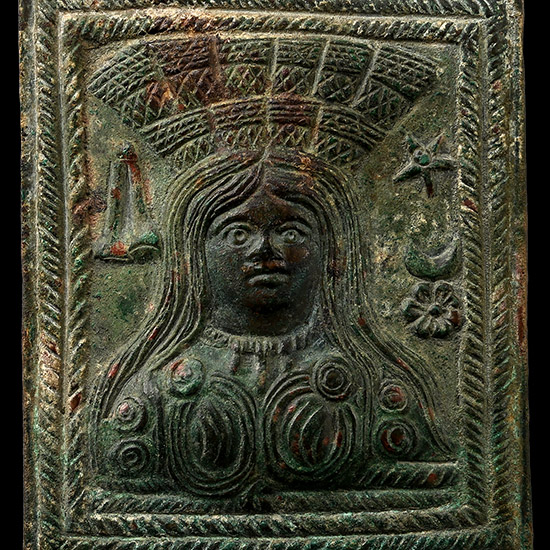
Roman Bronze Plaque with Goddess Cybele
3rd century A.D.Sold for (Inc. bp): £2,340
Rectangular plaque with stepped herringbone border, facing bust of Cybele with flaring turret-crown and cascading hair, symbols in the field. 430 grams, 94 mm
From the collection of a European gentleman living in South London; acquired 1970-1980. This lot has been checked against the Interpol Database of stolen works of art and is accompanied by search certificate number no.13307-258227.
Cybele was the great Phrygian mother of the gods, and goddess of motherhood, fertility and the mountain wilds.
