
Loading, please wait...
LOT 0802
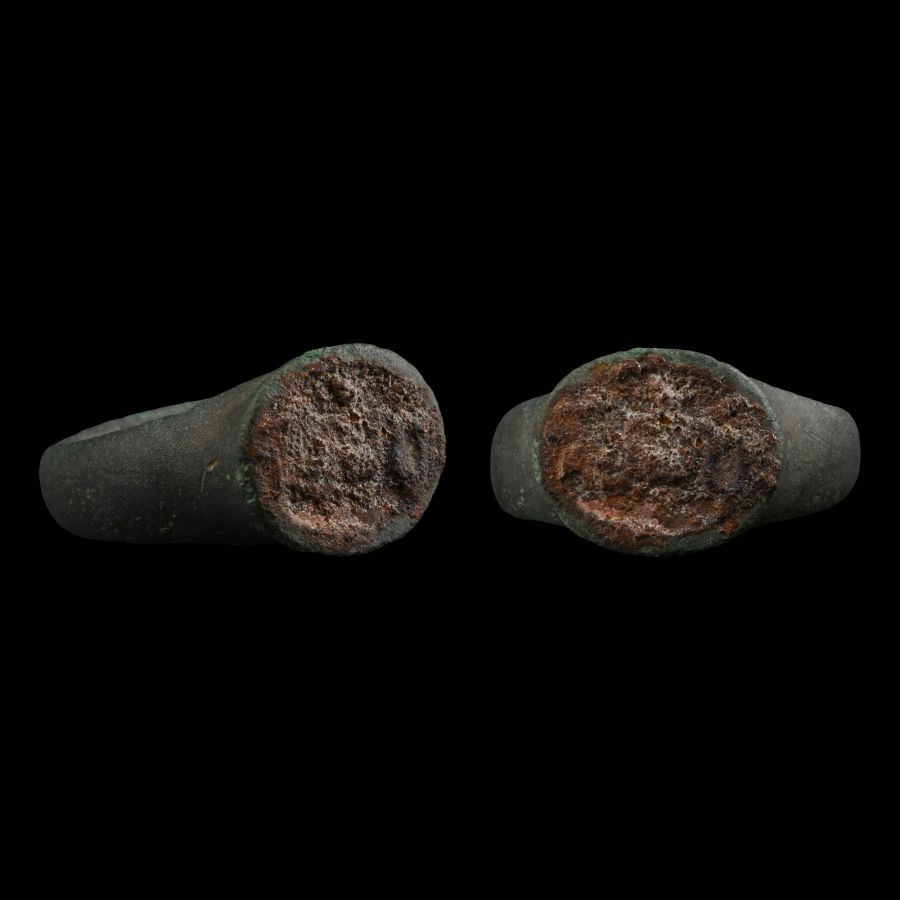
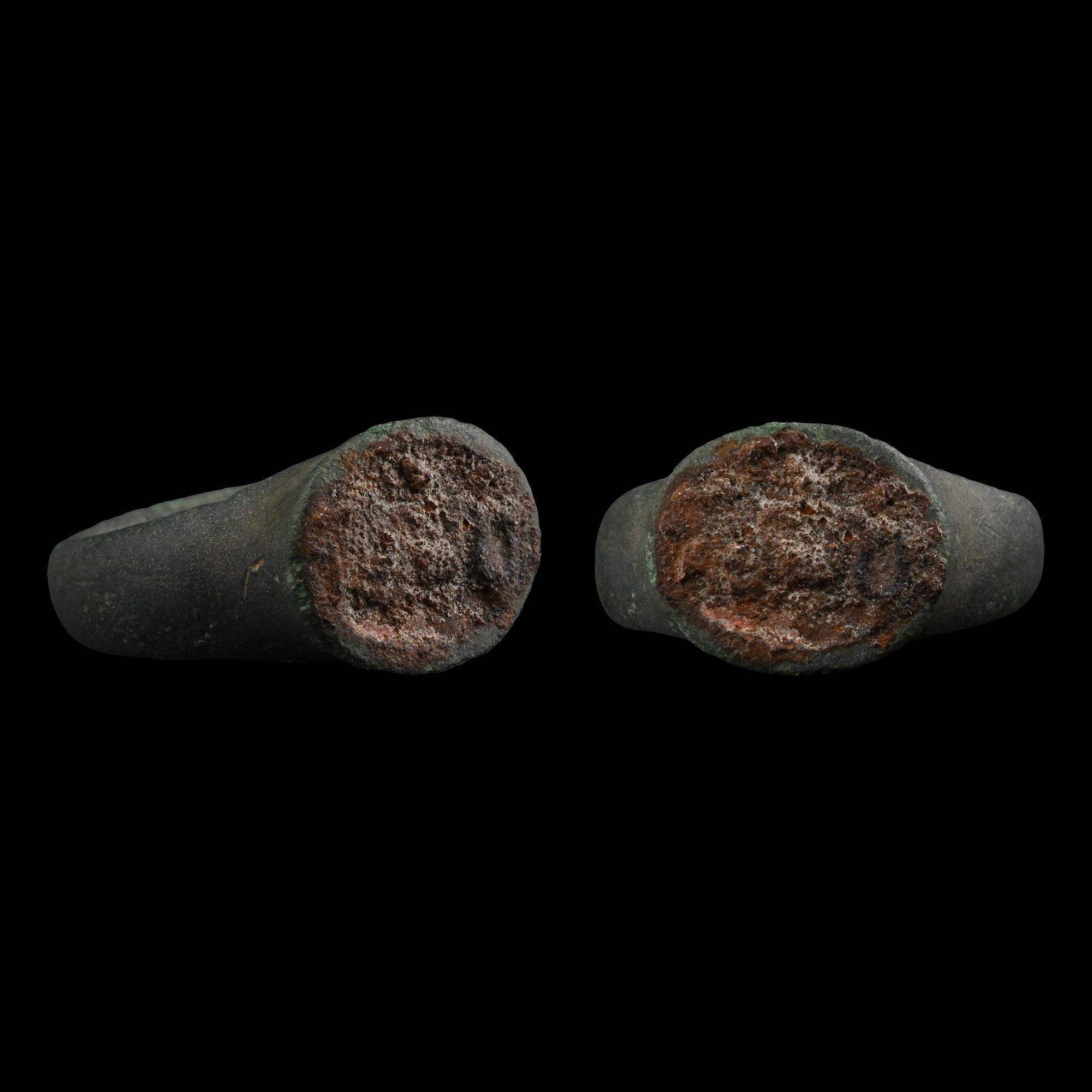
Roman Bronze Ring with Snake
MID 1ST-3RD CENTURY A.D.
1 in. (7.87 grams, 25.05 mm overall, 18.04 mm internal diameter (approximate size British O, USA 7, Europe 14.98, Japan 14)).
Comprising a D-section hoop and integral ellipsoid bezel; incuse serpent motif with enamel fill. [No Reserve]
ProvenanceFound whilst searching with a metal detector near Little Wilberham, South Cambridgeshire, UK, on Friday 13th December 2024.
Accompanied by a copy of the British Museum's Portable Antiquities Scheme (PAS) report no.SF-9C2757.
TimeLine Auctions follows a vetting process to ensure the authenticity and legality of all items, reinforcing our commitment to integrity and responsible trading. Each antiquity, antique, and coin lot undergoes thorough examination by a vetting committee of at least ten external specialists, professional trade association members, scientists, and archaeologists: Our Vetting Process
AUCTIONS:
TimeLine is a leading auction house specialising in antiquities, ancient art, collectables, natural history, coins, medals, and books. Our auctions offer museums, collectors, historians, and enthusiasts the opportunity to acquire unique and historically significant pieces.
-
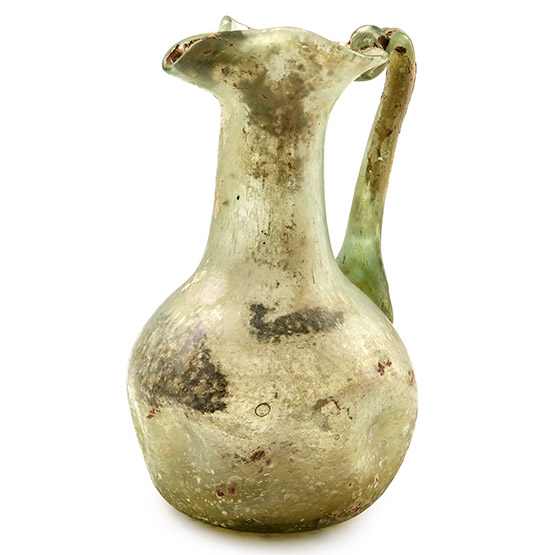
Roman Green Glass Juglet
1st-3rd century A.DEstimate: £300 - 400 (+bp*)
Opening Bid: £140
With dimpled piriform body and flared neck pinched into a pouring spout; strap handle; dimpled base. 80 grrams, 11.3 cm
From a London, UK, collection of glass, 1970-2000s. -
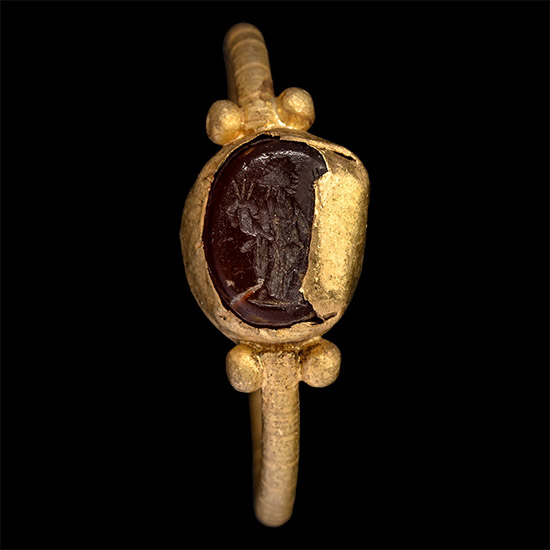
Roman Gold Ring with Fortuna Gemstone
2nd-3rd century A.D.Sold for (Inc. bp): £598
Slender hoop with notches to the shoulders, pairs of granules at the junction with the rectangular cell with inset carnelian intaglio Fortuna with a cornucopia; supplied with a museum-quality impression. 3.17 grams, 23.57 mm overall, 18.42 mm internal diameter (approximate size British Q, USA 8, Europe 17.49, Japan 16)
Ex German art market, 2000s. Acquired from an EU collector living in London. From the collection of a Surrey, UK, gentleman. -
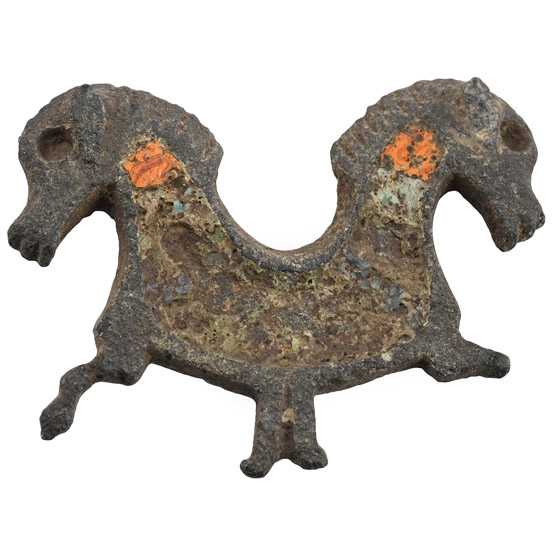
Roman Bronze Two-Headed Sea Horse Brooch
Circa 2nd-3rd century A.D.Sold for (Inc. bp): £683
Plate brooch with pin-lugs, pin and catch to reverse, addorsed equine heads with recesses to accept enamel. 9.25 grams, 37 mm
Ex German art market, 2000s. Acquired from an EU collector living in London. From the collection of a Surrey, UK, gentleman.
