
Loading, please wait...
LOT 0999
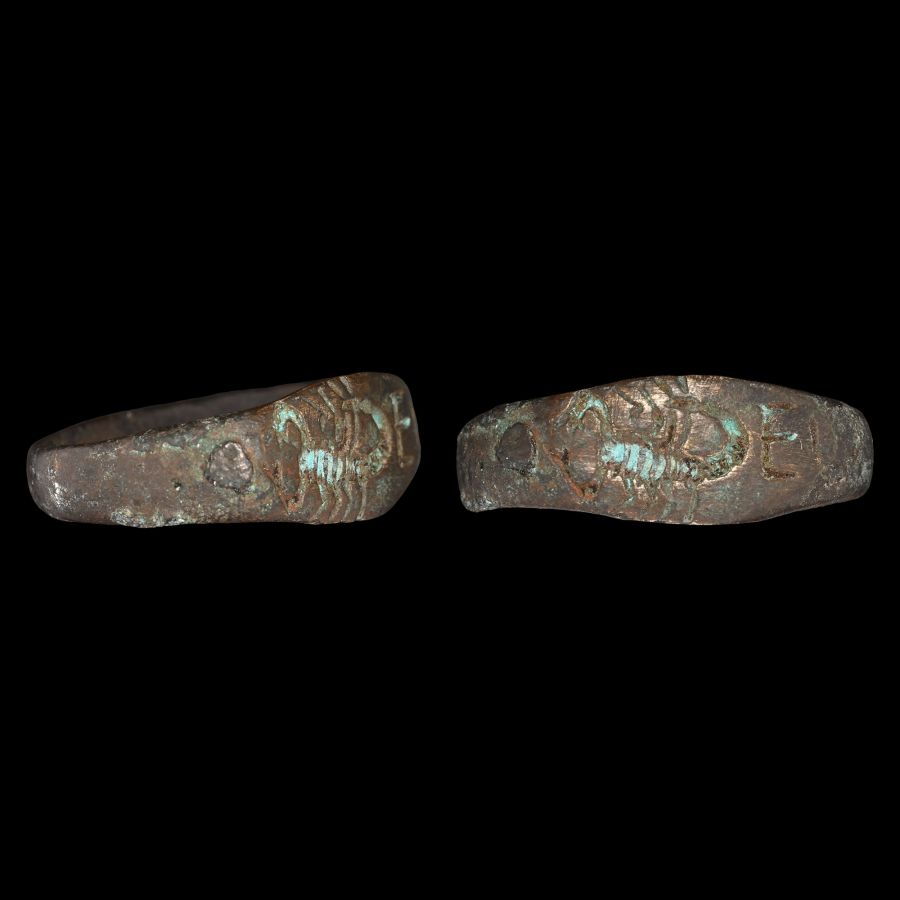
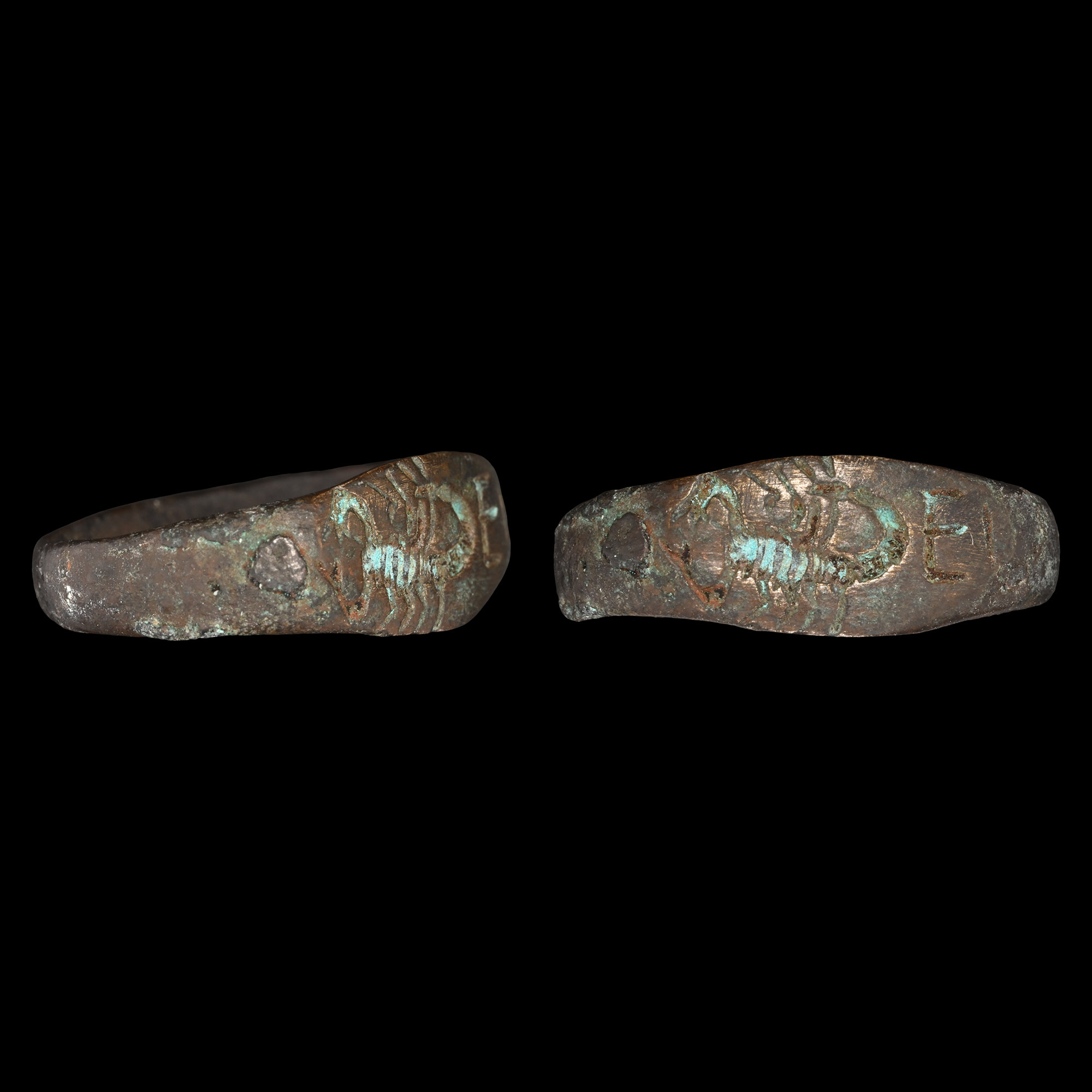
Roman Bronze Ring with Scorpion and EI
1ST-2ND CENTURY A.D.
3/4 in. (2.23 grams, 19.41 mm overall, 16.06 x 13.49 mm internal diameter (approximate size British H, USA 3 3/4, Europe 6.18, Japan 6)).
Featuring a flat-section hoop and a bezel with a scorpion with a raised tail and the letters 'EI'. [No Reserve]
ProvenanceFrom the private collection of a European gentleman (1942-2024), formed since the 1970s.
FootnotesIt is possible that the ring was carried by a Pretorian guardsman, as the scorpion was one of their emblems.
CONDITIONTimeLine Auctions follows a vetting process to ensure the authenticity and legality of all items, reinforcing our commitment to integrity and responsible trading. Each antiquity, antique, and coin lot undergoes thorough examination by a vetting committee of at least ten external specialists, professional trade association members, scientists, and archaeologists: Our Vetting Process
AUCTIONS:
TimeLine is a leading auction house specialising in antiquities, ancient art, collectables, natural history, coins, medals, and books. Our auctions offer museums, collectors, historians, and enthusiasts the opportunity to acquire unique and historically significant pieces.
-
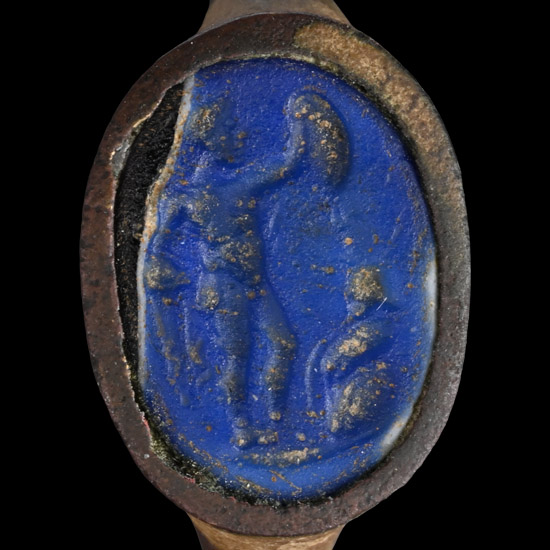
Roman Bronze Ring with Naked Male Gemstone
2nd-3rd century A.D.Sold for (Inc. bp): £156
D-section hoop widening at the shoulders, tall oval bezel set with blue glass intaglio with a standing nude male, bow behind back, holding a wine skin in upraised hand. 4.33 grams, 21.61 mm overall, 16.10 mm internal diameter (approximate size British K, USA 5 1/4, Europe 9.95, Japan 9)
Ex property of a gentleman; from a Mayfair, London, UK, gallery. Private collection, Suffolk, UK. -
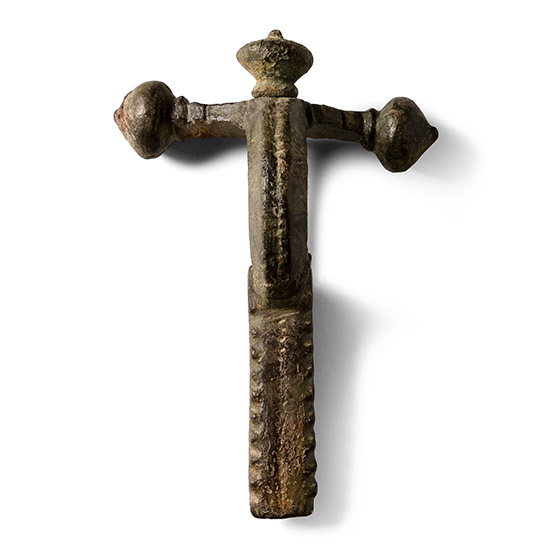
Roman Bronze Crossbow Brooch
4th century A.D.Sold for (Inc. bp): £85
With three onion-shaped knops to the crossbar, deep bow, trapezoidal foot with notched edges and longitudinal line; integral catch; hinged pin to reverse. 39 grams, 69 mm
From the private coin collection of a West London, UK, gentleman, formed since the mid 1980s. -
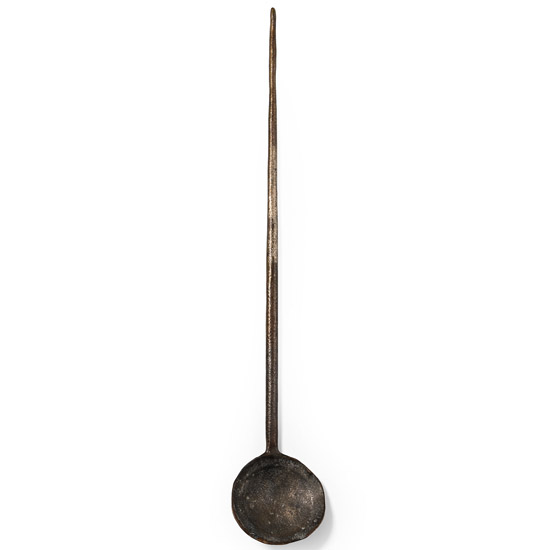
Roman Tinned Bronze Cochlear Spoon
Circa 2nd-3rd century A.D.Sold for (Inc. bp): £130
Featuring a long, pointed handle and a round bowl. 6.91 grams, 13.5 cm
From the private collection of a South London, UK, gentleman, formed since the early 1970s; thence by descent 2006.
