
Loading, please wait...
LOT 0813
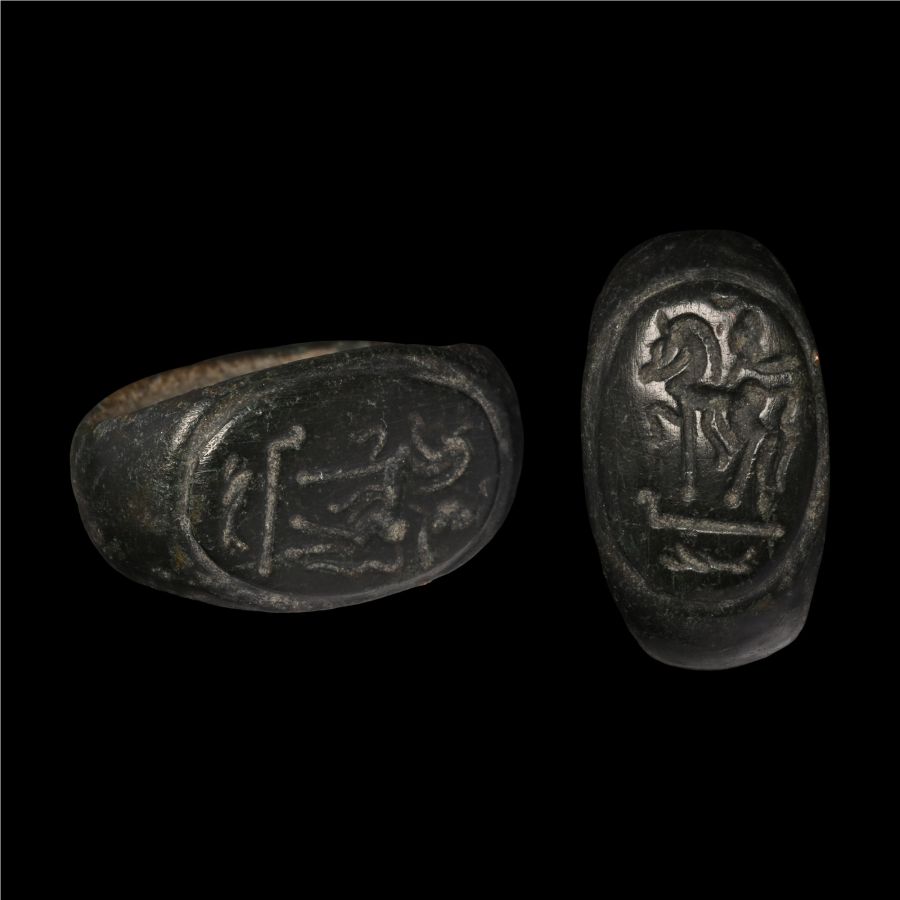
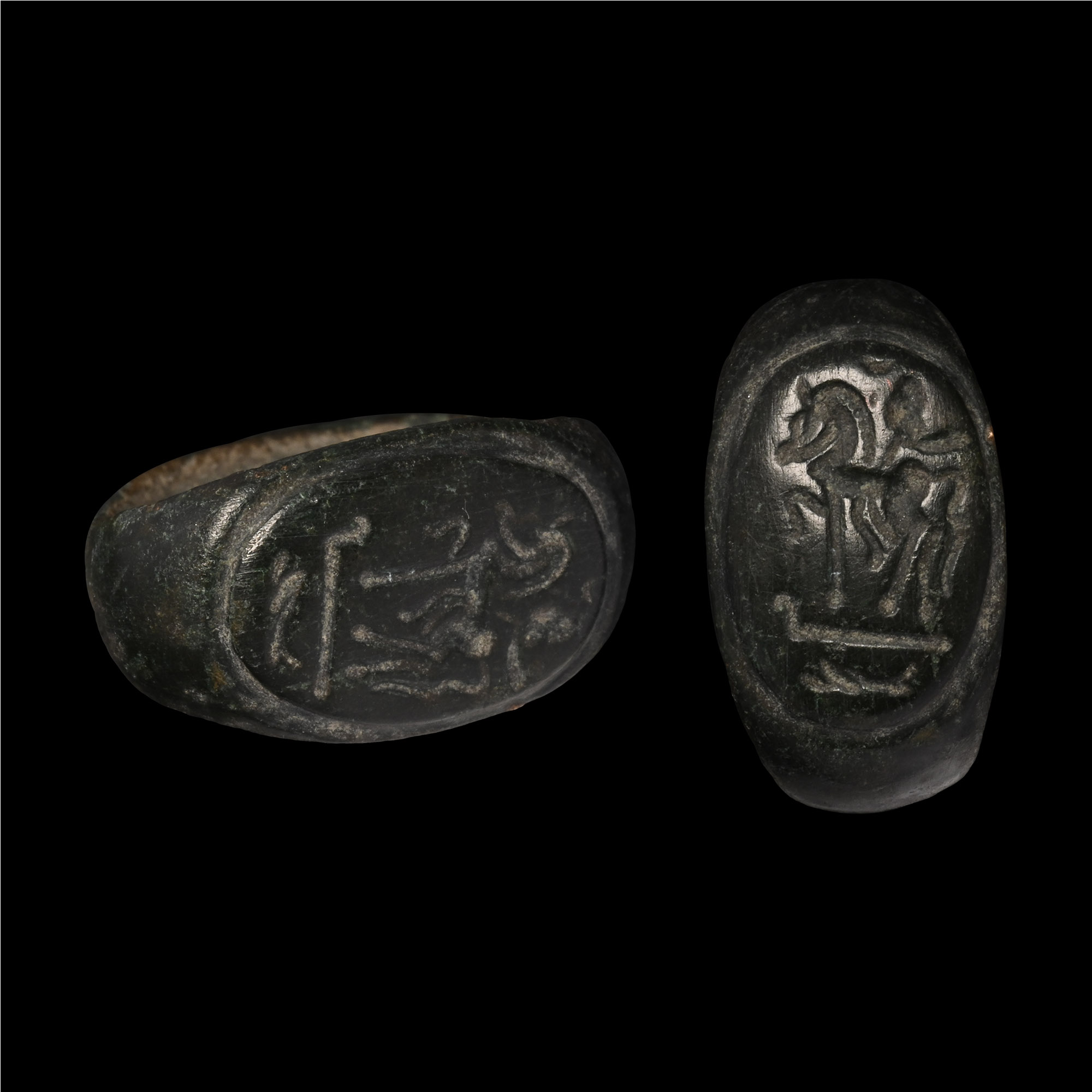
Roman Bronze Ring with Prancing Horse and Rider
2ND-3RD CENTURY A.D.
3/4 in. (5.81 grams, 21.16 mm overall, 17.29 mm internal diameter (approximate size British I 1/2 , USA 4 1/2, Europe 8.07, Japan 7)).
With broad shoulders and ellipsoid plaque, incuse profile horse and rider motif.
ProvenanceEx German art market, 2000s.
Acquired from an EU collector living in London.
From the collection of Surrey, UK, gentleman.
This lot is accompanied by an illustrated lot declaration signed by the Head of the Antiquities Department, Dr Raffaele D’Amato.
Cf. Chadour, A.B., Rings. The Alice and Louis Koch Collection, volume I, Leeds, 1994, item 232.
CONDITIONTimeLine Auctions follows a vetting process to ensure the authenticity and legality of all items, reinforcing our commitment to integrity and responsible trading. Each antiquity, antique, and coin lot undergoes thorough examination by a vetting committee of at least ten external specialists, professional trade association members, scientists, and archaeologists: Our Vetting Process
AUCTIONS:
TimeLine is a leading auction house specialising in antiquities, ancient art, collectables, natural history, coins, medals, and books. Our auctions offer museums, collectors, historians, and enthusiasts the opportunity to acquire unique and historically significant pieces.
-
.jpg)
Roman Silver Votive Figure of the God Mercury
1st-3rd century A.D.Sold for (Inc. bp): £182
Modelled in the round, wearing a tightly-wrapped toga, his left arm bent and hand gripping the marsupium bag of coins; with full beard and hair parted neatly at the rear. 4.7 grams, 29 mm
Acquired in the 1980s. From the collection of a London antiquarian. This lot is accompanied by an illustrated lot declaration signed by the Head of the Antiquities Department, Dr Raffaele D’Amato. -
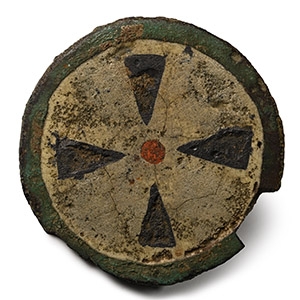
Roman Enamelled Bronze Plate Brooch
2nd century A.D.Sold for (Inc. bp): £195
With four radiating triangular cells and central pellet; pin, pin-lugs and catchplate to the reverse. 12 grams, 35 mm
Acquired on the London art market in the late 1980s-1990s. From the family collection of an East London, UK, gentleman. This lot is accompanied by an illustrated lot declaration signed by the Head of the Antiquities Department, Dr Raffaele D’Amato. -
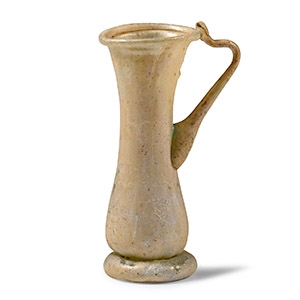
Roman Glass Handled Phial
1st-3rd century A.D.Sold for (Inc. bp): £208
Piriform in profile with applied trail base, rolled rim and applied handle. 22.9 grams, 84 mm
Formerly in North American collection, 1990s. From the collection of a London, UK, gentleman. This lot is accompanied by an illustrated lot declaration signed by the Head of the Antiquities Department, Dr Raffaele D’Amato.
