
Loading, please wait...
LOT 0685
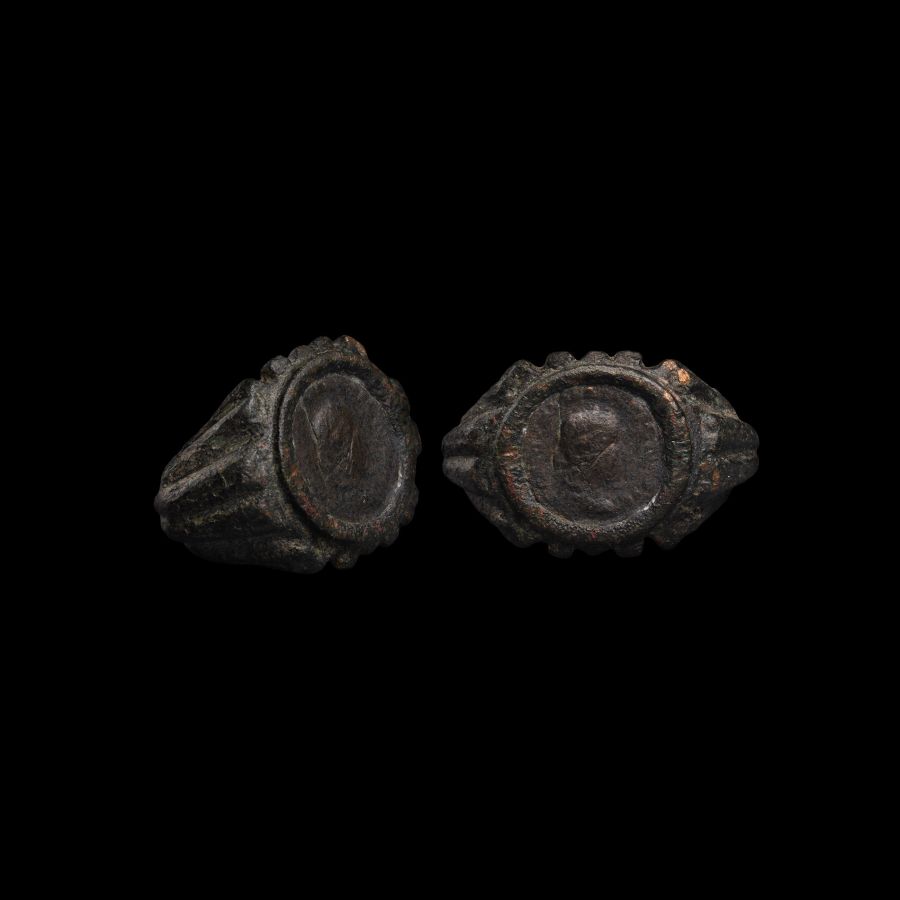
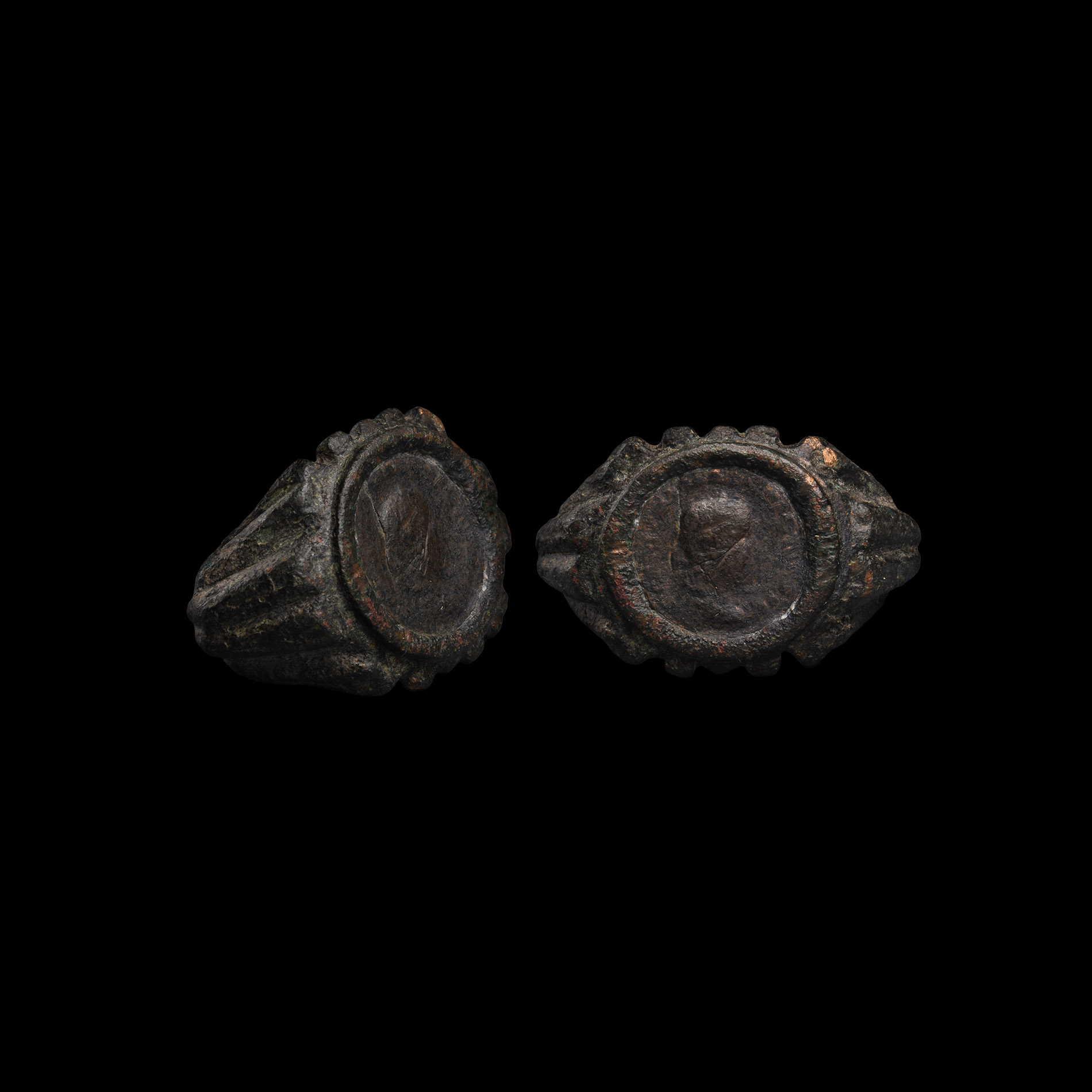
Roman Bronze Ring with Portrait
3RD CENTURY A.D.
1 1/2 in. (34.93 grams, 38.63 mm overall, 22.43 mm internal diameter (approximate size British O 1/2, USA 7 1/4, Europe 15.61, Japan 15)).
Hoop composed of angled and fluted shoulders and an oval bezel displaying a portrait bust in profile right, in relief.
ProvenanceAcquired 1990s-early 2000s.
East Anglian private collection.
Cf. Ruseva-Slokoska, L., Roman Jewellery, Sofia, 1991, item 256, for broad type.
CONDITIONTimeLine Auctions follows a vetting process to ensure the authenticity and legality of all items, reinforcing our commitment to integrity and responsible trading. Each antiquity, antique, and coin lot undergoes thorough examination by a vetting committee of at least ten external specialists, professional trade association members, scientists, and archaeologists: Our Vetting Process
AUCTIONS:
TimeLine is a leading auction house specialising in antiquities, ancient art, collectables, natural history, coins, medals, and books. Our auctions offer museums, collectors, historians, and enthusiasts the opportunity to acquire unique and historically significant pieces.
-
.jpg)
Roman Gold Ring with Carnelian Cameo of Eros
Early 3rd century A.D.Sold for (Inc. bp): £1,170
Composed of a convex hoop with expanding angled shoulders, oval bezel set with carnelian cameo gemstone carved with the head and face of Eros with pinched features and centrally-parted hair; a marriage. 7.09 grams, 21.79 mm overall, 17.87 mm internal diameter (approximate size British H 1/2, USA 4, Europe 6.81, Japan 6)
Acquired 1990s-early 2000s. East Anglian private collection.
This ring belongs to the typology of gold rings with gem (Type II, Variant I) of Ruseva-Slokoska classification. -
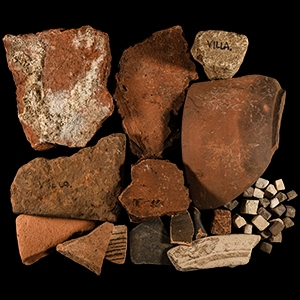
Roman 'St Albans' Pottery Sherd and Mosaic Tesserae Group
1st-4th century A.D.Sold for (Inc. bp): £26
Comprising large tile and vessel fragments, some with inked notes; and a group of white and grey tesserae, including one large redware tessera. 2.3 kg total, 1-17 cm
Found St Albans, Hertfordshire, UK. Acquired from the finder in 2008. Property of a Nottinghamshire gentleman.
The great monuments of Verulamium were efficiently destroyed by the medieval builders of Saxon and Norman abbeys. They sought Roman bricks and, above all, limestone which could be burnt for mortar. Most of the ancient Roman town stone monuments were broken up and thrown into lime kilns. These surviving fragments give a hint of what was once there. For the monuments and buildings Romans used Northamptonshire limestone, but the more delicate, finely carved inscriptions were realised in Purbeck marble from Dorset. -
.jpg)
Roman Gold Ring with Serapis Gemstone
1st century A.D.Sold for (Inc. bp): £1,300
Hollow-formed with inset carnelian gemstone engraved with a profile bust of Serapis above a perching eagle flanked by fronds, possibly a marriage. 3.15 grams, 26.98 mm overall, 13.22 mm internal diameter (approximate size British D, USA 1 3/4, Europe 1.15, Japan 1)
Acquired early 1990s. Ex private American collection; thence by descent. Private Swiss collection since 1998.
