
Loading, please wait...
LOT 0884
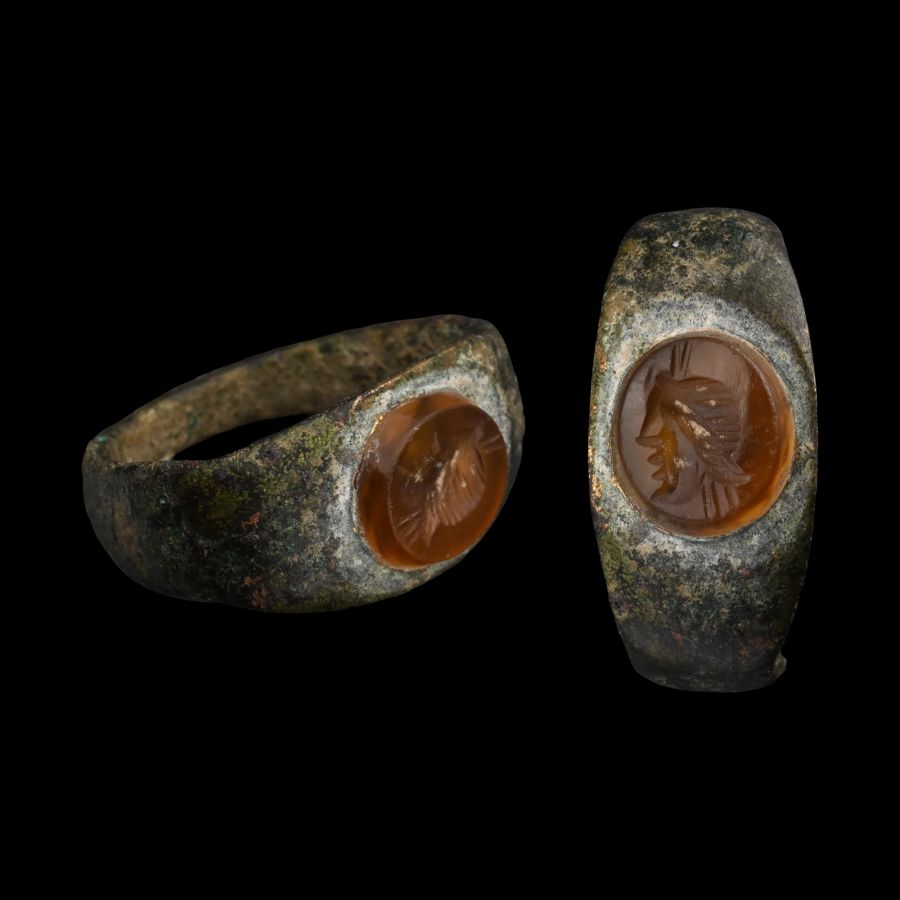
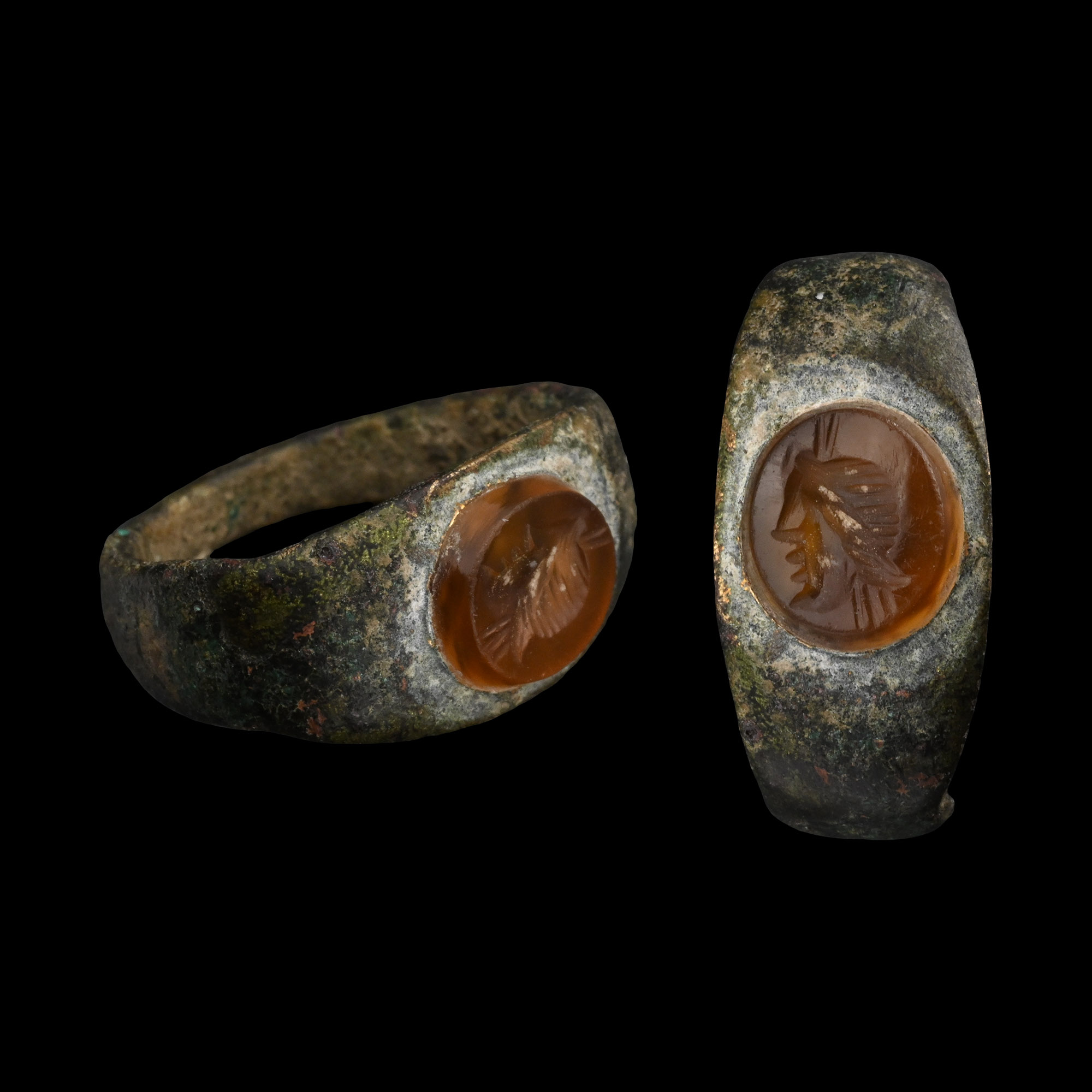
Roman Bronze Ring with Portrait Gemstone of Venus
2ND-3RD CENTURY A.D.
7/8 in. (5.22 grams, 22.85 mm overall, 17.76 mm internal diameter (approximate size British K, USA 5 1/4, Europe 9.95, Japan 9)).
Hoop with broad shoulders and inset carnelian wheel cut intaglio with portrait bust of Venus.
ProvenanceFrom a London, UK, private collection since the early 2000s.
LiteratureCf. Ruseva-Slokoska, L., Roman Jewellery, Sofia, 1991, item 194, for type.
CONDITIONTimeLine Auctions follows a vetting process to ensure the authenticity and legality of all items, reinforcing our commitment to integrity and responsible trading. Each antiquity, antique, and coin lot undergoes thorough examination by a vetting committee of at least ten external specialists, professional trade association members, scientists, and archaeologists: Our Vetting Process
AUCTIONS:
TimeLine is a leading auction house specialising in antiquities, ancient art, collectables, natural history, coins, medals, and books. Our auctions offer museums, collectors, historians, and enthusiasts the opportunity to acquire unique and historically significant pieces.
-
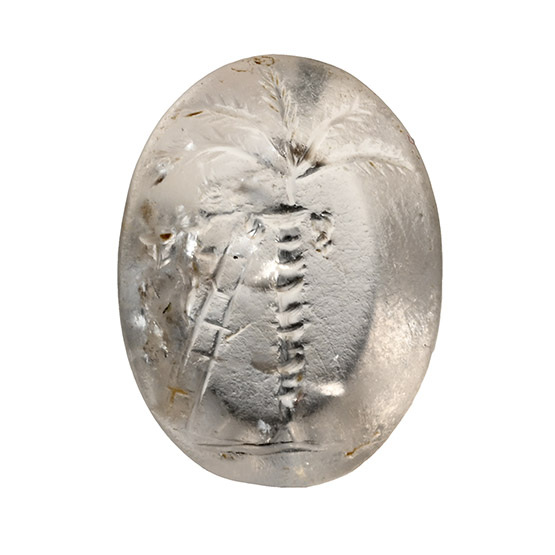
Roman Rock Crystal Gemstone of a Date Picker
1st-2nd century A.D.Sold for (Inc. bp): £715
Incuse image of a palm tree with splayed fronds, ladder placed against the trunk, and a man with a basket ascending to pick the fruit; supplied with a museum-quality impression. 0.71 grams, 12 mm
Private English collection, formed between the late 1970s and early 1990s. Private collection, London, UK. -
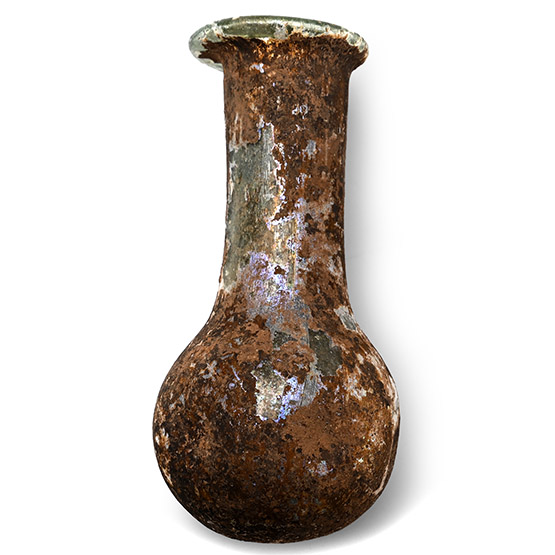
Roman Glass Flask
Circa 1st-4th century A.D.Estimate: £100 - 140 (+bp*)
Opening Bid: £50
Bulbous body, cylindrical tall neck and everted rim. 23 grams, 89 mm
From a London, UK, collection of glass, 1970-2000s. -
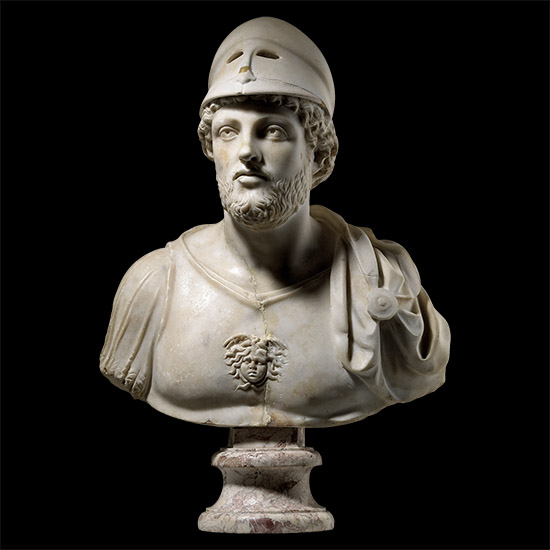
Roman Marble Helmetted and Cuirassed Bust of Mars, the God of War
Late 4th century A.D.Sold for (Inc. bp): £32,000
His head turned slightly to the right, calm and idealised facial expression with heavy-lidded eyes defined by incised irises and drilled, crescent-shaped pupils, and a neatly trimmed beard; his wavy hair crowned by a Corinthian helmet, pushed back high on the forehead; wearing a cuirass decorated at the centre with a small gorgoneion, and a chlamys secured by a brooch on the left shoulder; mounted on a later variegated stone socle. 45.2 kg, 68.5 cm
European private collection, 18th century (based on the restoration techniques). Private collection, France, acquired on the Marseilles art market in the late 1960s. Sotheby's, London, 13th June 2016, no.18. UK collection, acquired from the above auction. Sotheby's, Ancient Marbles: Classical Sculpture and Works of Art, 3-9 July 2020, no.30. Accompanied by copies of the relevant Sotheby's 2016 catalogue pages. This lot has been checked against the Interpol Database of stolen works of art and is accompanied by search certificate number no.13115-249591.
The sculpture has undergone both ancient and modern intervention. The back has been hollowed out in modern times, indicating that it was originally part of a tondo. Restoration is visible to the tip of the nose, the lower edges of the helmet’s cheek-pieces, and a small area of drapery. There is minor reworking to parts of the drapery folds and the brooch, as well as light retouching to the proper right corner of the lower lip and possibly the right side of the moustache. A small area of fill is also present on the restored nose of the helmet. In style, the bust belongs to the Late Antique tradition of ideal sculpture. The simplified facial features and distinctive eye treatment closely recall a comparable head in the Vatican, dated to the late 4th century AD. The military dress and iconography strongly suggest that the figure represents the Roman god Mars, comparable to known images of Mars Ultor. The Corinthian helmet, restored with a sculpted nose-guard, reflects an 18th-century restoration practice well attested in Roman collections, including examples from the Villa Albani.
