
Loading, please wait...
LOT 0560
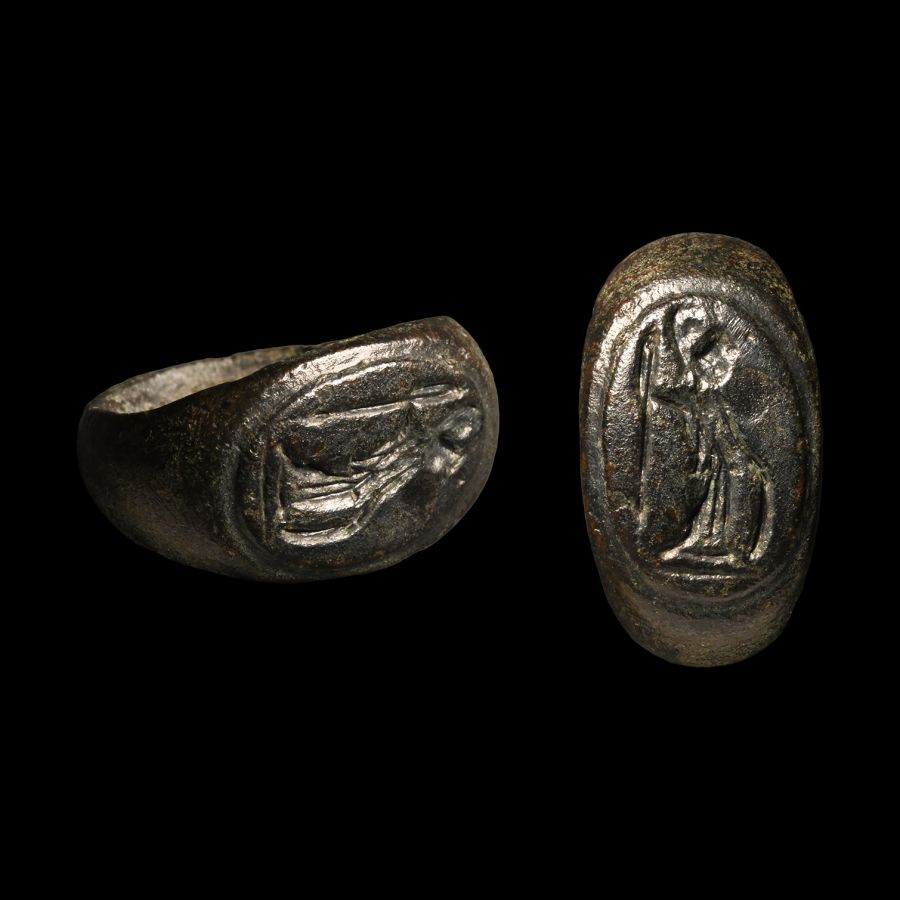
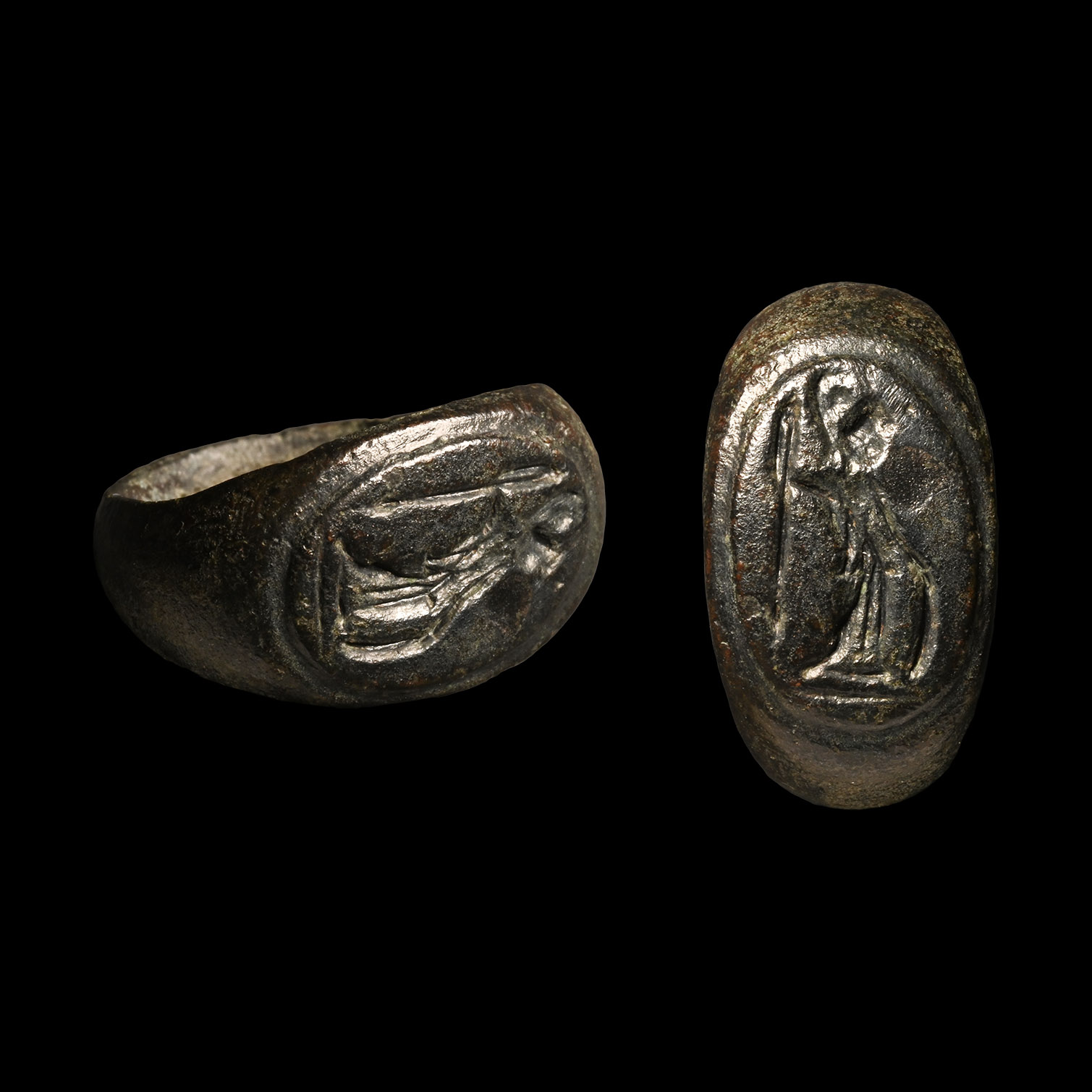
Roman Bronze Ring with Minerva
CIRCA 1ST-3RD CENTURY A.D.
7/8 in. (6.92 grams, 22.09 mm overall, 17.21 mm internal diameter (approximate size British J, USA 4 3/4, Europe 8.69, Japan 8)).
With a keeled hoop expanding at the shoulders, oval raised bezel with standing goddess Minerva holding a long spear and shield at her feet, wearing a crested helmet.
ProvenanceFrom the collection of a High Wycombe, Buckinghamshire, UK, gentleman, circa 2000.
CONDITIONTimeLine Auctions follows a vetting process to ensure the authenticity and legality of all items, reinforcing our commitment to integrity and responsible trading. Each antiquity, antique, and coin lot undergoes thorough examination by a vetting committee of at least ten external specialists, professional trade association members, scientists, and archaeologists: Our Vetting Process
AUCTIONS:
TimeLine is a leading auction house specialising in antiquities, ancient art, collectables, natural history, coins, medals, and books. Our auctions offer museums, collectors, historians, and enthusiasts the opportunity to acquire unique and historically significant pieces.
LOT 0560
Roman Bronze Ring with Minerva
Estimate £100 - 140€120 - 160 (for guidance only)$140 - 190 (for guidance only)
-
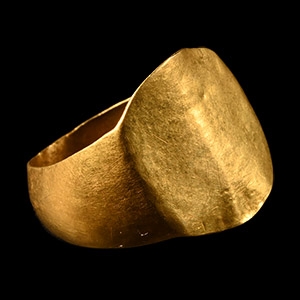
Roman Solid Gold Ring
Circa 3rd century A.D.Sold for (Inc. bp): £338
With a flat-section, wide hoop and rounded bezel. 3.06 grams, 19.11 mm overall, 16.10 mm internal diameter (approximate size British L, USA 5 3/4, Europe 11.24, Japan 10)
From a late Japanese specialist collector, 1970-2000s. -
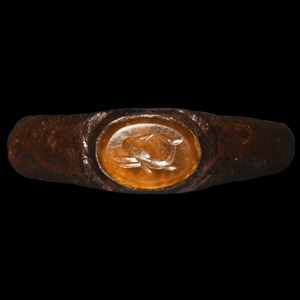
Late Roman Bronze Ring with Dolphin Gemstone
Circa 3rd-4th century A.D.Sold for (Inc. bp): £169
With facetted angled shoulders, small plaque with inset carnelian intaglio of a dolphin with raised tail. 3.15 grams, 24.52 mm overall, 18.01 mm internal diameter (approximate size British O 1/2, USA 7 1/4, Europe 15.61, Japan 15)
Acquired on the German art market before 2000. Property of a Surrey, UK, collector. -
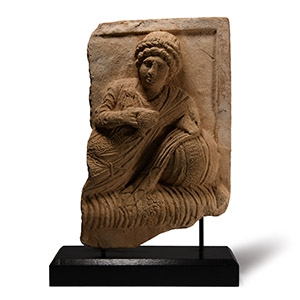
Eastern Roman Sandstone Frieze Fragment with Banquet Scene
Circa 2nd-3rd century A.D.Sold for (Inc. bp): £2,470
The rectangular stele modelled in the half-round representing a banqueting scene with elaborate couch and reclining character; the couch with banded and padded platform, rounded cushion with bands of ornament; the figure depicting a young noble wearing a male Palmyrene costume with band of scrolled foliage ornament, hair dressed into braided tresses and wound round the brow; left arm supporting the body on the cushion, right hand placed before the chest holding the handle of a footed kylix; rectangular border; mounted on a custom-made stand; head restored. 11.2 kg total, 46 cm including stand
Ex P.A., Hertfordshire, UK, specialist collection of Greek art, 1980-1990s.
The character shows a typical male in Palmyrene costume, with long sleeved tunic and large central band, decorated with interlaced vegetal embroidery. Its position is typical of the so-called 'banquet' reliefs. The belt is also decidedly masculine. The sculpture, originally headless, was probably reworked in the upper part, with the addition of a female head incompatible with the rest of the body.
