
Loading, please wait...
LOT 0609
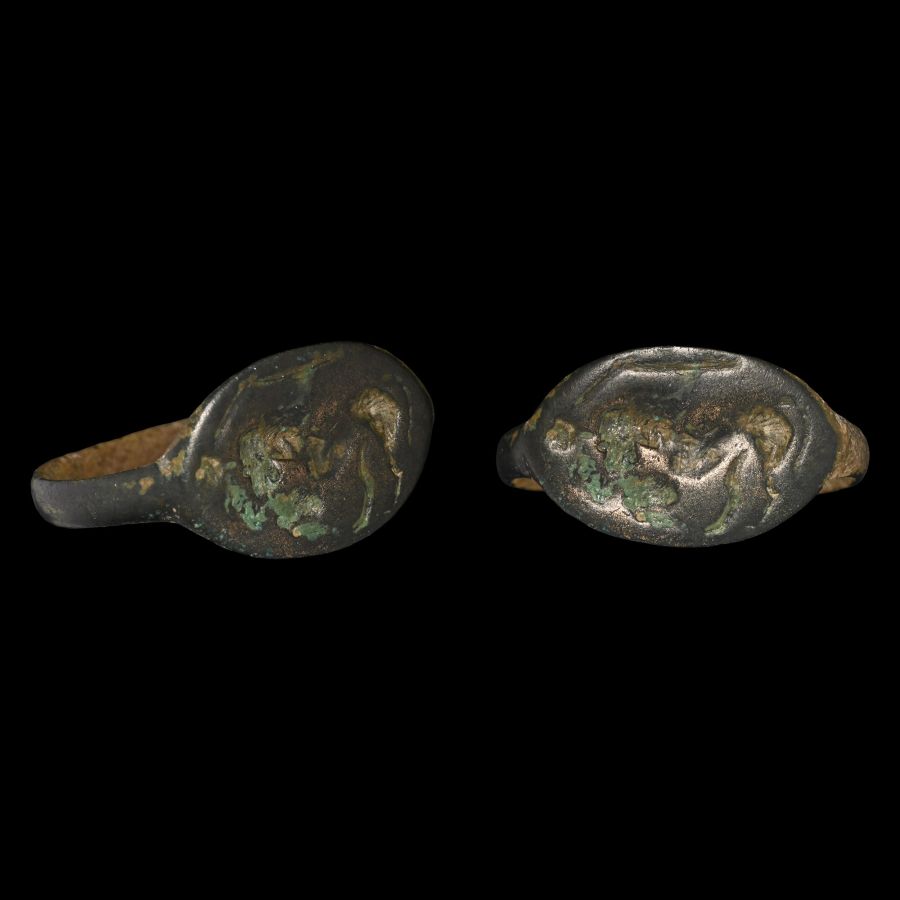
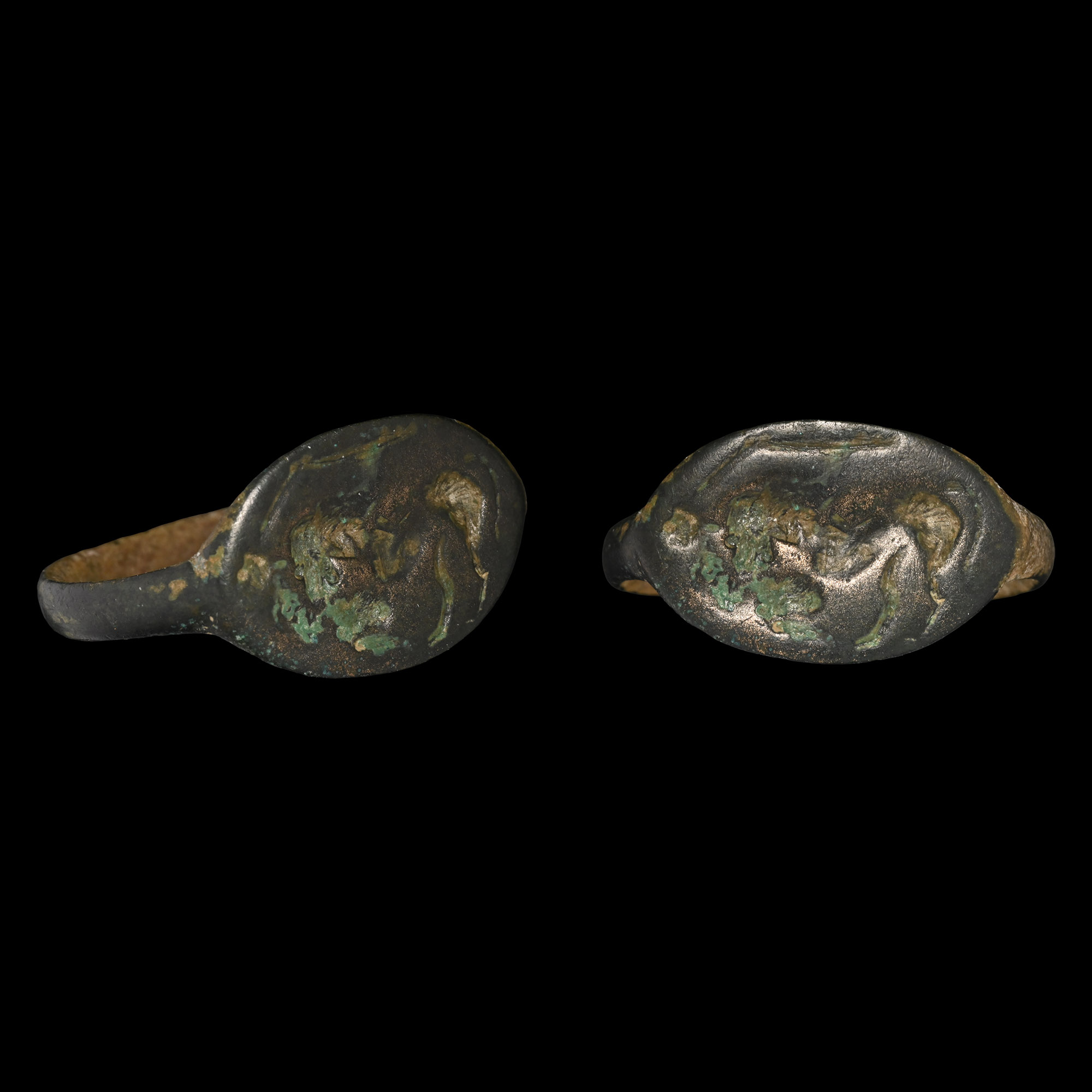
Roman Bronze Ring with Lion
1ST-2ND CENTURY A.D.
1 in. (4.57 grams, 23.72 mm overall, 19.59 x 17.86 mm internal diameter (approximate size British R, USA 8 1/2, Europe 18 3/4, Japan 18)).
Featuring a D-section hoop and a lentoid bezel with a standing lion, possibly with a small prey animal in its jaws. [No Reserve]
ProvenanceFrom the private collection of a European gentleman (1942-2024), formed since the 1970s.
CONDITIONTimeLine Auctions follows a vetting process to ensure the authenticity and legality of all items, reinforcing our commitment to integrity and responsible trading. Each antiquity, antique, and coin lot undergoes thorough examination by a vetting committee of at least ten external specialists, professional trade association members, scientists, and archaeologists: Our Vetting Process
AUCTIONS:
TimeLine is a leading auction house specialising in antiquities, ancient art, collectables, natural history, coins, medals, and books. Our auctions offer museums, collectors, historians, and enthusiasts the opportunity to acquire unique and historically significant pieces.
-
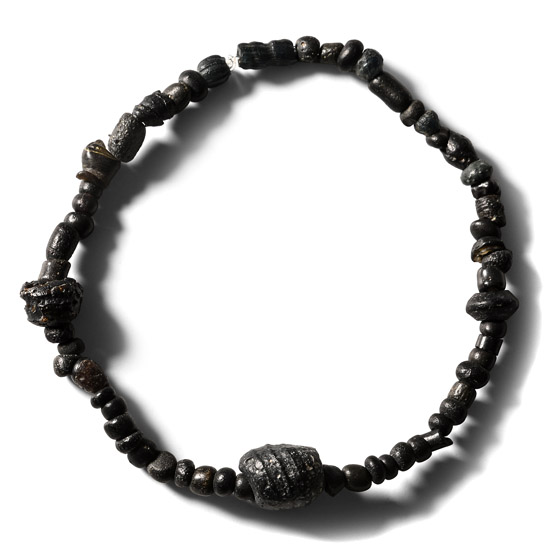
Roman Black Glass Bead Bracelet
1st-4th century A.D. and laterSold for (Inc. bp): £26
Composed mainly of oblate beads with a larger feature bead, restrung with an elasticated string. 4.41 grams, 17 cm
Ex Ancient Art Shop, Windsor, UK, 1990s. Ex private collection. -
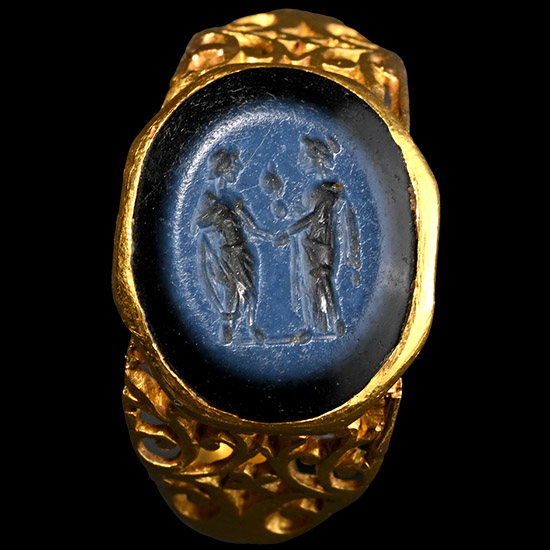
Roman Gold Matrimonial Ring with Nicolo Gemstone
2nd-3rd century A.D.Estimate: £8,000 - 10,000 (+bp*)
Current Winning Bid: £4,200
A 3rd-century A.D. opus interrasile ring featuring an expanding hoop with openwork volute scroll shoulders, set with a 2nd-century A.D. dextrarum iunctio nicolo intaglio showing an opposing man and a woman holding hands, the woman holding an ear of wheat, the male figure wearing a long military mantle hanging down his back; supplied with a museum-quality impression. 8.40 grams, 23.52 mm overall, 18.89 x 17.87 mm internal diameter (approximate size British Q, USA 8, Europe 17.49, Japan 16)
Acquired on the European art market. This lot has been checked against the Interpol Database of stolen works of art and is accompanied by search certificate number no.13346-257954.
The wheat symbolises abundance, fertility and prosperity in marriage. -
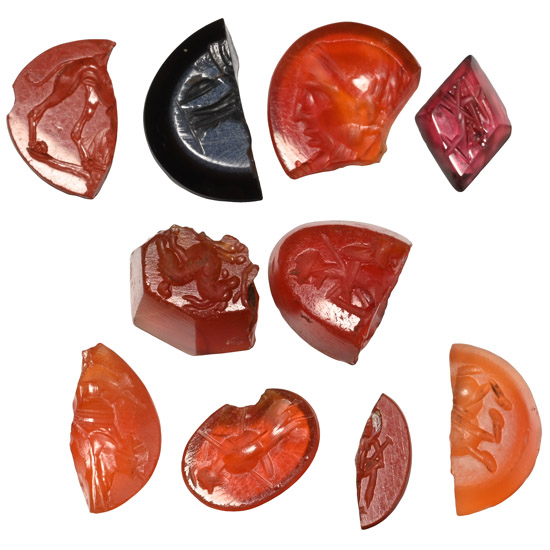
Roman Gemstone Group
2nd-3rd century A.D.Sold for (Inc. bp): £117
Including advancing rear legs of a lion, profile bust, Minerva with spear and other types; each supplied with a museum-quality impression. 3 grams total, 8-12 mm
From the private collection of a European gentleman (1942-2024), formed since the 1970s.
