
Loading, please wait...
LOT 0848
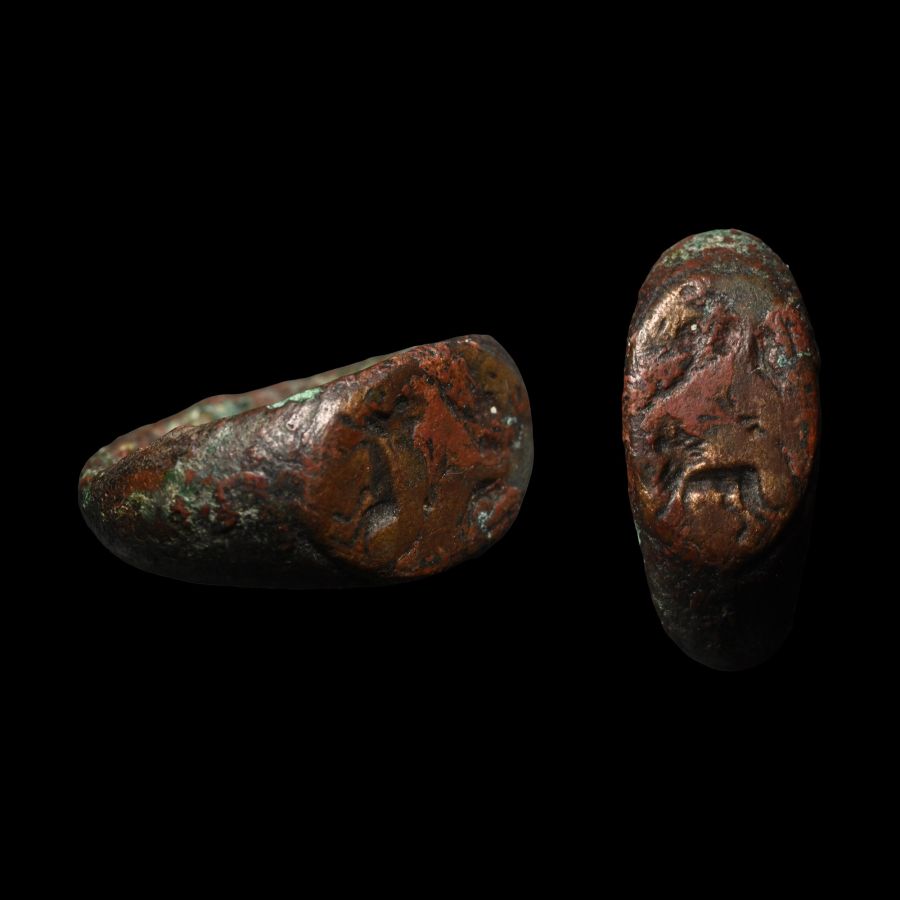
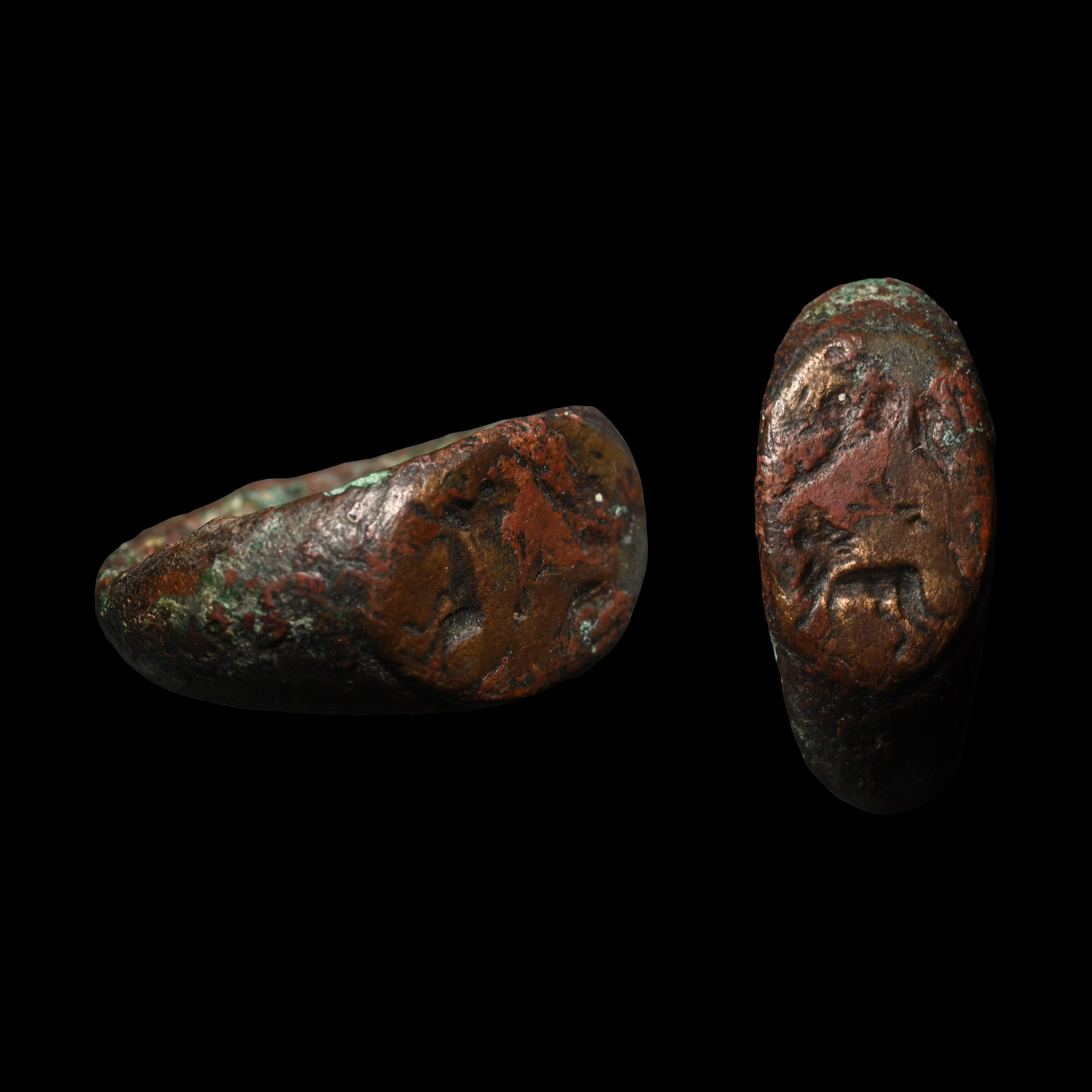
Roman Bronze Ring with Lion
1ST-4TH CENTURY A.D.
7/8 in. (5.41 grams, 22.87 mm overall, 14.26x16.16 mm internal diameter (approximate size British H 1/2, USA 4, Europe 6.81, Japan 6)).
Comprising a D-section hoop with expanding shoulders and an oval bezel with a standing lion. [No Reserve]
ProvenanceFrom the private collection of a European gentleman (1942-2024), formed since the 1970s.
CONDITIONTimeLine Auctions follows a vetting process to ensure the authenticity and legality of all items, reinforcing our commitment to integrity and responsible trading. Each antiquity, antique, and coin lot undergoes thorough examination by a vetting committee of at least ten external specialists, professional trade association members, scientists, and archaeologists: Our Vetting Process
AUCTIONS:
TimeLine is a leading auction house specialising in antiquities, ancient art, collectables, natural history, coins, medals, and books. Our auctions offer museums, collectors, historians, and enthusiasts the opportunity to acquire unique and historically significant pieces.
-
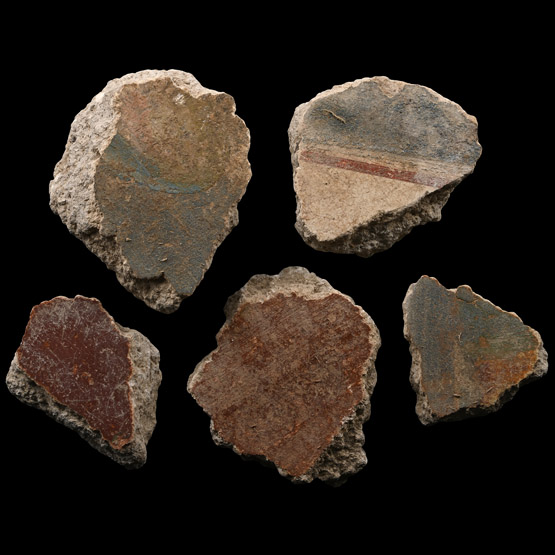
Roman Fresco Wall Plaster Collection
1st century A.D.Sold for (Inc. bp): £52
Fragments of wall plaster with rendered surface painted with mainly Pompeii red, pale blue and white detailing; some with impression of timber laths to the reverse. 613 grams total, 6.2-10.3 cm
Acquired in the 19th century. Ex Jeger collection, Switzerland. UK gallery, early 2000s.
These small fragments, for analogies with the fragments of Pompeii, seem to belong to the second style of Roman painting, red panels representing highlight and shadow, decorated with vegetal interlaces. Some panels were probably framed by a red grenade fillet. A fragment shows alternate blue and red colour over a cream background, maybe pertinent to a socle. -
.jpg)
Large Roman Glass Gem with Apollo
1st century B.C.Sold for (Inc. bp): £78
Plano-convex in section with intaglio image of Apollo standing nude beside a column with his lyre; supplied with a museum-quality impression. 4.66 grams, 29.72 mm
From the private collection of a European gentleman (1942-2024), formed since the 1970s. -
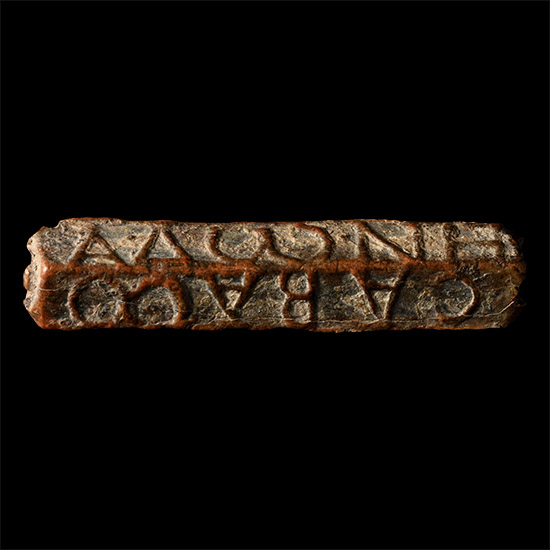
Roman Inscribed Magical Bead
1st century A.D.Sold for (Inc. bp): £644
Tubular bead, square in section with longitudinal piercing; reserved text to each face: (1) Xω·ωX (2) EIAω (3) CABAOO (4) AΔωNH. 6.29 grams, 33 mm
From the London collection of the late Mr S.M., 1969-1999.
The form 'AΔωNH' (Adōne) 'O Lord' is used in Christian inscriptions.
