
Loading, please wait...
LOT 0618
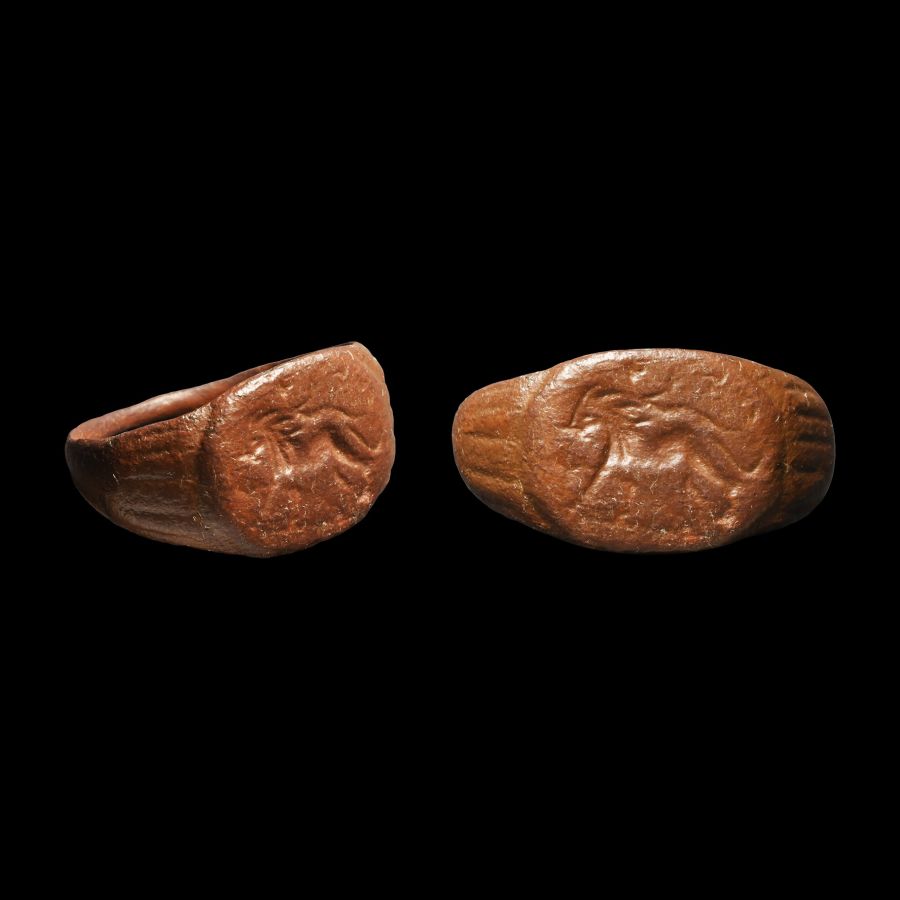
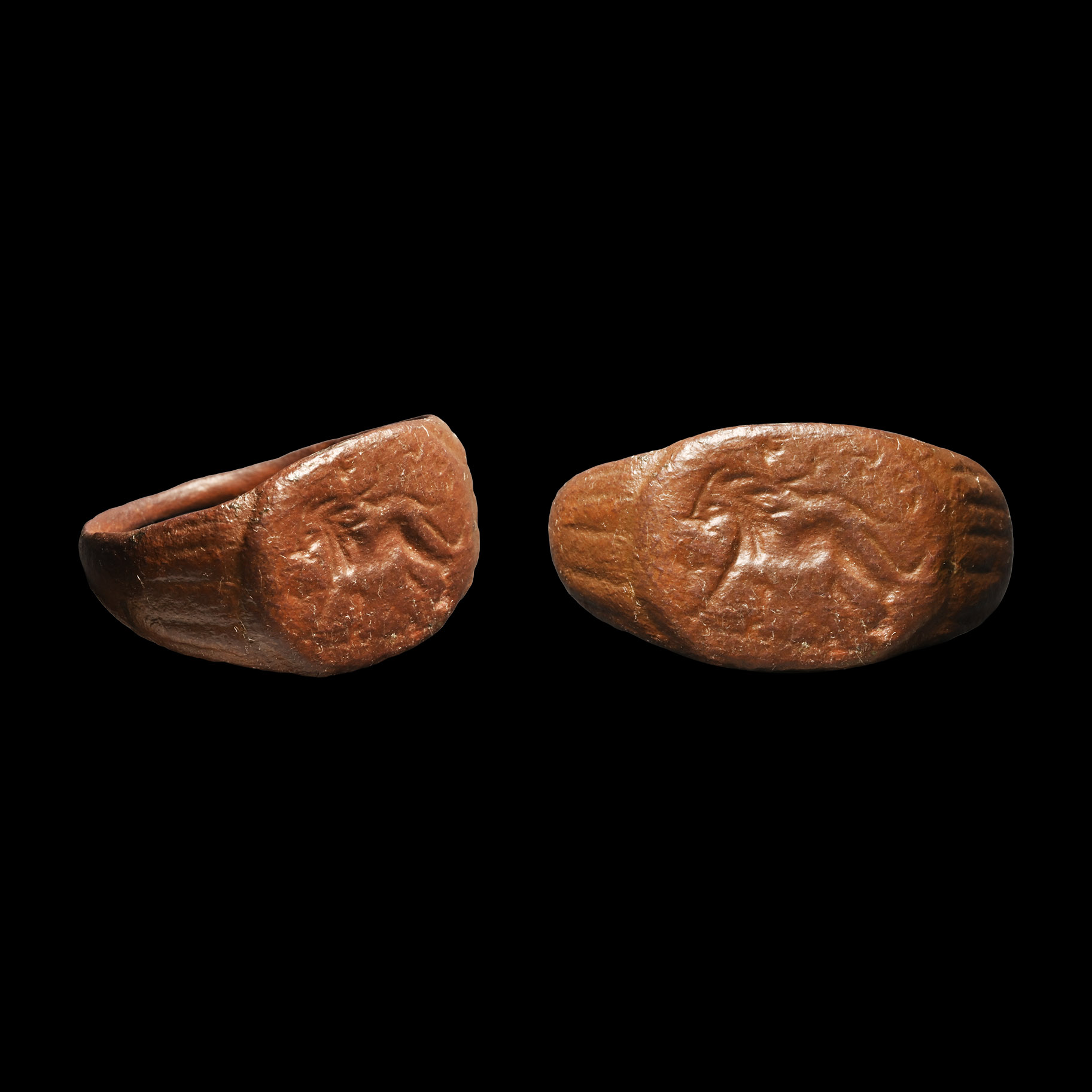
Roman Bronze Ring with Lion
CIRCA 2ND-4TH CENTURY A.D.
1 in. (5.58 grams, 24.46 mm overall, 19.29 mm internal diameter (approximate size British M 1/2, USA 6 1/4, Europe 13.09, Japan 12)).
The narrow hoop expanding at the fluted shoulders, oval bezel with intaglio image of an advancing lion with voluminous mane. [No Reserve]
ProvenanceFrom the collection of a High Wycombe, Buckinghamshire, UK, gentleman, circa 2000.
CONDITIONTimeLine Auctions follows a vetting process to ensure the authenticity and legality of all items, reinforcing our commitment to integrity and responsible trading. Each antiquity, antique, and coin lot undergoes thorough examination by a vetting committee of at least ten external specialists, professional trade association members, scientists, and archaeologists: Our Vetting Process
AUCTIONS:
TimeLine is a leading auction house specialising in antiquities, ancient art, collectables, natural history, coins, medals, and books. Our auctions offer museums, collectors, historians, and enthusiasts the opportunity to acquire unique and historically significant pieces.
-
.jpg)
Roman Bronze Plaque with Eros on Lion
Circa 2nd-4th century A.D.Sold for (Inc. bp): £1,430
Modelled in relief with openwork elements, stylised detailing to both figures; hollow reverse. 182 grams, 10.2 cm high
Acquired 1990s-early 2000s. East Anglian private collection.
Hollow cast bronze images of Eros riding a lion are linked to the Eastern Levant and have been found for example in Tamna, probably a Roman import. The importance of long-distance contacts within the Eastern Mediterranean areas was rapidly reflected in provincial artistic styles, probably as soon as in Hellenistic times, at the beginning of the third century B.C., possibly even earlier. The unquestionable Greek influence led a number of scholars to define three main styles for the bronzes discovered in the eastern Roman provinces: a local type and iconography locally produced, Greek or Roman imports, and Oriental, Hellenistic, or Roman style, locally produced. -
.jpg)
Roman Gemstone with Youth Fighting a Multi-Headed Serpent
Circa 3rd-4th century A.D.Sold for (Inc. bp): £585
A young man trampling and spearing a multi-headed beast; supplied with a museum-quality impression. 1.17 grams, 16 mm
From the collection of a Swiss gentleman formed in Europe from 1970-1980s; thence by descent from the family in London. -
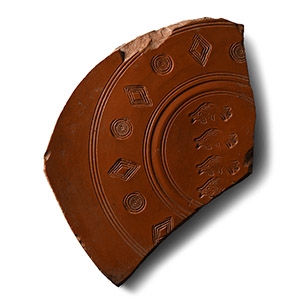
Roman Redware Fish Sherd with Christian Symbols
4th-5th century A.D.Sold for (Inc. bp): £85
Flat ceramic sherd with incised concentric rings, band of impressed alternating lozenges and roundels, group of four fish to the centre; fabric-backed. 178 grams, 17.5 cm
Acquired 1960s-1990s. From the late Alison Barker collection, a retired London barrister
The representation of fish on this terra sigillata from a North African workshop suggests the connection with Christian faith through the fish symbol. The ancient Greek: 'ἰχθύς', was an acronym for the phrase ‘Jesus Christ, Son of God’, in Greek, and was used by early Christians for this reason. The fish symbol was very common in the catacombs of Rome and was used as a recognition symbol among the early Christians.
