
Loading, please wait...
LOT 0619
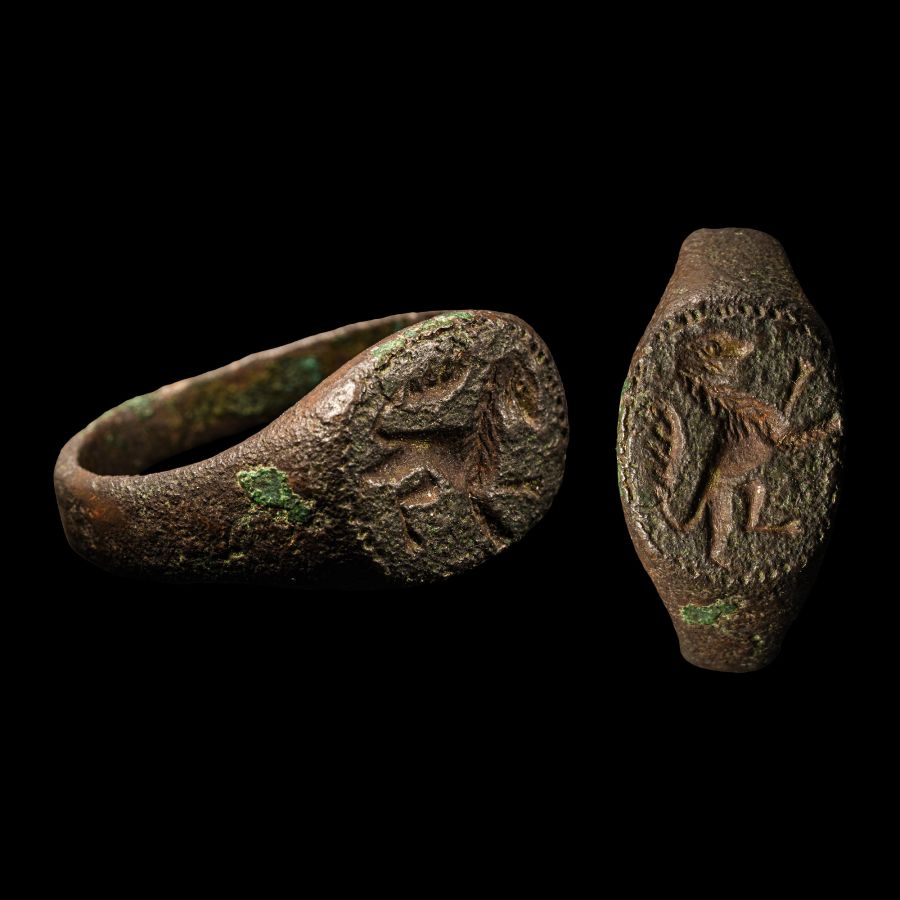
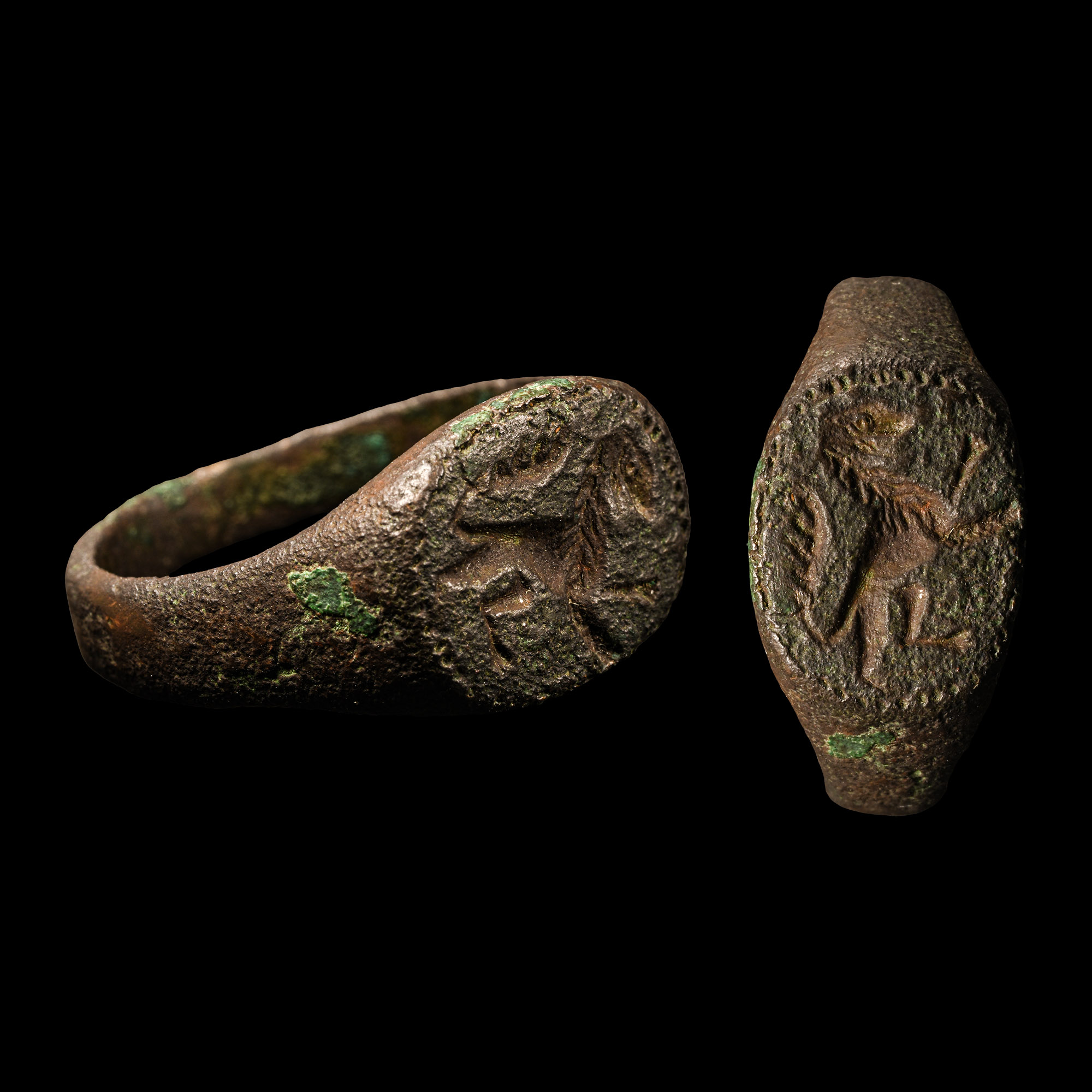
Roman Bronze Ring with Lion
3RD-4TH CENTURY A.D.
7/8 in. (6.00 grams, 23.22 mm overall, 23.62 mm internal diameter (approximate size British T, USA 9 1/2, Europe 21.26, Japan 20)).
With a flat-section expanding hoop, the oval bezel with the quadruped advancing right, voluminous tail curled above the beast's back, surrounded by a dotted border. [No Reserve]
ProvenancePrivate collection formed since the 1940s.
UK art market.
Property of an Essex gentleman.
TimeLine Auctions follows a vetting process to ensure the authenticity and legality of all items, reinforcing our commitment to integrity and responsible trading. Each antiquity, antique, and coin lot undergoes thorough examination by a vetting committee of at least ten external specialists, professional trade association members, scientists, and archaeologists: Our Vetting Process
AUCTIONS:
TimeLine is a leading auction house specialising in antiquities, ancient art, collectables, natural history, coins, medals, and books. Our auctions offer museums, collectors, historians, and enthusiasts the opportunity to acquire unique and historically significant pieces.
-
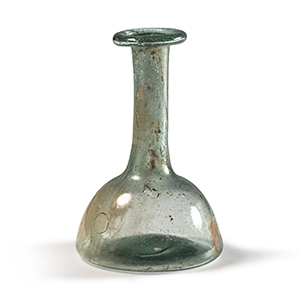
Roman Green Glass Vial
2nd-3rd century A.D.Sold for (Inc. bp): £117
Wide bulbous body with flat base, tall narrow piriform neck, splayed rim with an in-folded lip. 36 grams, 90 mm high
Acquired 1980-2015. Ex Abelita family collection.
During the early Roman period the glass-making techniques used by the Greeks were continued. Much of the glass was buried and as a result acquired an attractive lustrous patination. Roman glass became a medium for the promotion of the emperor and imperial propaganda, as well as having utilitarian purposes. Glass blowing, a new technique, meant that quantities of identical bottles could be produced. -
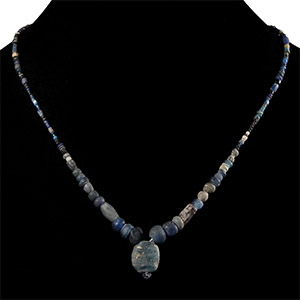
Roman Stone and Glass Bead Necklace String
1st century A.D. and laterSold for (Inc. bp): £52
Restrung group of annular, oblate and tubular glass and other beads with discoid glass centrepiece. 16 grams, 67 cm long
Acquired 1980-2015. Ex Abelita family collection. -
.jpg)
Large Roman Iridescent Glass Vessel
3rd-4th century A.D.Estimate: £400 - 600 (‡+bp*)
Opening Bid: £200
With broad shoulder, slender neck, stepped neck and upwards-flaring rim, two applied rectangular handles; iridescent surfaces. 143 grams, 17 cm high
Acquired early 1990s. Ex private American collection; thence by descent. Private collection since 1998.
