
Loading, please wait...
LOT 0944
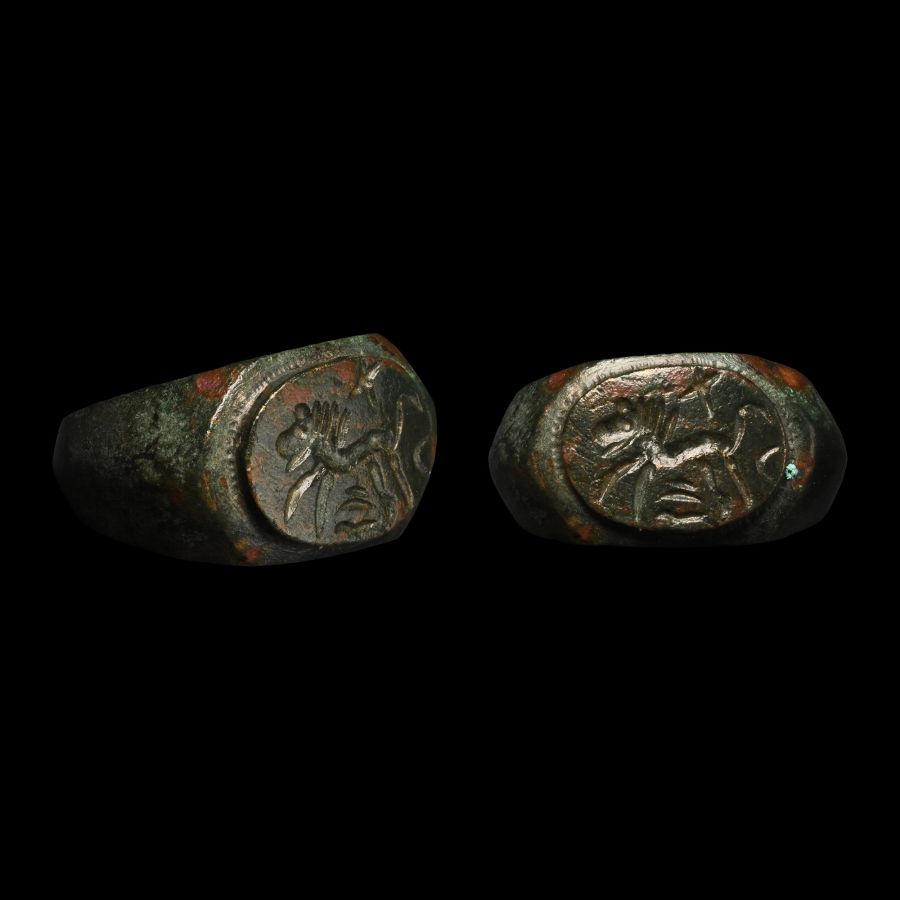
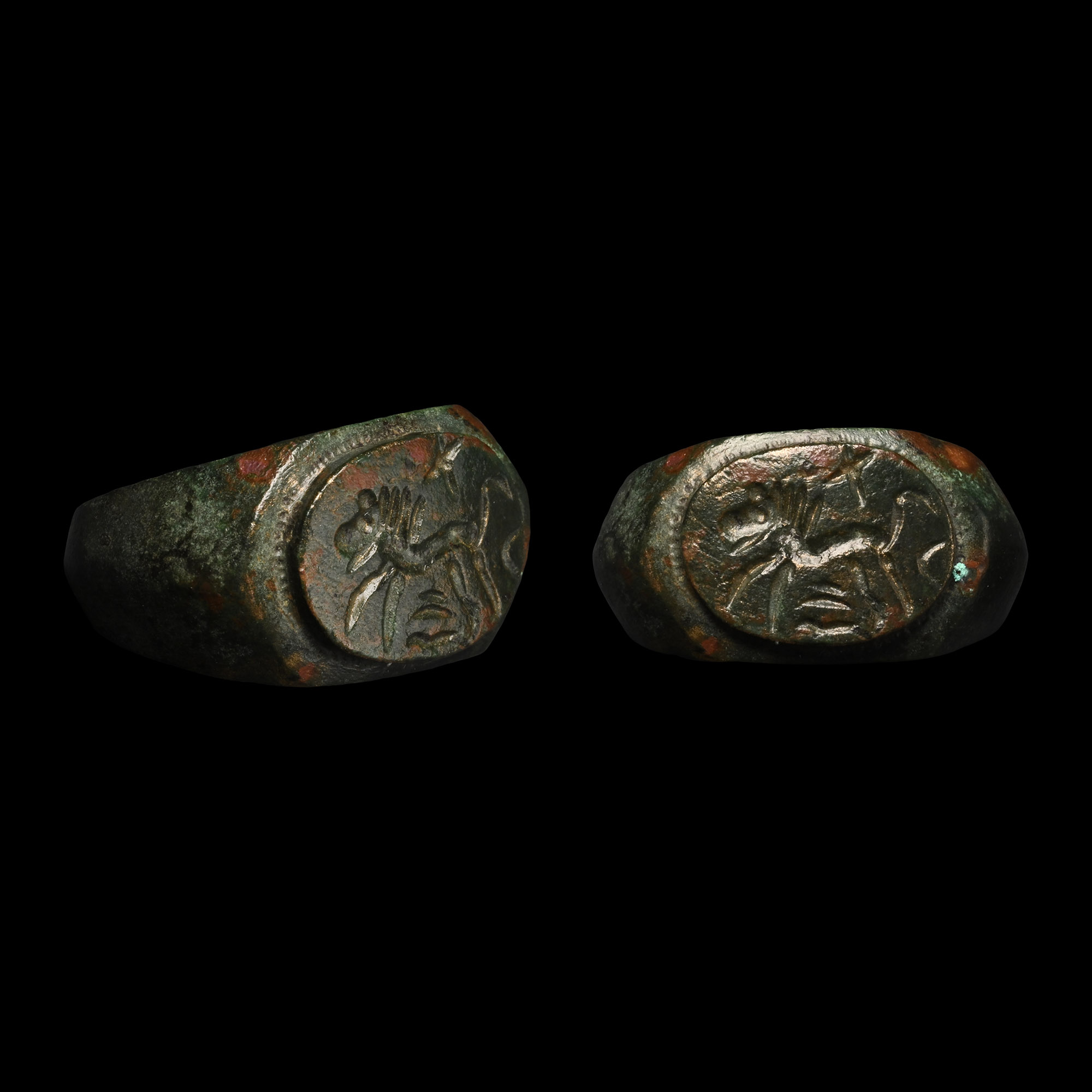
Roman Bronze Ring with Leaping Lion
2ND-3RD CENTURY A.D.
1 in. (11.25 grams, 25.66 mm overall, 19.35 mm internal diameter (approximate size British M 1/2, USA 6 1/4, Europe 13.09, Japan 12)).
Keeled hoop expanding at the shoulders, raised oval bezel with incuse stylised lion leaping left, star above. [No Reserve]
ProvenanceAcquired on the UK and EU art market before 2000.
From the private collection of a Surrey, UK, gentleman.
Cf. parallel for the shape in PAS, LIN-25CD0D.
FootnotesThe shape of the ring belongs to the typologies of the Severian Age. Under Caracalla, the theme of the lion was popular on civilian and soldiers' rings, the lion being the emperor's favourite animal. Stars and lions were, from the age of Caracalla, symbols of the Praetorian Guard.
CONDITIONTimeLine Auctions follows a vetting process to ensure the authenticity and legality of all items, reinforcing our commitment to integrity and responsible trading. Each antiquity, antique, and coin lot undergoes thorough examination by a vetting committee of at least ten external specialists, professional trade association members, scientists, and archaeologists: Our Vetting Process
AUCTIONS:
TimeLine is a leading auction house specialising in antiquities, ancient art, collectables, natural history, coins, medals, and books. Our auctions offer museums, collectors, historians, and enthusiasts the opportunity to acquire unique and historically significant pieces.
-
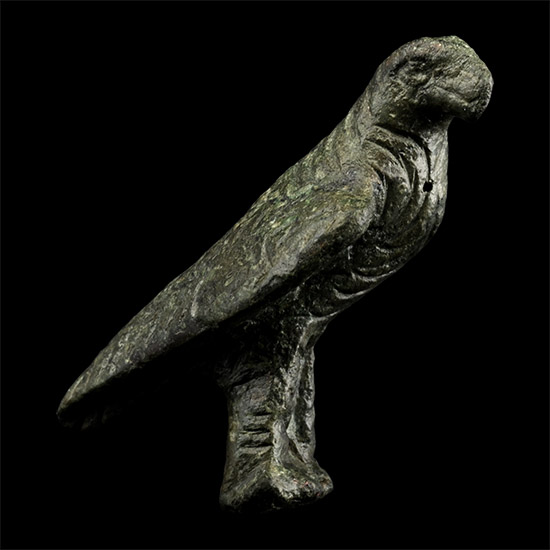
Roman Bronze Eagle Statuette
2nd-3rd century A.D.Sold for (Inc. bp): £143
Modelled in the round perching on the knop with wings closed and head turned. 41.38 grams, 48 mm
Ex German art market, 2000s. Acquired from an EU collector living in London. From the collection of a Surrey, UK, gentleman. -
.jpg)
Roman Decorated Bronze Vessel Lid Group
3rd-4th century A.D.Sold for (Inc. bp): £515
Each a domed disc with central depression, concentric tendril bands and leaf motifs to shoulder, hinge lugs. 765 grams total, 11.2-11.6 cm wide
Acquired on the European art market in the early 2000s. with Galerie Rhéa, Zurich, Switzerland. -
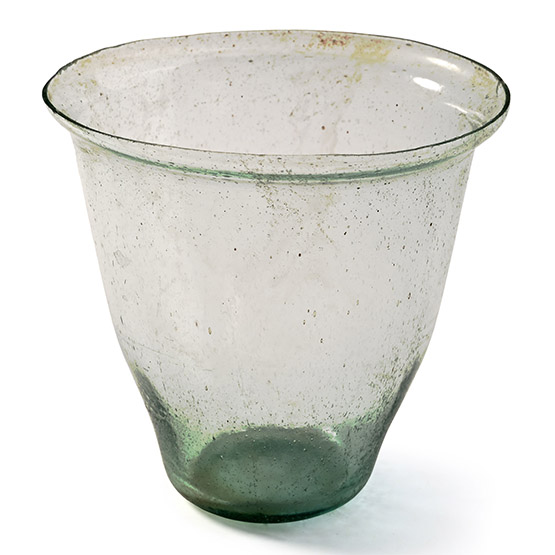
Roman Light Green Glass Lamp
Circa 4th century A.D.Estimate: £250 - 350 (+bp*)
Opening Bid: £139
Tapering body with pontil base, slightly everted rim; traces of iridescence. 41 grams, 80 mm
From an important collection of glass, London, UK, 1990s.
