
Loading, please wait...


LOT 0740
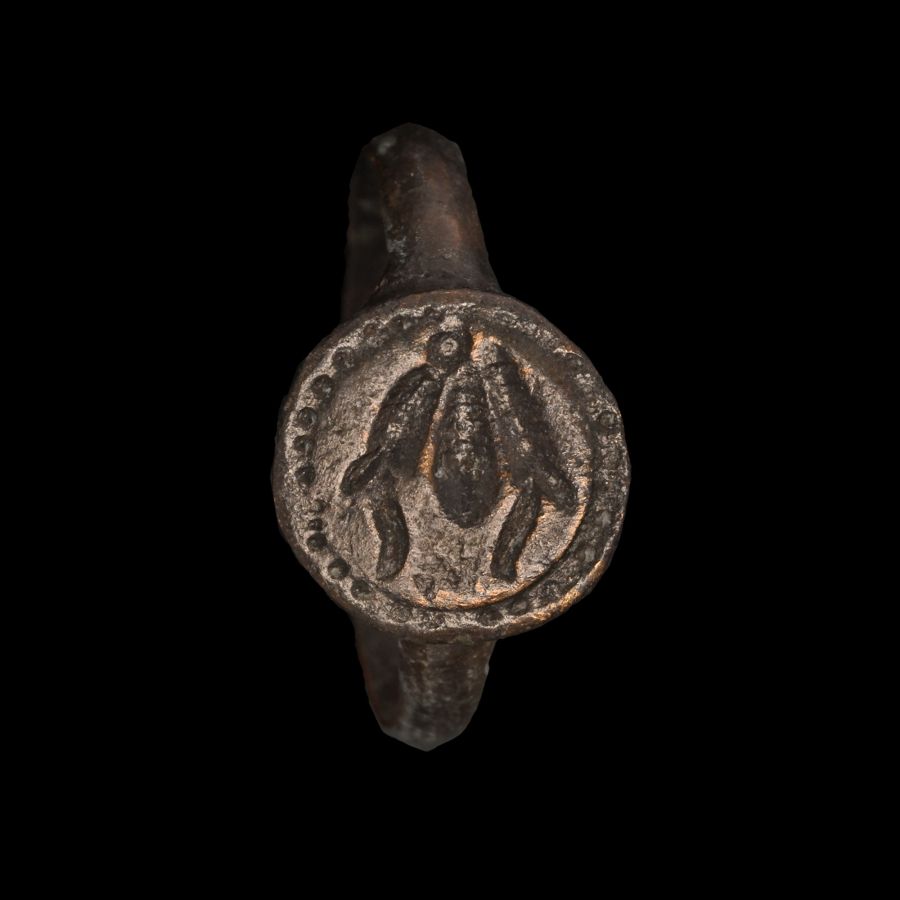
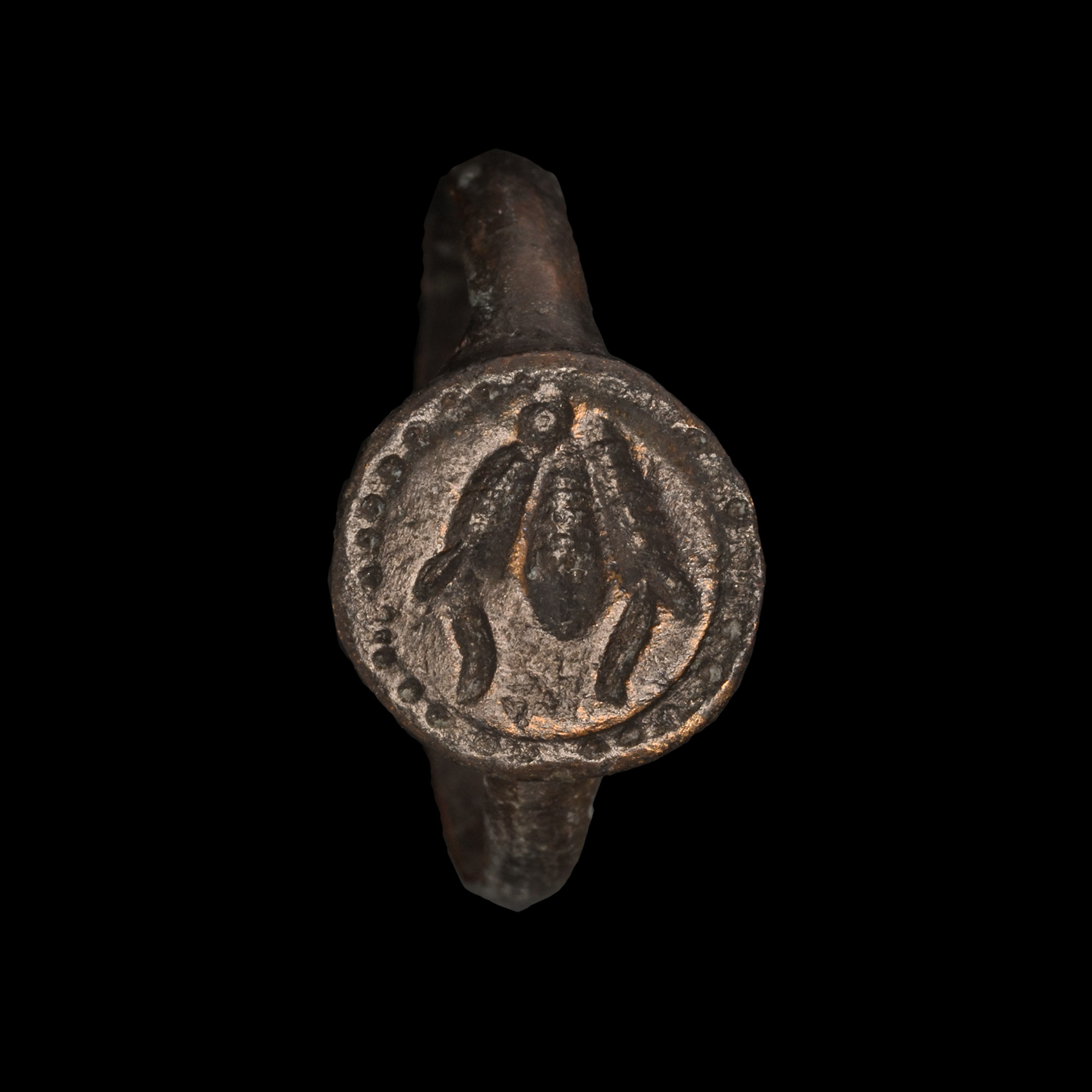
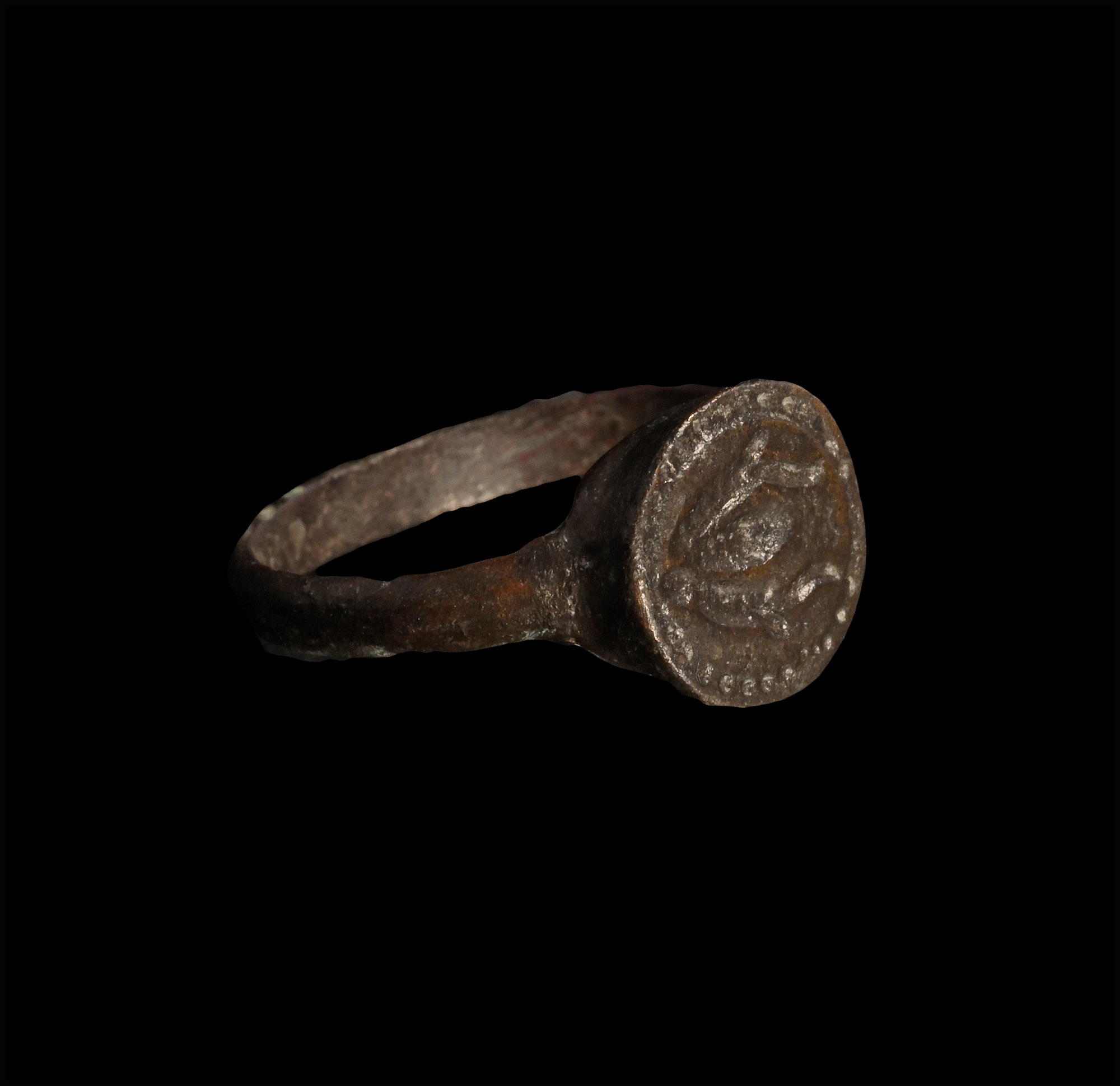
Roman Bronze Ring with Insect
3RD CENTURY A.D.
1 in. (5.83 grams, 24.49 mm overall, 19.94 mm internal diameter (approximate size British R 1/2, USA 8 3/4, Europe 19.38, Japan 18)).
D-section hoop and discoid bezel with pelletted border enclosing a fly. [No Reserve]
ProvenanceAcquired on the London art market in the late 1980s-1990s.
From the family collection of an East London, UK, gentleman.
This lot is accompanied by an illustrated lot declaration signed by the Head of the Antiquities Department, Dr Raffaele D’Amato.
Cf. Ruseva-Slokoska, L., Roman Jewellery, Sofia, 1991, item 207, for type.
CONDITIONTimeLine Auctions follows a vetting process to ensure the authenticity and legality of all items, reinforcing our commitment to integrity and responsible trading. Each antiquity, antique, and coin lot undergoes thorough examination by a vetting committee of at least ten external specialists, professional trade association members, scientists, and archaeologists: Our Vetting Process
AUCTIONS:
TimeLine is a leading auction house specialising in antiquities, ancient art, collectables, natural history, coins, medals, and books. Our auctions offer museums, collectors, historians, and enthusiasts the opportunity to acquire unique and historically significant pieces.
-
Roman Glass Bead Necklace String
1st-4th century A.D. and laterSold for (Inc. bp): £111
Composed of graduated barrel-, drum-shaped, and round beads with a central pendant feature of three beads; restrung. 22.7 grams, 35 cm
Acquired 1980-2015. Ex Abelita family collection. This lot is accompanied by an illustrated lot declaration signed by the Head of the Antiquities Department, Dr Raffaele D’Amato. -
.jpg)
Roman Iridescent Glass Double Unguentarium
2nd-3rd century A.D.Estimate: £800 - 1,000 (‡+bp*)
Opening Bid: £400
With rolled rim to each tapering tube, applied trail detailing to the body, lateral angled handles and large applied loop handle above; iridescent surface. 59 grams, 17 cm
Acquired in the mid 1980s-1990s. Private collection, Switzerland, thence by descent. Private collection, since the late 1990s. This lot has been checked against the Interpol Database of stolen works of art and is accompanied by search certificate number no.12237-222167. This lot is accompanied by an illustrated lot declaration signed by the Head of the Antiquities Department, Dr Raffaele D’Amato. -
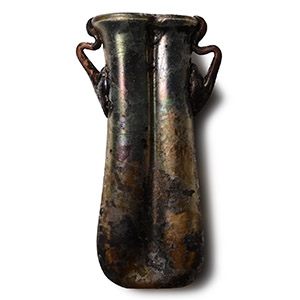
Roman Glass Double Balsamarium
Circa 4th century A.D.Sold for (Inc. bp): £234
A dark amber double balsamarium formed as a pair of conjoined tubes with slightly flared tops with thickened rims; applied handles at the shoulders joined to the rim; glass with areas of iridescence and dark crust, a few small earthy deposits. 67 grams, 10.3 cm
From a UK private collection. Ex London, UK, gallery. Ex TimesAncient, Bristol, UK. Accompanied by a copy of a previous catalogue entry. This lot is accompanied by an illustrated lot declaration signed by the Head of the Antiquities Department, Dr Raffaele D’Amato.
