
Loading, please wait...
LOT 0842
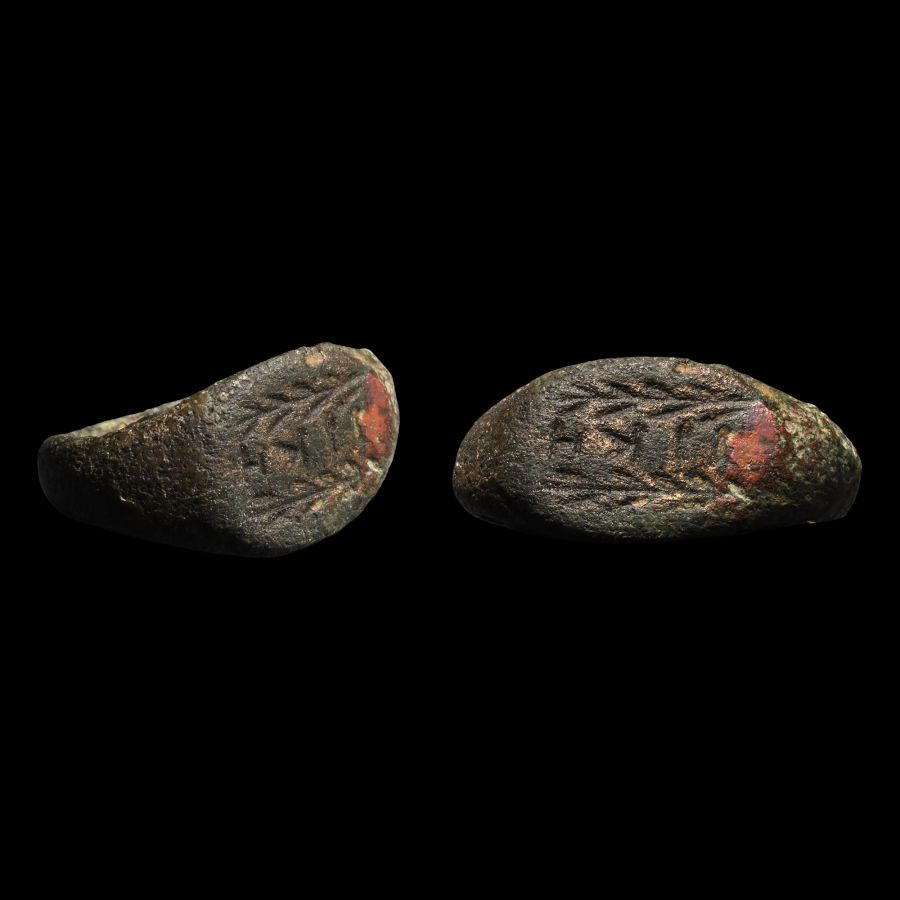
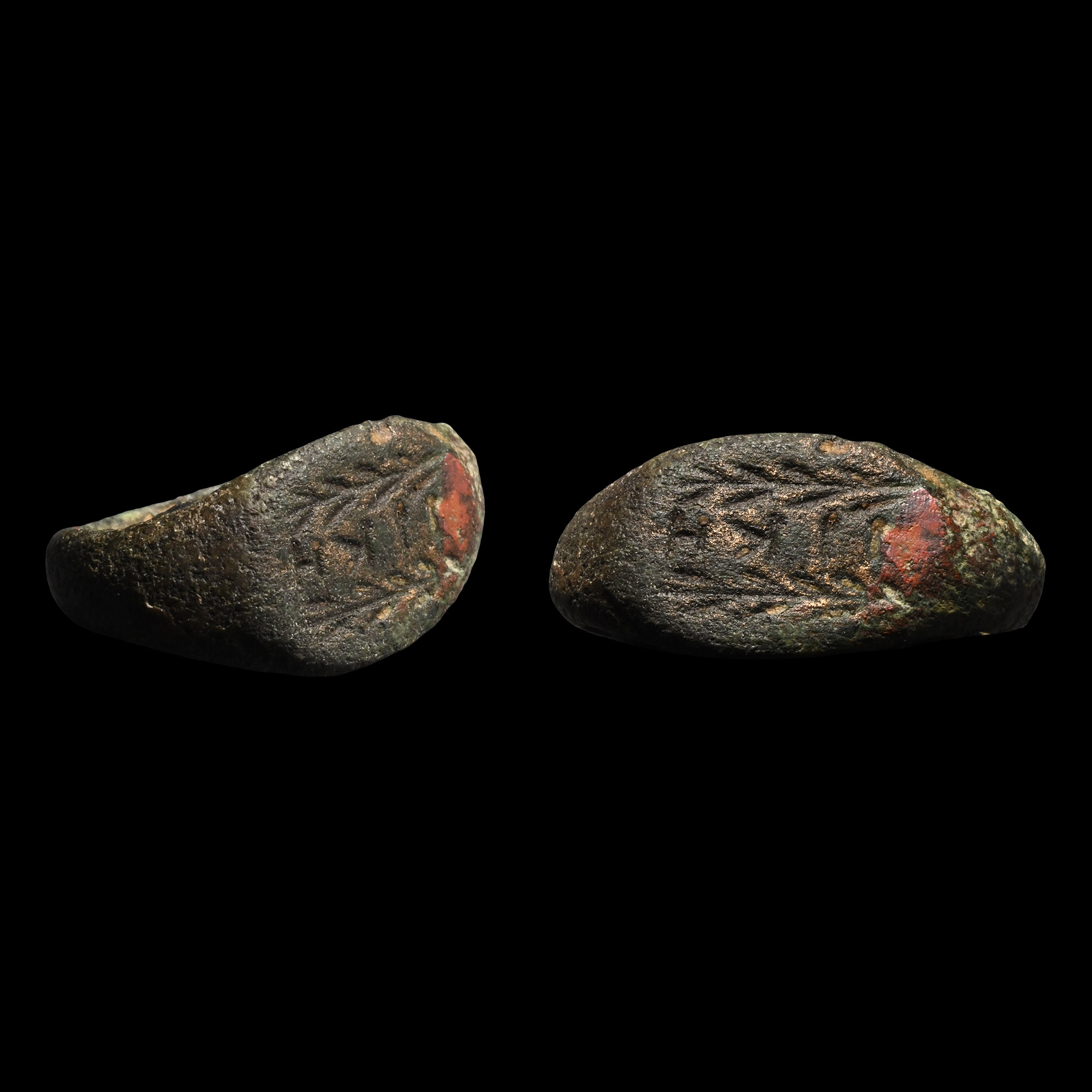
Roman Bronze Ring with Inscription
1ST-4TH CENTURY A.D.
7/8 in. (3.89 grams, 21.37 mm overall, 13.01x15.86 mm internal diameter (approximate size British F 1/2, USA 3, Europe 4.30, Japan 4)).
The hoop expanding at the shoulder, oval bezel with reversed inscription 'IIKH' flanked by two palm fronds. [No Reserve]
ProvenanceFrom the private collection of a European gentleman (1942-2024), formed since the 1970s.
CONDITIONTimeLine Auctions follows a vetting process to ensure the authenticity and legality of all items, reinforcing our commitment to integrity and responsible trading. Each antiquity, antique, and coin lot undergoes thorough examination by a vetting committee of at least ten external specialists, professional trade association members, scientists, and archaeologists: Our Vetting Process
AUCTIONS:
TimeLine is a leading auction house specialising in antiquities, ancient art, collectables, natural history, coins, medals, and books. Our auctions offer museums, collectors, historians, and enthusiasts the opportunity to acquire unique and historically significant pieces.
-
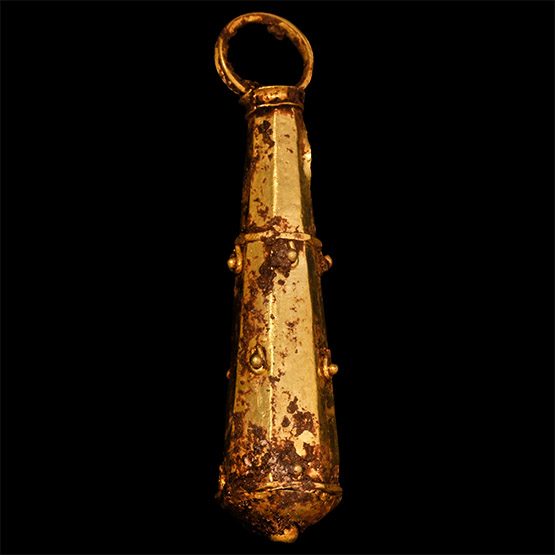
Roman Gold Hercules Club Amulet
1st-3rd century A.D.Sold for (Inc. bp): £585
Hexagonal in section, tapering with integral loop, applied granule studs, domed finial with a knop. 1.1 grams, 28 mm
Private collection, acquired in the late 1980s-early 1990s; thence by descent.
A similar object formed part of the remarkable hoard of late Roman gold jewellery and silver tableware found near Thetford, Norfolk, in 1979. -
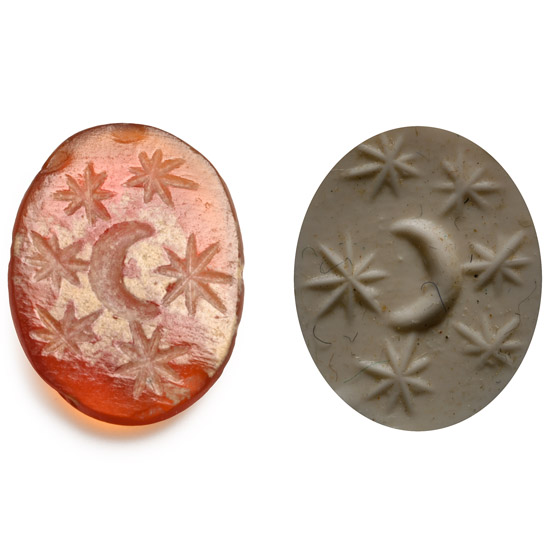
Roman Carnelian Gemstone with Moon and Stars
2nd-3rd century A.D.Sold for (Inc. bp): £104
Intaglio crescent moon surrounded by six stars; supplied with a museum-quality impression. 0.44 grams, 12.85 mm
From the private collection of a European gentleman (1942-2024), formed since the 1970s. -
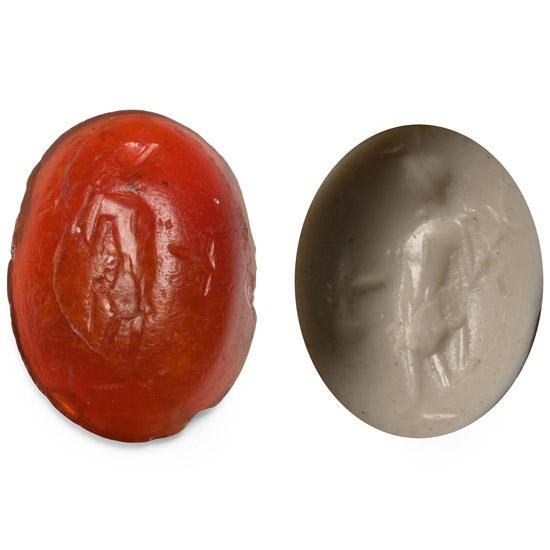
Roman Carnelian Gemstone with Mercury
2nd-3rd century A.D.Sold for (Inc. bp): £65
With intaglio standing figure of Mercury with caduceus; supplied with a museum-quality impression. 0.57 grams, 12.85 mm
From the private collection of a European gentleman (1942-2024), formed since the 1970s.
