
Loading, please wait...
LOT 0689
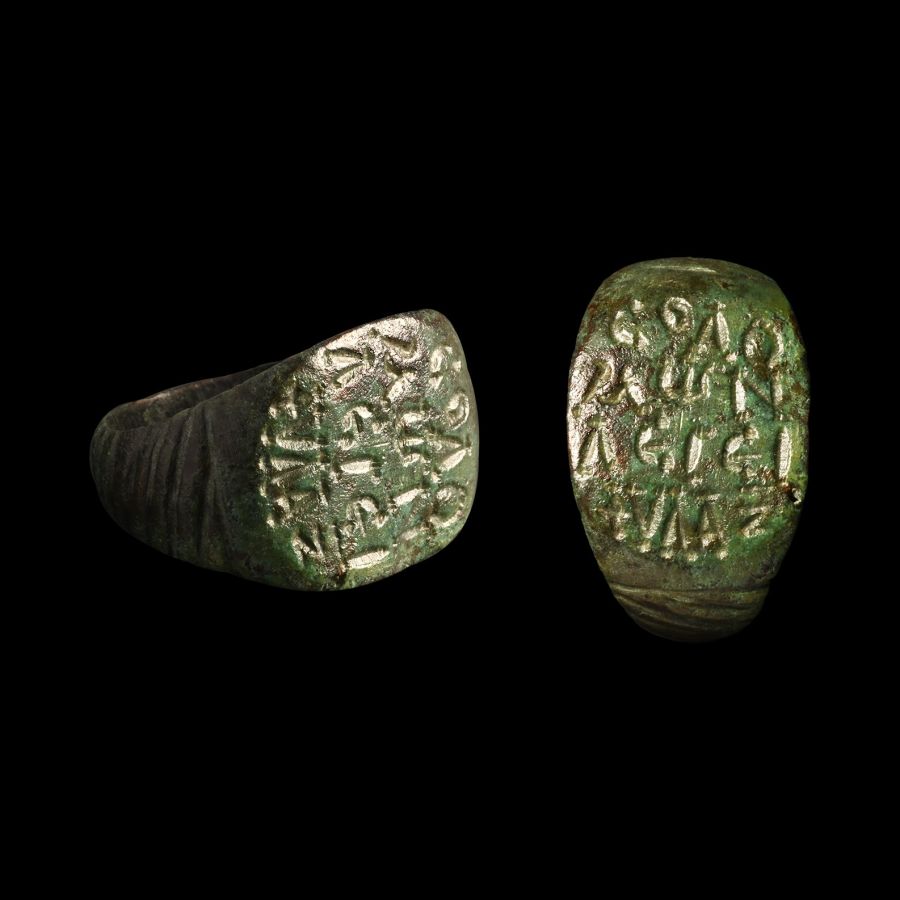
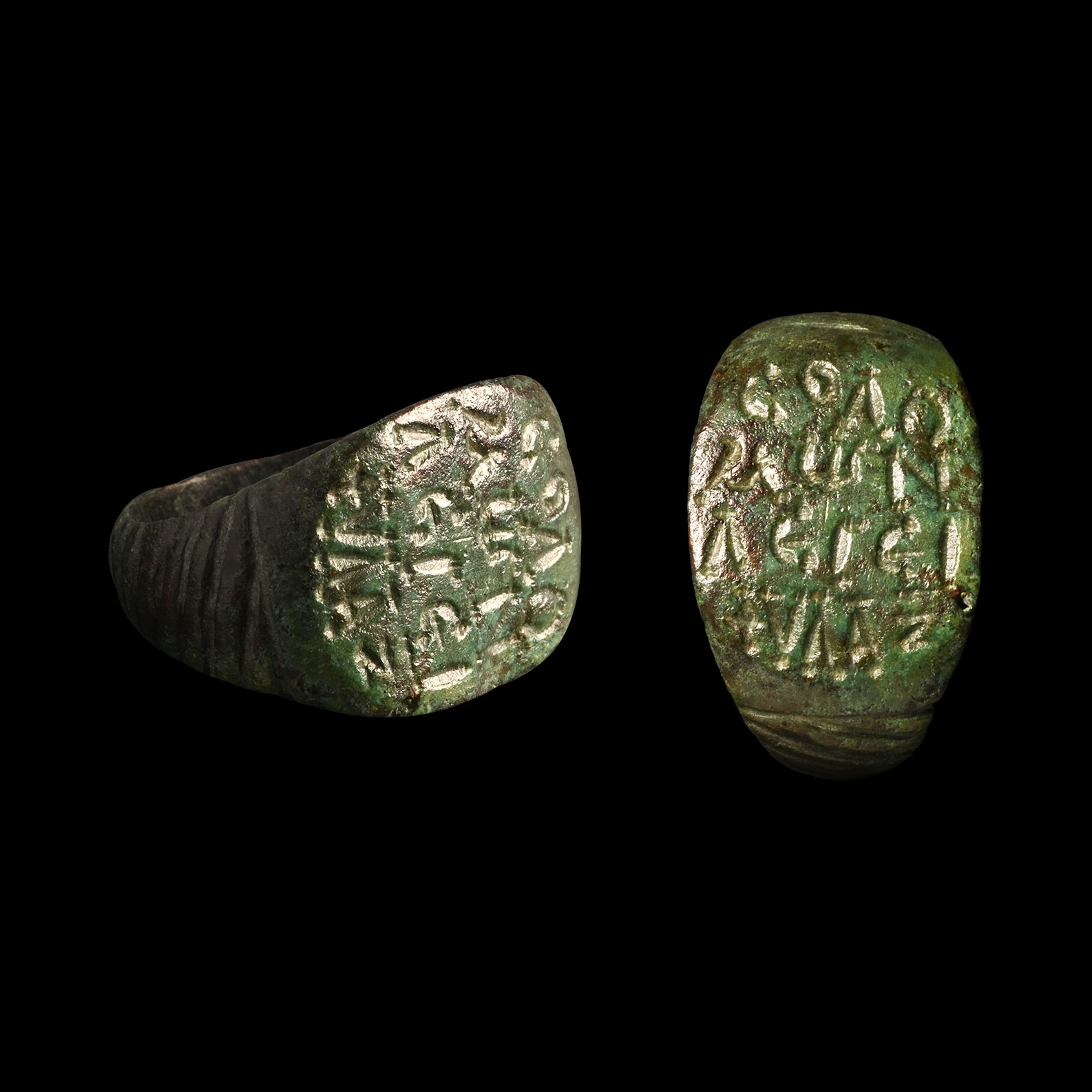
Roman Bronze Ring with Greek Inscription
CIRCA 4TH CENTURY A.D.
1 in. (6.25 grams, 25.20 mm overall, 20.86 mm internal diameter (approximate size British Q, USA 8, Europe 17.49, Japan 16)).
Flat discoid plaque inscribed in Greek capitals 'CΟΛΟ/ΜѠΝ/ΛΕΓΕΙ/ΦΥΛАΞ' (Σολομων λεγει φυλαξ = Salomon says [to be] the guardian).
ProvenanceFrom the collection of a High Wycombe, Buckinghamshire, UK, gentleman, circa 2000.
CONDITIONTimeLine Auctions follows a vetting process to ensure the authenticity and legality of all items, reinforcing our commitment to integrity and responsible trading. Each antiquity, antique, and coin lot undergoes thorough examination by a vetting committee of at least ten external specialists, professional trade association members, scientists, and archaeologists: Our Vetting Process
AUCTIONS:
TimeLine is a leading auction house specialising in antiquities, ancient art, collectables, natural history, coins, medals, and books. Our auctions offer museums, collectors, historians, and enthusiasts the opportunity to acquire unique and historically significant pieces.
-
Roman Stone and Glass Bead Necklace String
1st century A.D. and laterSold for (Inc. bp): £39
Restrung group of mainly rough red opaque glass furnace-wound beads with a polyhedral centrepiece. 19.3 grams, 36 cm long
Acquired 1980-2015. Ex Abelita family collection. -
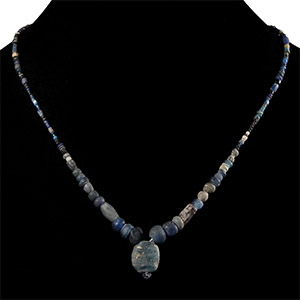
Roman Stone and Glass Bead Necklace String
1st century A.D. and laterSold for (Inc. bp): £52
Restrung group of annular, oblate and tubular glass and other beads with discoid glass centrepiece. 16 grams, 67 cm long
Acquired 1980-2015. Ex Abelita family collection. -
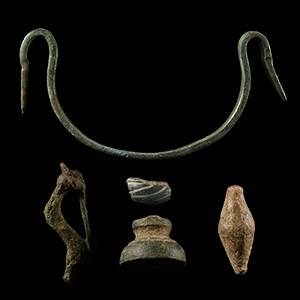
Roman 'Shrewsbury Fort' Artefact Collection
1st-4th century A.D.Sold for (Inc. bp): £117
Comprising: a lead glans slingshot; a bronze 'seahorse' trumpet brooch; a bronze furniture finial; a glass bangle fragment with white trails; a bronze flat-section situla handle. 164 grams total, 2-11.5 cm
Found near a Roman fort in Shrewsbury, Shropshire, UK. Acquired from the finder in 2006. Property of a Nottinghamshire gentleman.
