
Loading, please wait...
LOT 0620
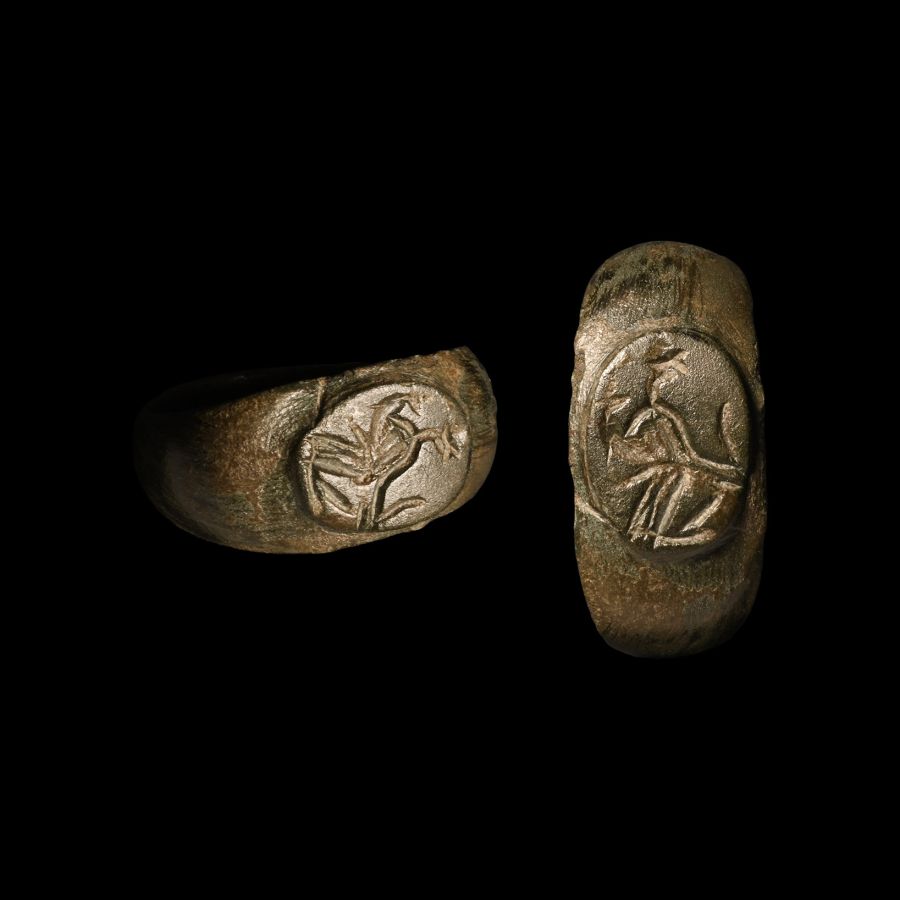
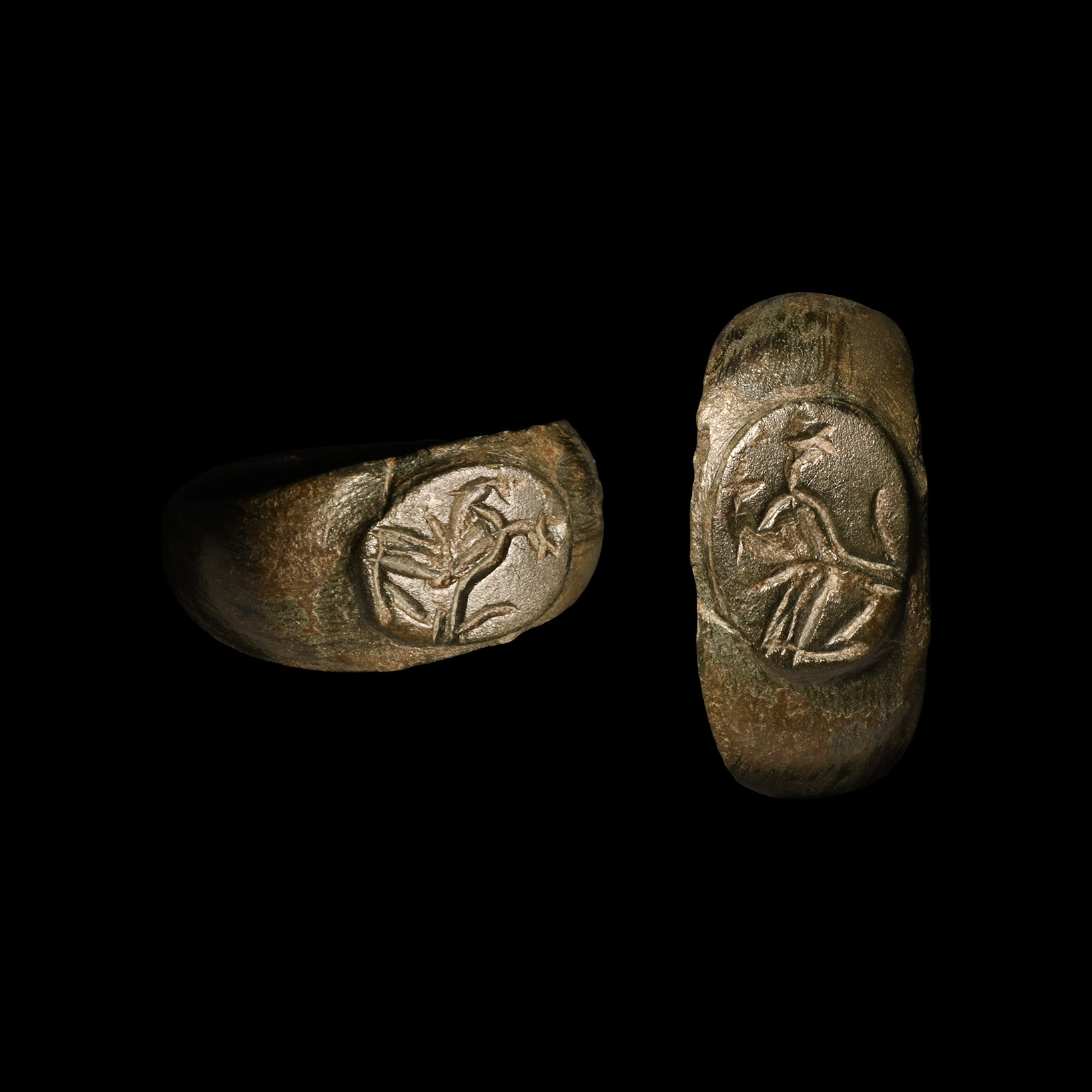
Roman Bronze Ring with Fortuna
CIRCA 1ST-3RD CENTURY A.D.
7/8 in. (4.35 grams, 21.37 mm overall, 17.58 mm internal diameter (approximate size British H, USA 3 3/4, Europe 6.18, Japan 6)).
With a D-section band expanding at the shoulders, wide bezel with raised oval plaque bearing a stylised depiction of goddess Fortuna facing right, holding a rudder and cornucopia. [No Reserve]
ProvenanceFrom the collection of a High Wycombe, Buckinghamshire, UK, gentleman, circa 2000.
CONDITIONTimeLine Auctions follows a vetting process to ensure the authenticity and legality of all items, reinforcing our commitment to integrity and responsible trading. Each antiquity, antique, and coin lot undergoes thorough examination by a vetting committee of at least ten external specialists, professional trade association members, scientists, and archaeologists: Our Vetting Process
AUCTIONS:
TimeLine is a leading auction house specialising in antiquities, ancient art, collectables, natural history, coins, medals, and books. Our auctions offer museums, collectors, historians, and enthusiasts the opportunity to acquire unique and historically significant pieces.
-
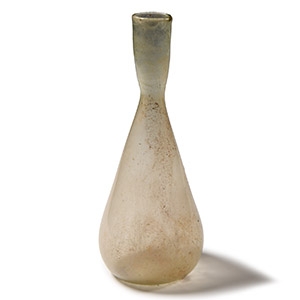
Roman Tall Glass Unguentarium
2nd-4th century A.D.Sold for (Inc. bp): £117
With piriform body and dimpled base; slender tubular neck expanding slightly towards the rim; in pale green glass. 42.6 grams, 15.5 cm high
Acquired in the 1970s, thence by descent 2012. Private UK collection, Cambridge, UK. Property of an East Sussex, UK, gentleman. -
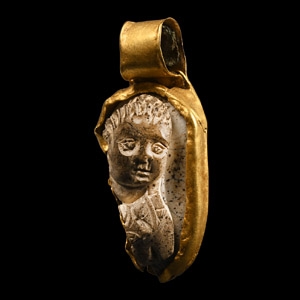
Roman Gold Pendant with Cameo
Circa 1st-2nd century A.D.Sold for (Inc. bp): £562
Suspension loop to one edge, the stone cameo fragment portraying a young boy. 3.84 grams, 30 mm
Acquired 1990s-early 2000s. East Anglian private collection. -
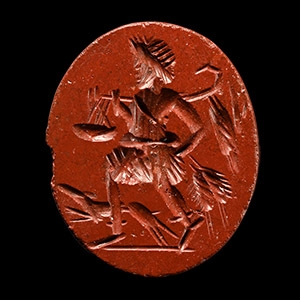
Roman Red Jasper Gemstone with Hunter and Dog
2nd-3rd century A.D.Estimate: £400 - 600 (+bp*)
Opening Bid: £222
Oval in shape, engraved with an advancing male figure holding a long curved staff on his shoulder, a water skin hanging from the rear end and a low dish from the other, a leaping hound at his feet. 0.71 grams, 15 mm
Acquired 1980-2015. Ex Abelita family collection.
