
Loading, please wait...
_900x900.jpg "Roman Bronze Ring with Eros Riding a Dolphin Gemstone")
_200x200.jpg "Roman Bronze Ring with Eros Riding a Dolphin Gemstone")
.jpg "Roman Bronze Ring with Eros Riding a Dolphin Gemstone")
LOT 0679
Roman Bronze Ring with Eros Riding a Dolphin Gemstone
2ND CENTURY A.D.
7/8 in. (9.42 grams, 20.30 mm overall, 13.82 x 16.27 mm internal diameter (approximate size British H, USA 3 3/4, Europe 6.18, Japan 6)).
With inset burnt white stone cloison.
ProvenanceAcquired 1970's.
Ex UK collection.
Property of a Hampshire, UK gentleman.
Cf. Ruseva-Slokoska, L., Roman Jewellery, Sofia, 1991, item 275, for type.
CONDITIONTimeLine Auctions follows a vetting process to ensure the authenticity and legality of all items, reinforcing our commitment to integrity and responsible trading. Each antiquity, antique, and coin lot undergoes thorough examination by a vetting committee of at least ten external specialists, professional trade association members, scientists, and archaeologists: Our Vetting Process
AUCTIONS:
TimeLine is a leading auction house specialising in antiquities, ancient art, collectables, natural history, coins, medals, and books. Our auctions offer museums, collectors, historians, and enthusiasts the opportunity to acquire unique and historically significant pieces.
-
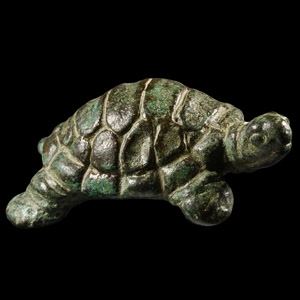
Roman Bronze Tortoise Figure
2nd-3rd century A.D.Sold for (Inc. bp): £910
Modelled in the round with semi-naturalistic detailing, head raised and turned slightly to the right. 30.1 grams, 37 mm
Ex UK private collection. Acquired at the London Coin Fair in the early 1990s. Property of a Buckinghamshire, UK, gentleman. -
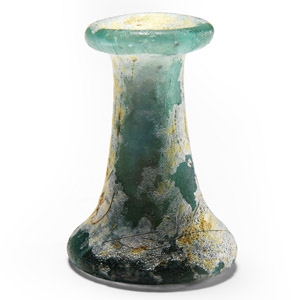
Roman Glass Cotton-Reel Type Bottle
1st century A.D.Estimate: £100 - 140 (+bp*)
Opening Bid: £40
A heavy squat unguentarium or perfume flask with tall, trumpet-style neck and everted rim. 20.2 grams, 42 mm
Acquired 1980-2015. Ex Abelita family collection. -
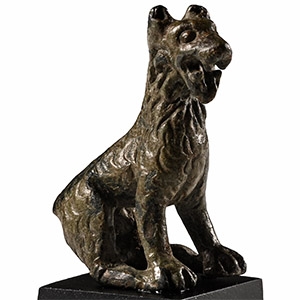
Roman Bronze Seated Long-Haired Dog Statuette
1st-4th century A.D.Estimate: £400 - 600 (+bp*)
Opening Bid: £222
Modelled seated on its rump with forepaws before the body, head erect with gaping mouth exposing sharp teeth; detailing to the long coat and face. 31.5 grams, 39 mm
‘The Ancient Menagerie Collection’ formerly the property of a Cambridgeshire lady, collected since the 1990s and acquired from auctions and dealers throughout Europe and the USA, now ex London collection.
