
Loading, please wait...
LOT 0616
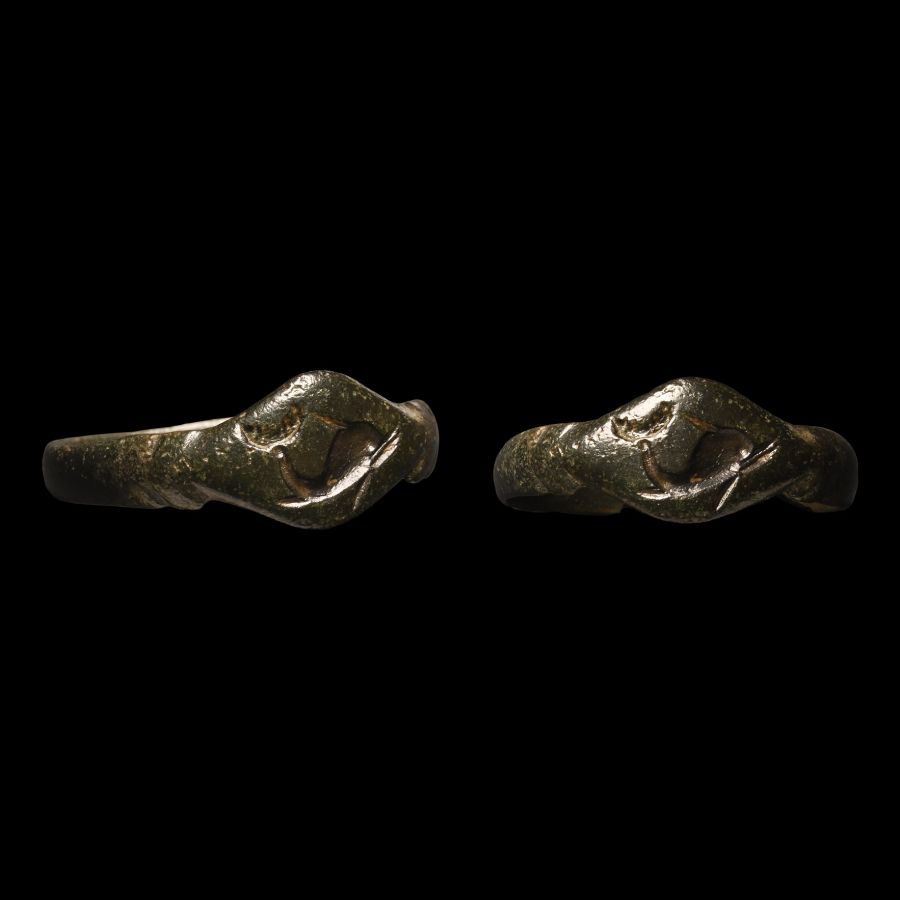
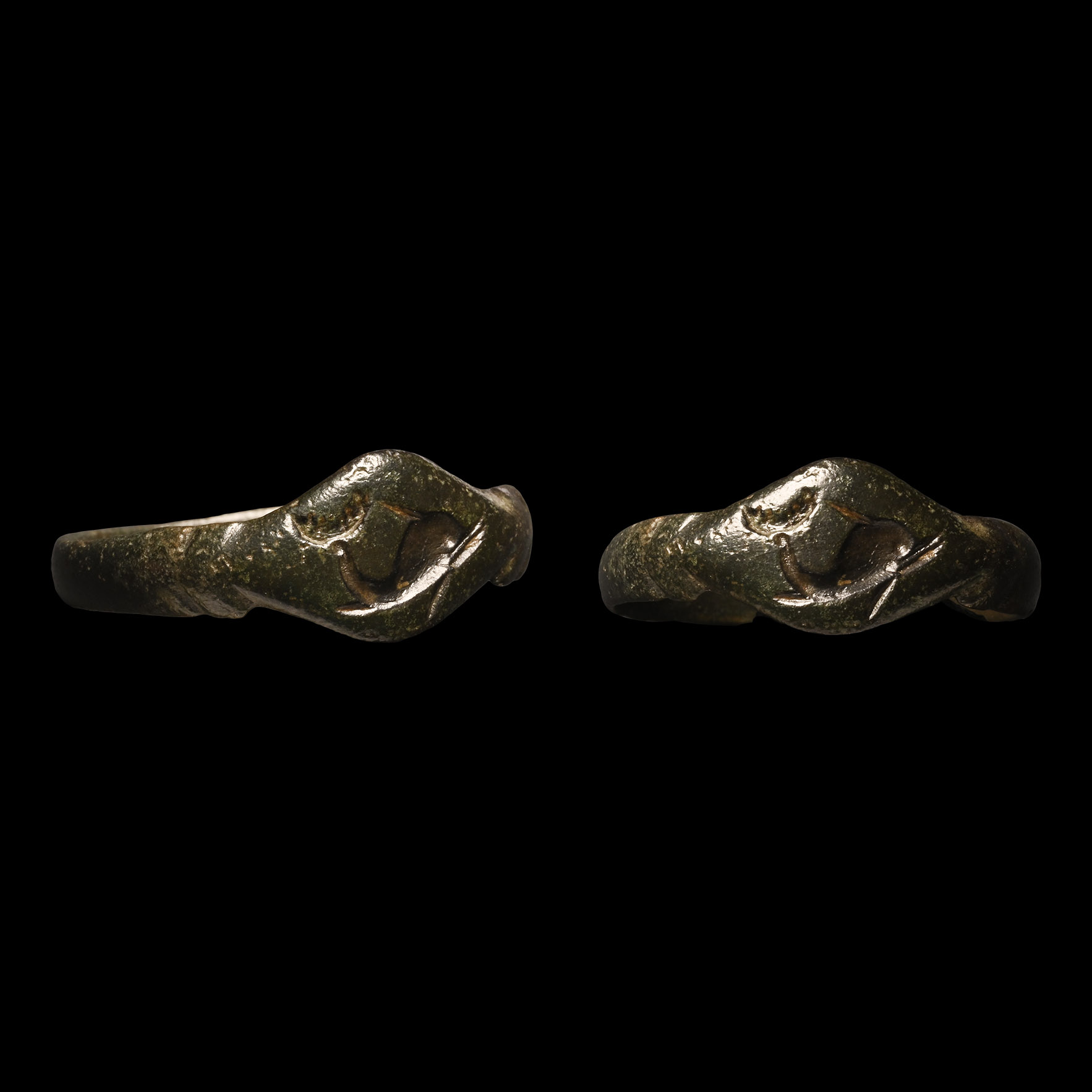
Roman Bronze Ring with Dolphin
CIRCA 2ND-3RD CENTURY A.D.
1 in. (2.57 grams, 23.54 mm overall, 20.94 mm internal diameter (approximate size British T, USA 9 1/2, Europe 21.26, Japan 20)).
With a large hoop supporting a lozenge-shaped bezel with a stylised dolphin facing right.
ProvenanceFrom the collection of a High Wycombe, Buckinghamshire, UK, gentleman, circa 2000.
CONDITIONTimeLine Auctions follows a vetting process to ensure the authenticity and legality of all items, reinforcing our commitment to integrity and responsible trading. Each antiquity, antique, and coin lot undergoes thorough examination by a vetting committee of at least ten external specialists, professional trade association members, scientists, and archaeologists: Our Vetting Process
AUCTIONS:
TimeLine is a leading auction house specialising in antiquities, ancient art, collectables, natural history, coins, medals, and books. Our auctions offer museums, collectors, historians, and enthusiasts the opportunity to acquire unique and historically significant pieces.
-
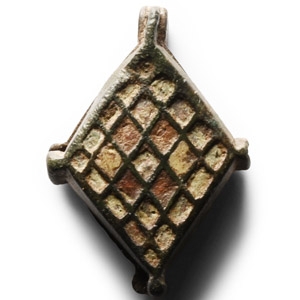
Romano-British Enamelled Bronze Seal Box
Circa 2nd century A.D.Sold for (Inc. bp): £78
Lozengiform two-part container with grid to the obverse, enamel fill to the cells. 7.22 grams, 31 mm
Found Southern England. Acquired on the UK art market in the 1980s. From an East Anglian private collection. -
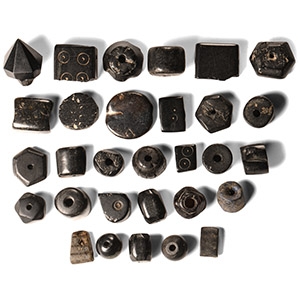
Roman and Other Jet and Glass Bead Group
Late 1st millennium B.C. and laterSold for (Inc. bp): £124
Mainly comprising polished beads of various sizes and shapes, including facetted, barrel-shaped and cuboid types, together with examples with ring-and-dot motifs. 29.3 grams total, 9-15 mm
UK gallery, early 2000s. -
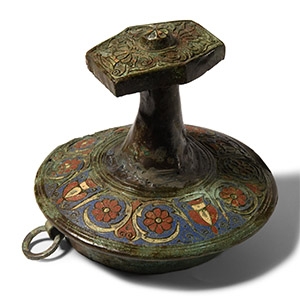
Roman Enamelled Bronze Vessel Lid
2nd-4th century A.D.Estimate: £10,000 - 14,000 (‡+bp*)
Opening Bid: £5,000
With carinated body and gently inverted lower rim, circumferential frieze displaying 'yellow' and red champlevé enamelled flower heads within foliate roundels, alternating with stylised amphoras and volute scrolls creating heart shapes set against a rich blue field; central projecting stem with hexagonal plate, ornamented with a central domed flower head, amphora and foliate motifs surrounding; two suspension lugs with loops to the perimeter of the lower rim; repaired. 435 grams, 15 cm wide
Acquired from Ariadne Galleries Inc, New York, 30 October 2003. This lot has been checked against the Interpol Database of stolen works of art and is accompanied by search certificate no.11622-198955.
Champlevé is a decorative technique which involves cutting cells into a metal surface and filling the void with enamel, using the raised metal borders between the cells to create the design outline.
