
Loading, please wait...
LOT 0798
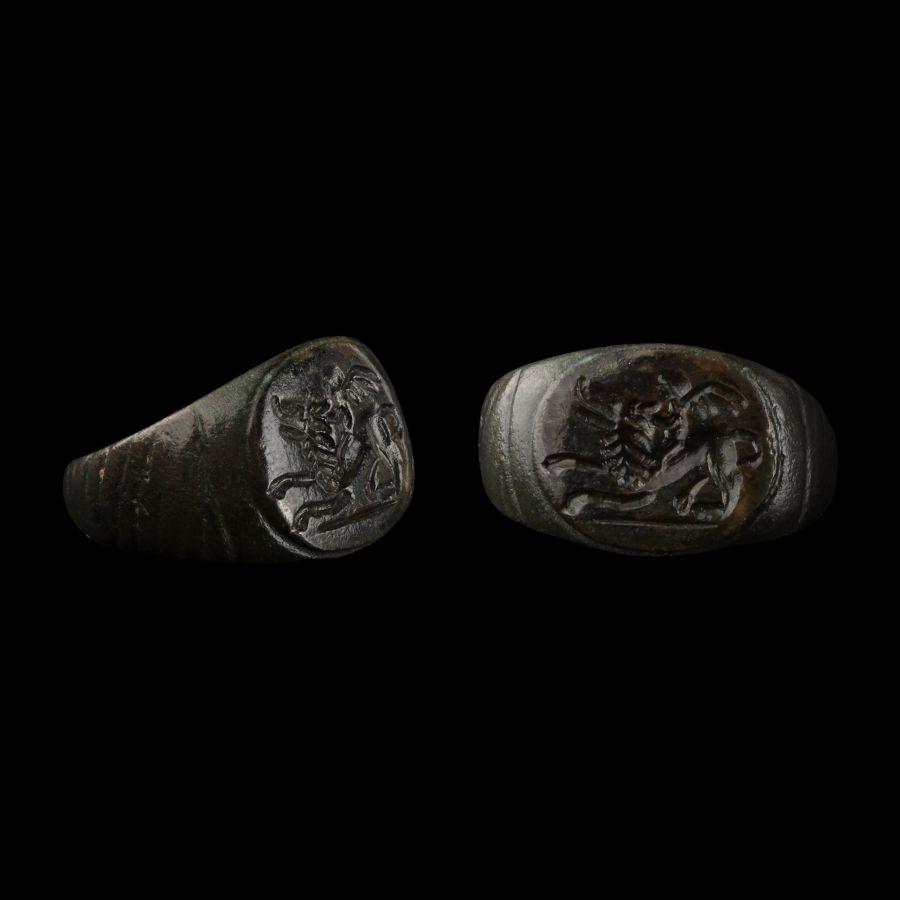
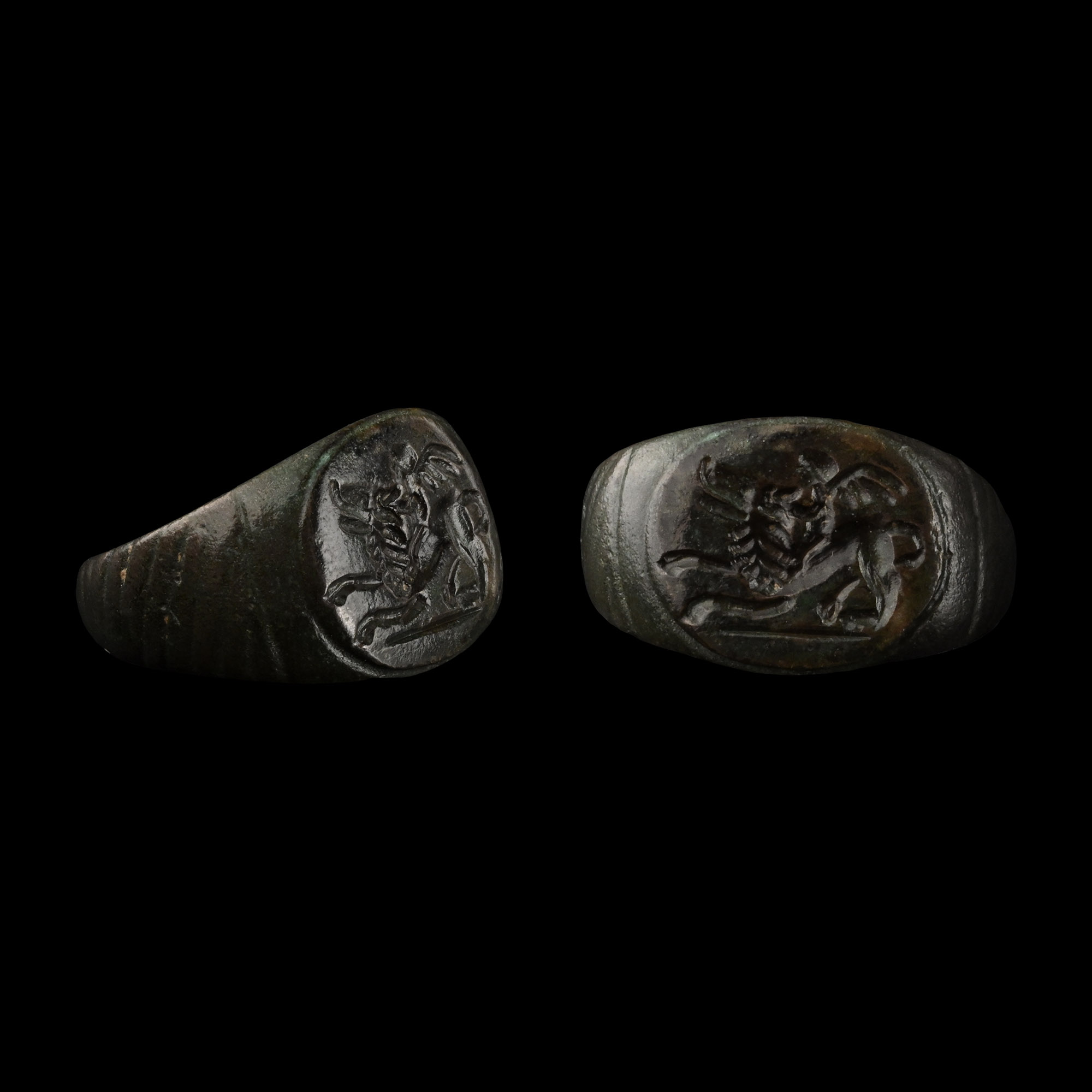
Roman Bronze Ring with Cupid Riding a Lion
2ND-3RD CENTURY A.D.
3/4 in. (5.55 grams, 20.18 mm overall, 16.51 mm internal diameter (approximate size British G, USA 3 1/4, Europe 4.92, Japan 4)).
Incuse ribbing to the shoulders, ellipsoid plaque with incuse crouching lion and winged putto or Cupid above.
ProvenanceEx German art market, 2000s.
Acquired from an EU collector living in London.
From the collection of a Surrey, UK, gentleman.
This lot is accompanied by an illustrated lot declaration signed by the Head of the Antiquities Department, Dr Raffaele D'Amato.
TimeLine Auctions follows a vetting process to ensure the authenticity and legality of all items, reinforcing our commitment to integrity and responsible trading. Each antiquity, antique, and coin lot undergoes thorough examination by a vetting committee of at least ten external specialists, professional trade association members, scientists, and archaeologists: Our Vetting Process
AUCTIONS:
TimeLine is a leading auction house specialising in antiquities, ancient art, collectables, natural history, coins, medals, and books. Our auctions offer museums, collectors, historians, and enthusiasts the opportunity to acquire unique and historically significant pieces.
-
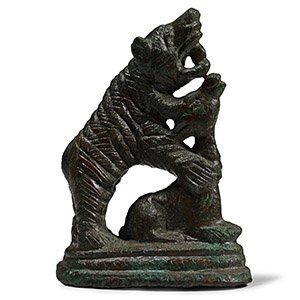
Roman Bronze Statue of a Bear Killing a Deer
1st-2nd century A.D.Estimate: £1,000 - 1,700 (+bp*)
Opening Bid: £500
On a stepped triangular base, bear with head raised, forepaws round the neck of a deer with legs folded beneath the body. 398 grams, 10 cm
Nicolas Koutoulakis (1910-1996). Private collection of Mr K.A. This lot is accompanied by an illustrated lot declaration signed by the Head of the Antiquities Department, Dr Raffaele D'Amato.
Combat between large animals was a popular theme in Roman art. The staging of such fights in the Flavian Amphitheatre in the heart of Rome is evidenced. Furthermore, the 3rd-4th century A.D. mosaic floor unearthed at Lod, Israel, in 1996 shows several scenes with ferocious wild animal - a lion and lioness, an elephant, a giraffe, a rhinoceros, a tiger, and a wild bull - all arranging themselves for a colossal fight to the death. The mosaic was lifted intact and is on display in the Metropolitan Museum of Art, New York. -
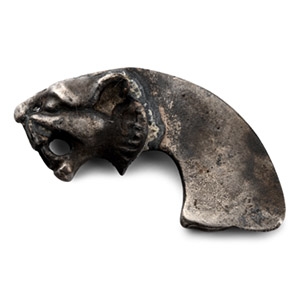
Roman Silver Razor Handle
1st-2nd century A.D.Sold for (Inc. bp): £156
Handle from a twin-bladed triangular razor, in the form of the head and neck of a panther, the head turned backwards, the panther having backwards-pointing ears, the eyes of the animal depicted by a horizontal engraved line within an elongated leaf-shaped moulding, the nose curving downwards and its tip tapering to a rounded end, smooth neck. 5.6 grams, 27 mm
Fine condition.
From a Home Counties collection, formed 1970-1980. From the private collection of John Meredith, acquired since the 1990s; thence by descent. This lot is accompanied by an illustrated lot declaration signed by the Head of the Antiquities Department, Dr Raffaele D'Amato. -
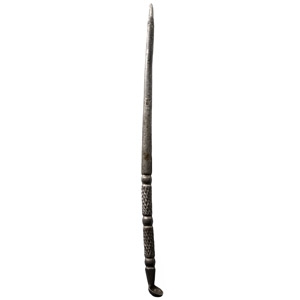
Roman Silver Ligula with Stylus
2nd-3rd century A.D.Sold for (Inc. bp): £182
Slender shank with tiered balusters to the upper end, bowl-shaped finial. 9.16 grams, 11.1 cm
Ex German art market, 2000s. Acquired from an EU collector living in London. From the collection of a Surrey, UK, gentleman. This lot is accompanied by an illustrated lot declaration signed by the Head of the Antiquities Department, Dr Raffaele D'Amato.
