
Loading, please wait...
LOT 0596
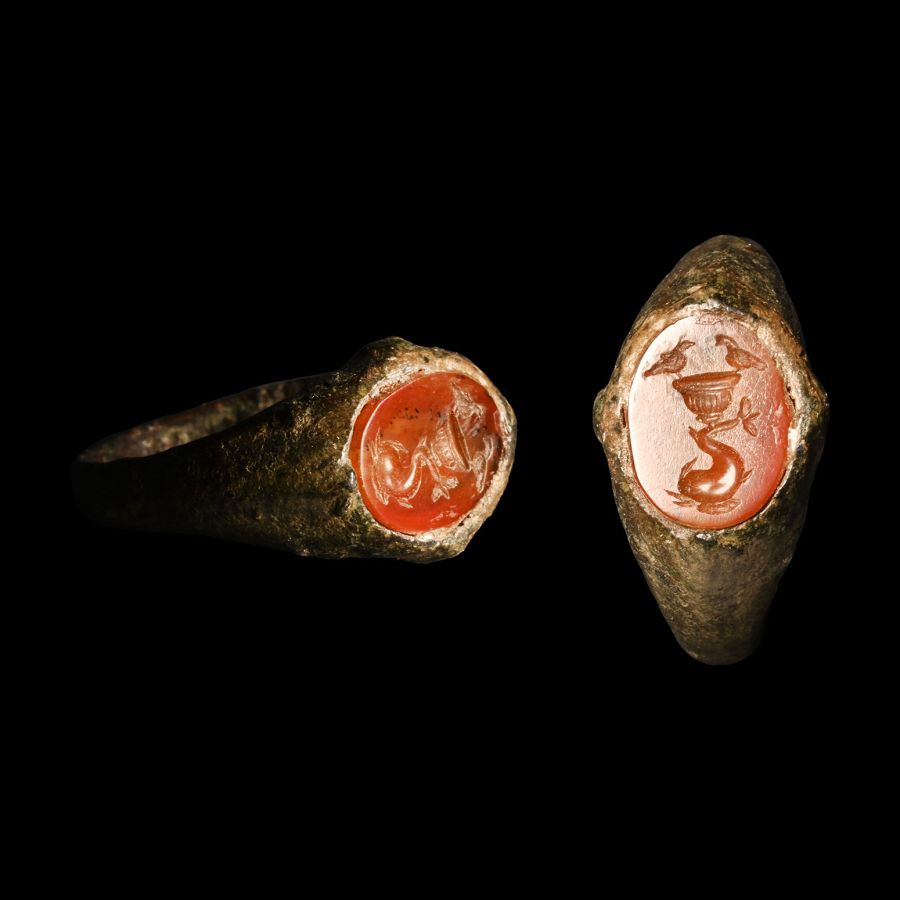
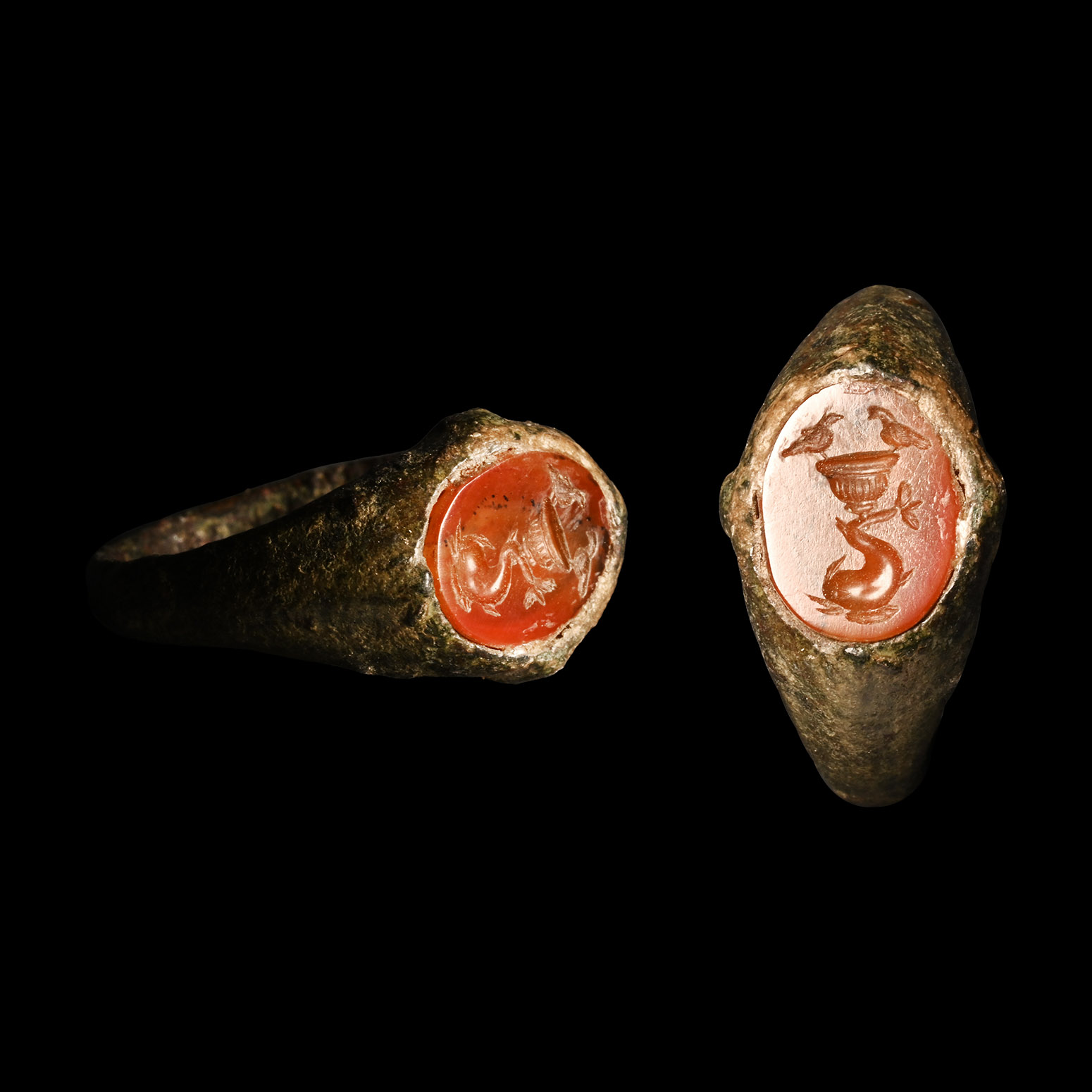
Roman Bronze Ring with Birds and Dolphin Gemstone
CIRCA 1ST-2ND CENTURY A.D.
1 in. (7.40 grams, 26.18 mm overall, 18.95 mm internal diameter (approximate size British R, USA 8 1/2, Europe 18 3/4, Japan 18)).
With shoulders tapering towards the plaque and two lateral knops, inset carnelian intaglio of a fluted vase with two birds perching on the rim, supported on the tail of dolphin; a marriage.
ProvenanceAcquired on the German art market before 2000.
Property of a Surrey, UK, collector.
Cf. Ruseva-Slokoska, L., Roman Jewellery, Sofia, 1991, item 232, for type.
CONDITIONTimeLine Auctions follows a vetting process to ensure the authenticity and legality of all items, reinforcing our commitment to integrity and responsible trading. Each antiquity, antique, and coin lot undergoes thorough examination by a vetting committee of at least ten external specialists, professional trade association members, scientists, and archaeologists: Our Vetting Process
AUCTIONS:
TimeLine is a leading auction house specialising in antiquities, ancient art, collectables, natural history, coins, medals, and books. Our auctions offer museums, collectors, historians, and enthusiasts the opportunity to acquire unique and historically significant pieces.
-
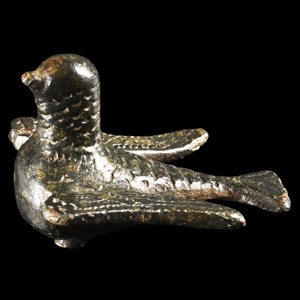
Roman 'Suffolk' Bronze Bird Mount
1st-2nd century A.D.Sold for (Inc. bp): £91
Modelled in the round with wings spread, lines of punched-point feather detailing to the wings and body; attachment lug to the underside. 12.3 grams, 26 mm
Found Suffolk, UK, 1980s. Property of an Essex collector. -
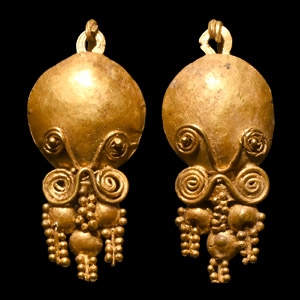
Roman Gold Earrings with Bosses
Circa 1st-2nd century A.D.Estimate: £1,200 - 1,700 (+bp*)
Opening Bid: £625
Matched pair of gold earrings, each adomed shield with substantial hoop to the reverse, hook-and-eye closure, applied filigree ram's head scrolls above a cluster of hollow balls with vertical granule clusters. 6.58 grams total, 34 mm each
From a collection of a London lady, acquired annually during 1990s-2000s. -
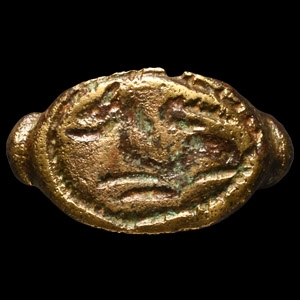
Roman Period Bronze Ring with Lion
Circa 3rd-4th century A.D.Sold for (Inc. bp): £39
With D-section shoulders flanking the ellipsoid plaque, incuse crouching beast in a pelletted border. 5.24 grams, 23.41 mm overall, 18.84 mm internal diameter (approximate size British M 1/2, USA 6 1/4, Europe 13.09, Japan 12)
Ex old English collection. London art market, pre 2000. Property of a London, UK, gentleman.
